

A Good Girl's Guide to Murder S2E6 Ending Explained — The Identity Twist Everyone Missed
- Rajveer Singh

- 3 hours ago
- 5 min read
Jamie Reynolds doesn't die in the Season 2 finale. Instead, Pip Fitz-Amobi finds him locked inside the home of local reporter Stanley Forbes—the actual target of the "Layla Mead" catfish trap. It is a stunning bait-and-switch that resolves the missing person case, but structurally, it serves to walk Pip into a completely different, much bloodier execution. As I noted in my [breakdown of the S2E5 verdict], the show stopped pretending the legal system works an episode ago. The finale proves that when the law fails, the suburbs turn into a slaughterhouse.

A Good Girl's Guide to Murder Season 2 Ending Explained
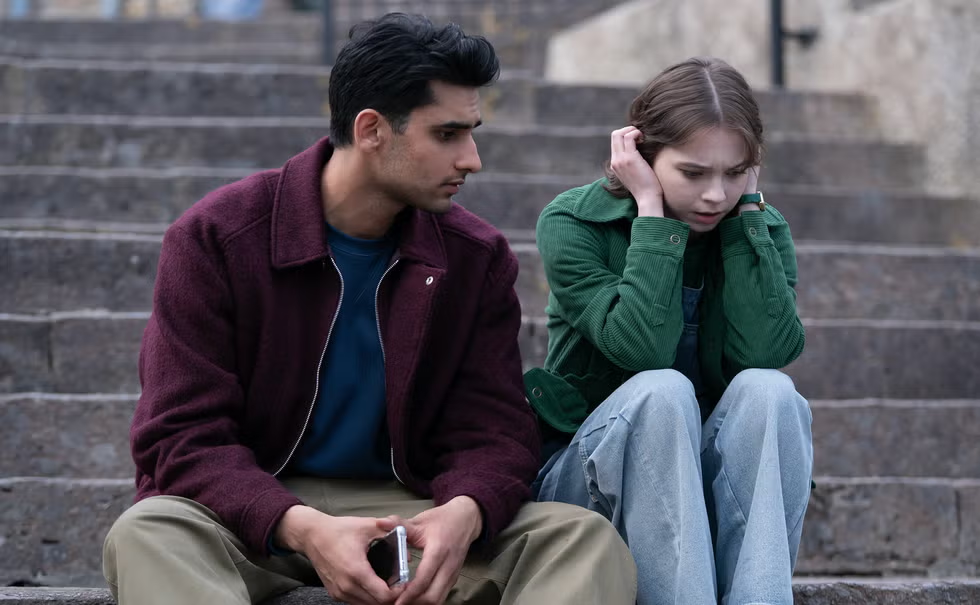
In the Season 2 finale, Pip discovers that the "Layla Mead" identity was created by her neighbor, Charlie Green, to hunt down "Child Brunswick"—the son of a notorious serial killer. That hidden child is revealed to be local reporter Stanley Forbes. When Jamie was tricked by Charlie into confronting Stanley, Stanley locked Jamie in his house to protect his own secret identity, keeping him safe but captive. During Pip's final confrontation with Stanley, Charlie Green arrives, shoots Stanley to avenge his murdered sister, sets the building on fire, and escapes. Jamie is recovered safely, but Pip is left traumatized by Stanley's murder and the system's absolute collapse.
The Architecture of Generational Guilt
The genius of Holly Jackson’s source material, Good Girl, Bad Blood, was always how it weaponized the reader's assumptions about true crime, and showrunner Poppy Cogan translates that to the screen with brutal efficiency. We spent six episodes chasing a digital phantom. As seen in [the missing knife discovery in S2E2], the audience was led to assume the catfish was a predator looking for a victim. We were completely wrong. The catfish was a victim looking for a predator.
Charlie Green isn't just the friendly neighbor; he is the grieving brother of a young girl murdered by Scott Brunswick, a notorious serial killer. Stanley Forbes is Scott's son, forced as a child to assist in covering up those brutal murders. By revealing that Stanley is the infamous "Child Brunswick," the show asks a terrifying structural question about culpability: can you inherit the guilt of a monster if you were just a traumatized child when you held the flashlight?
Look at how the final confrontation is staged. There is no triumphant unmasking. When Charlie pulls the gun on Stanley, Pip realizes she has inadvertently done a vigilante's legwork. She didn't solve a mystery; she delivered a target to an executioner. The physical geography of the scene—a burning building, an unstoppable bleeding wound, Pip desperately attempting CPR—is the exact opposite of the neat, podcast-friendly resolution she enjoyed in Season 1. Charlie Green doesn't care about Stanley's desperate apologies or his childhood trauma. He cares about blood debt. When he fires those shots, he is bypassing the court system entirely.
A Rejection of the Streaming True-Crime Formula
If you look at the current economics of Netflix true-crime adaptations, they usually rely on a neat, cathartic ending to wrap up the binge cycle. The detective outsmarts the killer, the victim gets a montage, and the audience gets closure. A Good Girl's Guide to Murder refuses that structural comfort, leaning closer to the bleak, generational guilt of a Scandinavian noir.
The adults in Little Kilton are obsessed with burying the past, but the past refuses to rot quietly. Stanley tried to reinvent himself as a local reporter—literally the person tasked with writing the town's current history—but he couldn't outrun his father's ledger. The cruelest irony of the season is that Jamie Reynolds, the boy whose disappearance drove the entire plot since the [S2E1 premiere], was ultimately just a pawn. He wasn't the primary target; he was just the bait used by Charlie to smoke out a ghost.
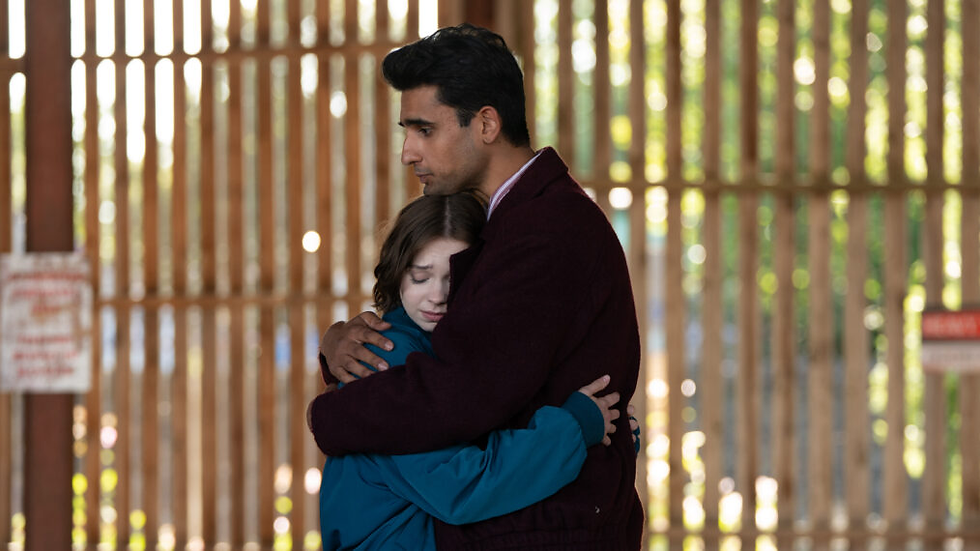
Emma Myers plays the final sequence with a hollowed-out exhaustion that anchors the tragedy. The podcast format, which felt so empowering to her character in the first season, is rendered utterly useless here. You can't edit out a gunshot wound. You can't put a neat narrative bow on watching a man bleed out in front of you. By the time Pip is screaming at the protesters at Stanley's funeral, the show has completely dismantled its own protagonist.
What Comes Next For Pip
The final frames of the episode show the catastrophic psychological toll of this investigation. Season 1 ended with Pip recording a triumphant wrap-up; Season 2 ends with blood permanently on her hands and a murderer—Charlie Green—on the run. Her violent reaction to the funeral protesters signals a complete psychological fracture. If Netflix greenlights the adaptation of the third book, As Good As Dead, the narrative will shift drastically from a detective procedural into a paranoid survival thriller. Pip isn't just a quirky investigator anymore; she is a deeply compromised vigilante who is about to become the primary target of a completely new, highly dangerous stalker. The hunter has officially become the hunted.
Quick Facts
Release Date: May 27, 2026
Platform: Streaming globally on Netflix. Available on BBC iPlayer in the UK. (Available internationally via standard Netflix apps).
Director / Showrunner: Poppy Cogan
Runtime: 50 minutes
Cast: Emma Myers, Zain Iqbal, Jude Morgan-Collie, Eden H. Davies, Asha Banks
Status: Streaming Now [Just Dropped]
Frequently Asked Questions
Who was the Layla Mead catfish in Season 2?
The "Layla Mead" digital profile was a fake identity created and operated by Pip's neighbor, Charlie Green, and his wife Flora. They used the catfish trap to lure out local men matching the age and physical description of "Child Brunswick" in order to enact revenge.
Who is Child Brunswick in A Good Girl's Guide to Murder?
Child Brunswick is revealed to be local reporter Stanley Forbes. As a young boy, he was forced by his father, serial killer Scott Brunswick, to assist in luring and burying his victims, a secret Stanley desperately tried to hide by changing his name and moving to Little Kilton.
Why did Charlie Green shoot Stanley Forbes?
Charlie Green murdered Stanley as an act of vigilante revenge. Charlie's younger sister was one of Scott Brunswick's original victims, and Charlie held Stanley culpable for assisting in the crime, refusing to forgive him despite Stanley being a child at the time.
Is Jamie Reynolds found alive in the finale?
Yes. Jamie is discovered alive, having been locked inside Stanley Forbes' house. Stanley kept Jamie captive to prevent him from exposing his true identity as Child Brunswick, but Stanley did not physically harm him.
Does Pip go to the police at the end of Season 2?
Pip is questioned by the police regarding Stanley's murder, but her faith in the institution is entirely broken. Following the acquittal of Max Hastings and the failure to protect Jamie or Stanley, Pip's reliance on the legal system is permanently shattered.

Comments