

A Good Girl's Guide S2E3 Ending Changes the Suspect List

Pip finds the blood, but the audio is what actually breaks the case. The third episode of A Good Girl's Guide to Murder Season 2 pivots the entire investigation on a single voice note, answering the terrifying question set up by the missing kitchen knife in [A Good Girl's Guide to Murder Season 2 Episode 2 Ending Explained]. We are no longer dealing with a digital phantom; the catfish trap has physically snapped shut.
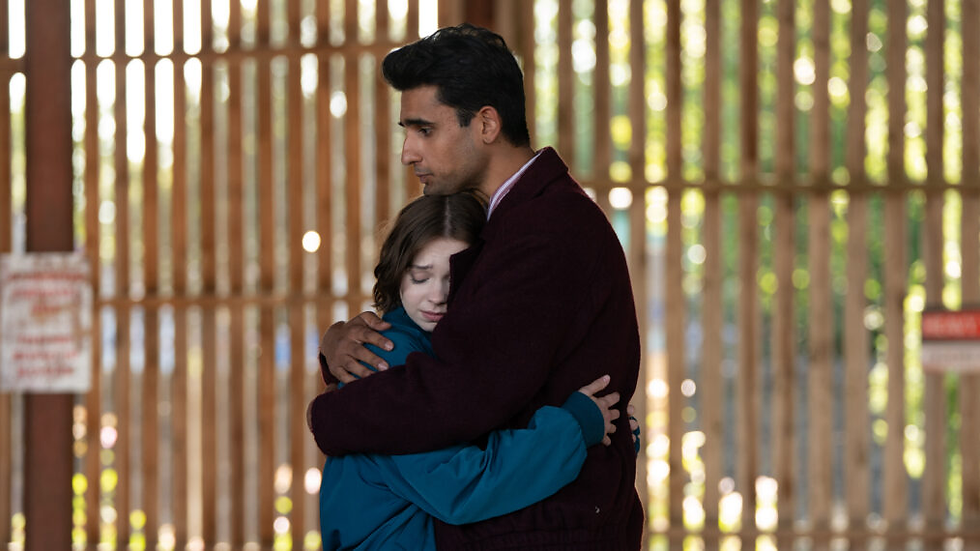
A Good Girl's Guide to Murder Season 2
Episode 3 Ending Explained
The episode concludes with Pip and Ravi tracking the "Layla Mead" digital footprint to the abandoned Shilton farmhouse on the edge of Little Kilton. Inside, they uncover Jamie Reynolds' temporary hideout, finding his discarded, blood-stained jacket and a hidden burner phone. The screen cuts to black as Pip plays the final, panicked voice memo saved on the device, where Jamie explicitly realizes that the person meeting him in the dark isn't a stranger—it is someone he already knows.
The Geography of a Small Town's Subconscious
There is a specific structural trap that streaming mysteries fall into around the three-hour mark. I’ve written before about [Netflix's shifting binge-model strategy] and how the mid-season slump usually involves characters spinning their wheels, manufacturing interpersonal drama to pad the runtime before the finale. Showrunner Poppy Cogan avoids this by shifting the geography of the threat.
Episodes 1 and 2 were largely domestic and digital. They existed on laptops, in suburban kitchens, and through Instagram direct messages. By moving the climax of Episode 3 to the rotting, isolated Shilton farmhouse, the show violently yanks the narrative into physical reality. In British crime fiction—think of the damp, forgotten valleys in Happy Valley or the coastal cliffs of Broadchurch—abandoned agricultural or industrial spaces always serve as the town's subconscious. It is where the polite society of Little Kilton buries its violence. Finding Jamie’s blood-stained jacket here isn't just a plot point; it is a visual confirmation that the town's rot has claimed another victim.
The Burner Phone and the Proximity of Violence
The true narrative weapon of this episode is the burner phone. When Pip and Ravi play that final audio memo, the rules of the investigation fundamentally change. The "Layla Mead" catfish wasn't an international scammer or a random predator. The sheer terror in Jamie’s recorded voice stems from recognition. The killer is a local.
This is where Emma Myers' performance continues to anchor the show's darker tone. As she listens to the recording, you can see the exact moment the PTSD from the Andie Bell case violently intersects with the current reality. Pip knows what happens when someone in Little Kilton decides they need to protect a secret. The missing knife from Episode 2 didn't save Jamie; it likely provoked his attacker. By restricting the audience to the audio of the confrontation, director Asim Abbasi forces us into Pip's paralyzing point of view. We hear the betrayal, but we are denied the face of the betrayer.
The Failure of Adult Institutions
We also need to look at how this episode continues to indict the adult world. Pip is only at that farmhouse because the police explicitly refused to look at Jamie's digital trail. The legal system in the background is entirely focused on the Max Hastings trial—a circus of privilege and high-priced lawyers—while a 24-year-old bleeds out in a barn because he doesn't fit the rigid institutional definition of a "victim." The contrast is deliberate. The show is arguing that justice in these towns is entirely privatized. If you don't have a traumatized teenager willing to break into a crime scene for you, you simply disappear.
What Comes Next
The voice note narrows the suspect pool exclusively to Jamie's immediate circle and Little Kilton residents. Episode 4 will have to become a paranoid locked-room mystery on a town-wide scale. Pip and Ravi now have to look at Nat Da Silva, Luke, and even Jamie's own family through the lens of potential murder. Furthermore, Pip has compromised a primary crime scene. If she takes the burner phone to the police now, she risks destroying the chain of custody. If she keeps it, she makes herself the next target for whoever left Jamie bleeding in that farmhouse.
Quick Facts
Release Date: May 27, 2026
Platform: Streaming globally on Netflix. Available on BBC iPlayer in the UK. (Available internationally via standard Netflix apps).
Director / Showrunner: Asim Abbasi (Ep 3) / Poppy Cogan
Runtime: 46 minutes
Cast: Emma Myers, Zain Iqbal, Jude Morgan-Collie, Eden H. Davies, Asha Banks
Status: Streaming Now [Just Dropped]
Frequently Asked Questions
What did Pip find at the Shilton farmhouse in Season 2 Episode 3?
Pip and Ravi discovered Jamie Reynolds' hideout, containing his blood-stained jacket and a hidden burner phone. This physical evidence confirms that Jamie was attacked after being lured to the location by the "Layla Mead" catfish.
Does Jamie die in A Good Girl's Guide to Murder S2E3?
The episode leaves his fate ambiguous. While the presence of his bloody jacket and the terrifying final voice note heavily imply a violent attack, a body is not recovered by the time the end credits roll.
Who was Jamie talking to on the burner phone recording?
The identity of the attacker is withheld from the audience. However, Jamie's dialogue on the recording reveals a fatal moment of recognition, proving the "Layla" catfish is someone he personally knew from Little Kilton.
Why didn't Pip call the police from the farmhouse?
Pip's inherent distrust of the Little Kilton police force, established during the Andie Bell case and reinforced by their refusal to open a missing persons file for Jamie in [A Good Girl's Guide to Murder Season 2 Episode 1 Ending Explained], drives her to secure the evidence herself rather than trust a broken institution.


Comments