

A Good Girl's Guide to Murder S2E5 Ending Destroys the Rulebook
- Rajveer Singh

- 3 hours ago
- 4 min read
The system doesn't just fail in the penultimate episode of A Good Girl's Guide to Murder Season 2; it actively protects the monster. The fifth episode ends not with a shocking clue about Jamie's disappearance, but with a devastating legal verdict: Max Hastings is found not guilty. It is the moment the show officially stops being a whodunit and becomes an origin story for a vigilante.
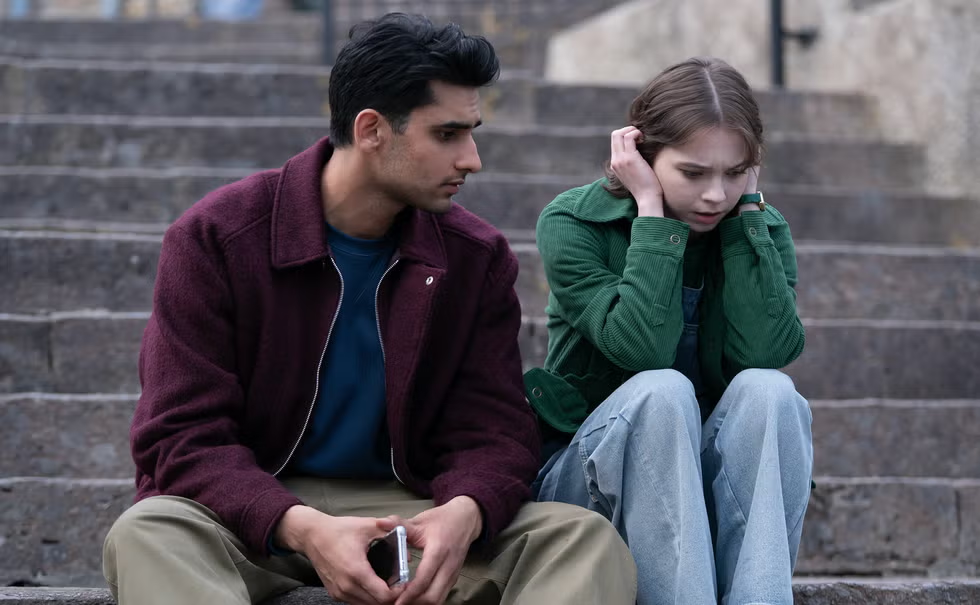
A Good Girl's Guide to Murder S2E5 Ending Explained
The episode concludes with the jury delivering a "Not Guilty" verdict in the sexual assault trial of Max Hastings, allowing him to walk completely free despite overwhelming evidence. The institutional failure shatters Pip Fitz-Amobi's remaining faith in the legal system. In the final moments, rather than going to the police with her audio evidence of the adult "Layla" catfish holding Jamie, an enraged Pip takes matters into her own hands. She vandalizes Max’s property, leaks his recorded confession online, and prepares to hunt down Jamie's captor entirely outside the boundaries of the law.
To understand why this episode feels so heavy, you have to look at the structural contract of television mysteries. Usually, the amateur detective exists to correct the temporary oversights of the police. The underlying assumption is that the law is inherently good, it just needs a little push from our plucky protagonist. Showrunner Poppy Cogan takes that assumption, puts it on a stand, and systematically dismantles it over 45 minutes.
I noted in my [breakdown of the S2E4 audio twist] that the show was pivoting from teenage drama into a bleak, generational tragedy. Episode 5 is the anvil dropping. Max Hastings is acquitted not because he is innocent, but because he possesses the specific armor of British upper-middle-class privilege. The courtroom scenes are shot with a sterile, suffocating formality. The defense doesn't have to prove Max didn't do it; they just have to weaponize the victims' trauma against them. When the "Not Guilty" verdict is read, the camera stays glued to Pip. Emma Myers plays the sequence not with tears, but with a terrifying, hollowed-out calcification. You are watching a teenager's moral compass violently shatter in real-time.
This is a profoundly cynical turn for a YA adaptation, and it is exactly why the show works. If you look at [the current economics of Netflix true-crime adaptations], the platform usually sanitizes the messy realities of the justice system to give the audience a clean, binge-able dopamine hit. A Good Girl's Guide to Murder refuses to provide that catharsis.
The verdict immediately recontextualizes the central mystery of Jamie Reynolds. Pip has the cleaned-up audio. She knows an adult in Little Kilton lured Jamie to a farmhouse to silence him about a historical crime. But the Max Hastings trial has just proven to her that handing this evidence to the police is a death sentence. The authorities didn't protect Becca. They didn't protect Nat. They won't protect Jamie.
When Pip drives to Max’s house in the rain, smashes his window, and paints his door red before leaking the audio of his confession, she is crossing a cinematic Rubicon. Think of the moral descent of Michael Corleone, scaled down for a suburban high schooler. She is no longer trying to help the police; she is actively subverting them. By the time the credits roll, Pip isn't just a detective. She is a vigilante operating in a town that has completely lost its right to govern itself.
What Comes Next
Episode 6 is entirely off the leash. Pip is now operating completely rogue. She has to identify the adult voice on Jamie's burner phone and physically confront them before they execute Jamie, all while dodging the fallout of her illegal vandalism at Max's house. The finale will force Pip into a direct, physical confrontation with the "Layla Mead" architect. Given how far she has already pushed her own moral boundaries, the real question of the finale isn't just whether she will find Jamie—it is what she is willing to do to the kidnapper once she finds him.
Quick Facts
Release Date: May 27, 2026
Platform: Streaming globally on Netflix. Available on BBC iPlayer in the UK. (Available internationally via standard Netflix apps).
Director / Showrunner: Poppy Cogan
Runtime: 45 minutes
Cast: Emma Myers, Zain Iqbal, Henry Ashton, Asha Banks, Jude Morgan-Collie
Status: Streaming Now [Just Dropped]
Frequently Asked Questions
Why was Max Hastings found not guilty in Season 2 Episode 5?
Max was acquitted because his high-priced legal defense successfully manipulated the courtroom, weaponizing the victims' trauma and leveraging his family's wealth and status to cast "reasonable doubt." The verdict highlights the show's critique of how systemic privilege
protects predators.
What does Pip do to Max's house after the verdict?
Driven by rage over the legal system's failure, Pip goes rogue. She travels to Max's home in the dark, smashes his window, paints his front door red to mark his guilt, and subsequently leaks the audio recording where he practically admitted to the assaults.
Does Pip take the burner phone to the police after the verdict?
No. The acquittal of Max Hastings completely destroys Pip's faith in Little Kilton's authorities. She realizes that turning over the evidence of the adult catfish holding Jamie will only result in another institutional cover-up, forcing her to handle the kidnapper herself.
Is Jamie Reynolds found in Episode 5?
No. While a body is briefly mentioned as being discovered in town, Connor confirms to Pip that it is not Jamie. Jamie's exact location remains unknown as Pip prepares for a final, illegal confrontation with his captor in the finale.


Comments