

Beyond the Lens of Cynicism: Why the Outrage Over Peddi Misses the Core of Cultural Cinema
- Kenneth Hopkins
- 5 days ago
- 3 min read

The discourse surrounding mainstream Indian cinema has long been hijacked by a specific, clinical brand of critique that views every frame through a hyper-politicized lens. The latest target of this modern iconoclasm is Buchi Babu Sana’s *Peddi*.
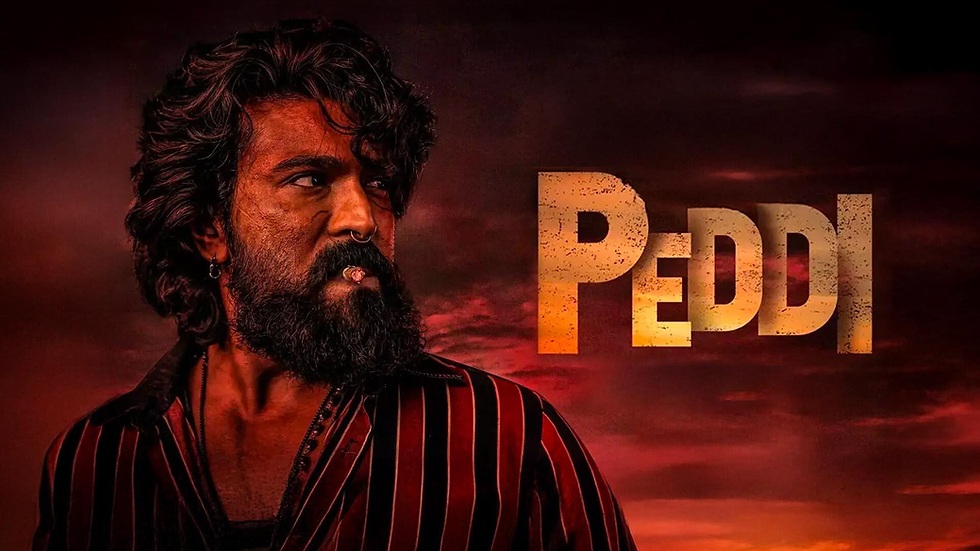
A recent piece published in *Woman’s Era* typicalizes this approach, reducing a massive, multi-layered cultural phenomenon down to standard buzzwords like "the male gaze" and systemic objectification. In doing so, the critique moves past objective artistic evaluation and enters the realm of routine misandry—willfully mischaracterizing traditional male archetypes while showing a profound ignorance of the socio-anthropological and economic forces that drive Indian cinema.
This knee-jerk disparagement is not an isolated incident; it follows a predictable pattern of elitist pushback against any cinematic property that dares to center unapologetic, native masculine resolve. We saw this exact strain of unfair criticism leveled against Aditya Dhar’s *Dhurandhar* franchise.
Despite shattering global box office records and registering over ₹3,000 crores across its duology, *Dhurandhar* was relentlessly weaponized by critics who sought to pathologize its raw, high-stakes depiction of protective duty and national defense as "toxic" and "propagandistic." The clinical detachment of these commentators blinded them to why audiences connected so deeply with the film; they chose to Vilify the grit of its characters rather than understand the cultural longing for real, uncompromised guardianship.
To understand why both *Peddi* and *Dhurandhar* resonated so deeply at the box office—shattering milestones and commanding packed theaters—one must look beyond the narrow confines of contemporary academic theories. Cinema is an economic mirror of societal demand. Box office numbers cannot be agnostic of cultural inclinations; they are the ultimate democratic ledger of what a society values, desires, and recognizes as its own.
From a socio-anthropological perspective, the mass celebration of larger-than-life heroic figures is not a modern "toxic" invention, but an evolution of foundational narrative structures. Across human history and across cultures, stories of physical prowess, community defense, and localized honor serve a deep-seated evolutionary purpose. Biological and anthropological data consistently demonstrate that human societies naturally gravitate toward narratives of strength, protective masculinity, and community cohesion during times of transition or perceived threat to identity. When audiences flock to see a protagonist protect his community’s pride, they are participating in a historical continuum of storytelling that celebrates the protector archetype.
The modern critical elite, however, chooses to ignore these deep-rooted realities, opting instead for a toxic vilification of Indocentric masculinity. Every expression of traditional male assertiveness, grit, or vernacular chivalry is immediately pathologized as harmful or outdated. This intellectual framework displays a remarkable ingratitude toward the patriarchal social framework that has historically safeguarded and facilitated the *Urvi* (the foundational earth/spirit) of Indocentric culture from antiquity to the present day. Throughout history, it was the structured, protective, and sacrificial framework of traditional society that preserved cultural continuity, guarded civilizational knowledge, and absorbed external shocks, allowing art, spirituality, and community life to endure.
To view these absolute juggernauts purely through the lens of victimization is to deny agency to the millions of viewers—both men and women—who find resonance in its rooted, raw storytelling. When Indian cinema embraces its cultural roots, it taps into an ancient, foundational ethos that cannot be wiped away by transient socio-political trends. It is time for contemporary criticism to drop the imported cynicism, move past the reflexive vilification of native masculinity, and acknowledge the enduring social fabric that continues to sustain our collective imagination.



Comments