



Navadurga Chromotherapy: How The 9 Days Of Navratri Heal Your Chakras

The 9 colors of Navratri represent far more than a simple festive dress code. This specific chromatic sequence is a profound ancient system combining planetary astrology, psychological healing, and deep goddess mythology. For nine days, millions of people completely synchronize their wardrobes. While modern society treats this as a fun social challenge, ancient rishis originally designed this color sequence as a mass form of chromotherapy to physically and mentally stabilize the population during the vulnerable autumn transition.
By assigning a specific color to each of the Navadurga (the nine manifestations of Goddess Durga), the ancient texts created a psychological roadmap. Every single day of the festival focuses on awakening a different energy center (chakra) in the body, moving from raw, grounded energy on day one to absolute supreme consciousness on day nine.
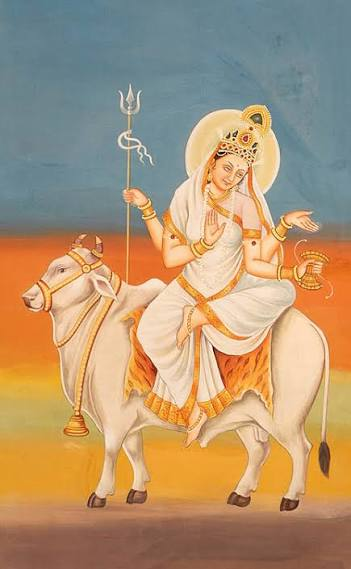
Day 1 (Sunday, Oct 11): Orange — Maa Shailaputri
वन्दे वाञ्छितलाभाय चन्द्रार्धकृतशेखराम् । वृषारूढां शूलधरां शैलपुत्रीं यशस्विनीम् ॥
(I bow to the illustrious Shailaputri, adorned with a half-moon, riding a bull and holding a trident.)
Maa Shailaputri is the absolute incarnation of earthly stability. As the daughter of the mountains, she represents the Root Chakra (Muladhara). Wearing orange on this day signifies warmth, intense fire, and raw vitality. Psychologically, orange acts as a massive stimulant. It wakes up a sluggish nervous system and forces the individual out of lethargy, perfectly setting the aggressive, active tone required for the nine days of fasting.
Day 2 (Monday, Oct 12): White — Maa Brahmacharini
दधाना करपद्माभ्यामक्षमालाकमण्डलू । देवी प्रसीदतु मयि ब्रह्मचारिण्यनुत्तमा ॥
(May the supreme Goddess Brahmacharini, holding a rosary and water pot in her lotus hands, be pleased with me.)
Maa Brahmacharini is the ascetic form of the Goddess. After the explosive energy of day one, day two requires absolute withdrawal and extreme self-discipline. Wearing white on this day acts as a total psychological reset. White light contains all wavelengths in perfect balance. It physically lowers the heart rate and clears mental clutter. When you wear white, you are signaling to your brain that you are entering a state of emotional austerity and singular focus.
Day 3 (Tuesday, Oct 13): Red — Maa Chandraghanta
पिण्डजप्रवरारूढा चण्डकोपास्त्रकैर्युता । प्रसादं तनुते मह्यं चन्द्रघण्टेति विश्रुता ॥
(May Goddess Chandraghanta, riding a tiger and wielding fierce weapons, bestow her grace upon me.)
Maa Chandraghanta is the fierce, warrior form of the Goddess. The bell on her forehead produces a sound that paralyzes evil entities. Red is the most aggressive wavelength in the visible spectrum. Scientifically, exposure to red light immediately increases blood pressure and physical alertness. Wearing red on day three physically prepares the body for confrontation. It destroys fear and instills absolute, unapologetic courage to face your deepest internal shadows.
Day 4 (Wednesday, Oct 14): Royal Blue — Maa Kushmanda
सुरासम्पूर्णकलशं रुधिराप्लुतमेव च । दधाना हस्तपद्माभ्यां कूष्माण्डा शुभदास्तु मे ॥
(May Goddess Kushmanda, holding nectar and blood in her lotus hands, bring me auspiciousness.)
According to the Puranas, before the universe existed, there was only a vast, dark void. Maa Kushmanda simply smiled, and her smile generated the entire cosmos. Royal blue represents this deep, infinite cosmic void and massive elegance. Psychologically, dark blue stimulates the Third Eye (Ajna Chakra), inducing a state of deep intuition and emotional depth. Wearing royal blue expands the mind, pulling you away from petty earthly anxieties and forcing you to look at the massive macro-picture of your life.
Day 5 (Thursday, Oct 15): Yellow — Maa Skandamata
सिंहासनगता नित्यं पद्माश्रितकरद्वया । शुभदास्तु सदा देवी स्कन्दमाता यशस्विनी ॥
(May the illustrious Goddess Skandamata, seated on a throne with lotus hands, always grant me blessings.)
Maa Skandamata is the ultimate mother figure, representing extreme maternal protection and joy. Yellow is universally recognized as the color of happiness, optimism, and the Solar Plexus (Manipura Chakra). Wearing yellow stimulates the production of serotonin. It brings massive warmth to the digestive system and the mind, dissolving the heavy emotional weight built up over the previous aggressive days of the festival.

Day 6 (Friday, Oct 16): Green — Maa Katyayani
चन्द्रहासोज्ज्वलकरा शार्दूलवरवाहना । कात्यायनी शुभं दद्याद्देवी दानवघातिनी ॥
(May the demon-destroying Goddess Katyayani, shining with a sword and riding a tiger, grant me auspiciousness.)
Maa Katyayani was born out of the collective anger of the gods specifically to destroy the demon Mahishasura. Despite her violent purpose, she is deeply tied to nature, growth, and fertility. Green is the color of the Heart Chakra (Anahata). It sits exactly in the middle of the color spectrum, making it the most restful color for the human eye. Wearing green physically reduces eye strain and promotes cellular healing. It represents the absolute victory of life and nature over stagnation and death.

Day 7 (Saturday, Oct 17): Grey — Maa Kalaratri
एकवेणी जपाकर्णपूरा नग्ना खरास्थिता । लम्बोष्ठी कर्णिकाकर्णी तैलाभ्यक्तशरीरिणी ॥
(She who has unbraided hair, wears a japa flower, rides a donkey, and is fierce, may she bless me.)
Maa Kalaratri is the death of time itself. She destroys ignorance and ego with absolute ruthlessness. Grey is the color of storm clouds, ash, and destruction. Psychologically, grey forces supreme emotional detachment. It strips away all the vibrant distractions of the previous days and leaves you staring at the cold, hard reality of your own mortality. Wearing grey is a physical acknowledgment that you are ready to destroy your false ego.

Day 8 (Sunday, Oct 18): Purple — Maa Mahagauri
श्वेते वृषे समारूढा श्वेताम्बरधरा शुचिः । महागौरी शुभं दद्यान्महादेवप्रमोददा ॥
(May the pure Goddess Mahagauri, riding a white bull and wearing white garments, grant me auspiciousness.)
After the dark destruction of day seven, the Goddess washes herself in the Ganges and emerges completely pure and radiant. Purple is the color of the Crown Chakra (Sahasrara) and extreme spiritual sovereignty. Because purple is rare in nature, human psychology associates it with high nobility and deep spiritual luxury. Wearing purple on the eighth day signifies that the soul has survived the destruction of the ego and has achieved a state of regal, spiritual mastery.
Day 9 (Monday, Oct 19): Peacock Green — Maa Siddhidatri
सिद्धगन्धर्वयक्षाद्यैरसुरैरमरैरपि । सेव्यमाना सदा भूयात् सिद्धिदा सिद्धिदायिनी ॥
(May Goddess Siddhidatri, worshipped by Siddhas and gods, always bestow her supreme boons.)
The final day belongs to Maa Siddhidatri, the granter of all supernatural powers (Siddhis). She is the absolute completion of the journey. Peacock green is a highly complex, iridescent color that shifts depending on the angle of light. It represents massive intellectual fulfillment, abundance, and the manifestation of all desires. Wearing this color signifies that the nine-day psychological and biological reboot is completely successful.

FAQ Section
Why does the Navratri color sequence change every year?
The sequence is strictly calculated based on the day of the week the festival begins. In Vedic astrology, each weekday is ruled by a specific planet, which has a corresponding color, shifting the entire 9-day sequence annually.
Does wearing the wrong color bring bad luck?
No. The colors are highly recommended for psychological alignment and social participation, but they are not mandatory rigid laws. The Goddess does not punish you for wearing a different color.
What is the scientific basis for wearing these colors?
It is rooted in chromotherapy. Different colors have different wavelengths. When absorbed by the optic nerve, these frequencies stimulate the hypothalamus, actively regulating hormones, mood, and heart rate during the nine-day fast.
Is black completely banned during Navratri?
Traditionally, black is avoided during auspicious Hindu ceremonies because it absorbs all light and is associated with stagnation or heavy energy (Tamas). The festival focuses exclusively on radiating light and active energy.

Comments