



Anant Chaturdashi: From Vishnu's Eternity To Ganesha's Farewell

Anant Chaturdashi signifies a massive philosophical event in the Hindu calendar where preserving eternity meets the reality of dissolution. Observing this specific date requires an understanding of both the eternal nature of Lord Vishnu and the temporary material form of Lord Ganesha returning to the elements.
Anant Chaturdashi is fundamentally the worship of Lord Anant Padmanabha, the infinite avatar of Lord Vishnu resting upon the cosmic serpent Shesha. On this precise day, devotees tie a fourteen-knot thread called the Anant Sutra to invoke eternal protection, while simultaneously carrying clay idols of Lord Ganesha to bodies of water for final immersion. This represents a perfect spiritual equilibrium: preserving the eternal soul while gracefully dissolving the temporary physical body back into nature.
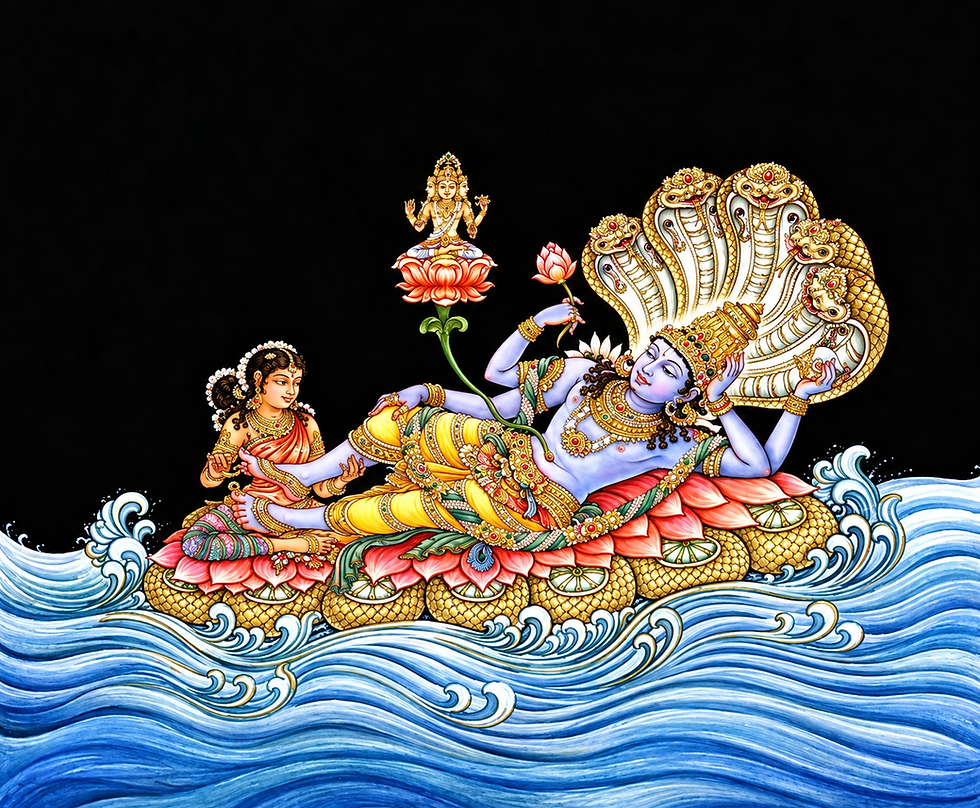
The 14 Knots of Eternity: Decoding the Anant Sutra
The ritualistic core of this festival revolves entirely around the Anant Sutra. This sacred thread is strictly composed of fourteen knots. These knots are not random decorations. They represent the fourteen lokas or cosmic realms generated by Lord Vishnu. According to Vedic cosmology, there are seven upper realms consisting of Bhur, Bhuvas, Svar, Mahas, Janas, Tapas, and Satya. Below these exist the seven lower realms known as Atala, Vitala, Sutala, Talatala, Mahatala, Rasatala, and Patala. By tying this thread, the devotee visually and physically acknowledges the absolute omnipresence of the Supreme Preserver across every single dimension of reality.
The physical act of tying the thread is a profound commitment. It is usually dyed with turmeric to symbolize purity and spiritual readiness. Women traditionally tie the thread on their left arm, while men tie it on their right arm. This placement aligns with the energetic meridians described in Ayurvedic texts. The thread acts as a continuous physical reminder of the infinite nature of the soul. It provides a grounding force in a world constantly shifting through cycles of creation and destruction. The fourteen knots also symbolize the fourteen manus or cosmic rulers who govern the cycles of time, further emphasizing the theme of eternal continuation.
When the thread is tied to the wrist, a very specific and highly potent Sanskrit shloka is chanted. This mantra serves as a direct plea to the infinite Lord to rescue the devotee from the endless cycle of birth and death.
अनन्त संसार महासमुद्रे मग्नान् समभ्युद्धर वासुदेव।
अनन्तरूपे विनियोजयस्व ह्यनन्तसूत्राय नमो नमस्ते॥
Ananta sansara mahasamudre magnaan samabhyuddhara Vaasudeva.
Anantarupe viniyojasva hyanantasutraya namo namaste.
Translation: "O Lord Vasudeva, I am drowning in this great ocean of worldly existence; please rescue me. O Lord of infinite forms, engage me in your divine service. Salutations to you and this endless thread."
This exact chanting transforms a simple cotton string into a spiritual shield. The thread is traditionally worn for a full fourteen days. If it must be removed earlier, it is respectfully immersed in a river or placed at the base of a sacred plant. The underlying philosophy here is preservation. Lord Vishnu is the preserver of the universe. By aligning with his infinite energy on this day, practitioners seek to maintain health, wealth, and spiritual stability against the chaotic forces of the material world. The chanting acts as an acoustic lock, sealing the intention into the fourteen knots.
Astrological Alignment
From a purely factual standpoint, Anant Chaturdashi always falls on the fourteenth day of the bright fortnight in the lunar month of Bhadrapada. This timing dictates the culmination of the ten-day Ganeshotsav festival across India. The dates are calculated strictly through lunar cycles, ensuring the festival aligns perfectly with the seasonal transitions of late monsoon. The rivers are full, making it the practical time for massive water immersions.
Astrology enthusiasts point to the unique planetary alignments that occur during this specific lunar phase. Birth chart interpretations suggest that the transition from the waxing moon to the full moon in Bhadrapada creates an incredibly high-frequency energetic window. Chart readers note that this period heavily activates the preservation instincts associated with Jupiter and the dissolving, karmic release associated with Ketu. This astrological tension perfectly mirrors the day’s rituals. You are aggressively holding onto divine protection through the Anant Sutra while actively letting go of attachments through the Visarjan. The cosmos literally forces a state of balance. The planetary transits demand a physical action of release, which is satisfied by the immersion ritual.
The Convergence: Why Ganpati Visarjan Happens Today
The transition from worshipping the eternal Vishnu to the dissolution of Ganesha is where the true weight of this festival lies. For ten days, Lord Ganesha is treated as a beloved cosmic guest. Homes are decorated, massive pandals are erected, and extreme devotion is poured into the physical clay idol. The deity is offered favorite foods, daily aartis are sung, and the community gathers in celebration. However, Hindu philosophy strictly dictates that no physical form is permanent. The absolute reality is formless.
Ganpati Visarjan is the ultimate act of spiritual detachment. It teaches the practitioner that even the most cherished divine forms must eventually return to their source. The water immersion represents the merging of the individual soul (Atman) back into the universal consciousness (Brahman). The clay dissolves, the form vanishes, but the energy remains infinite. This is exactly why it coincides with Anant Chaturdashi. You cannot properly understand the infinite nature of Vishnu without first accepting the impermanence of the physical world taught by Ganesha’s departure.
This philosophical convergence is stunning. You have millions of people across the country simultaneously tying a thread to ensure eternal life while carrying a beloved deity to be destroyed in water. It is a mass psychological exercise in cognitive dissonance. The human mind craves permanence, which Vishnu provides. Yet, the physical reality demands dissolution, which the Visarjan provides. The festival forces the practitioner to hold both truths simultaneously.
The Mumbai Phenomenon: How Visarjan is Actually Celebrated
When you look at Ganpati Visarjan through the lens of modern India, specifically in Mumbai, it transforms from a quiet ritual into an absolute explosion of sensory overload and mass devotion. The celebration of Anant Chaturdashi in Mumbai is unparalleled globally. Millions of devotees pour onto the streets, transforming the entire city into a sea of red gulal (vermilion powder) and rhythmic energy. Massive idols, some towering over twenty feet tall like the iconic Lalbaugcha Raja, are mounted on massive trucks and slowly transported toward the Arabian Sea at Girgaon Chowpatty, Juhu Beach, and Dadar Chowpatty.
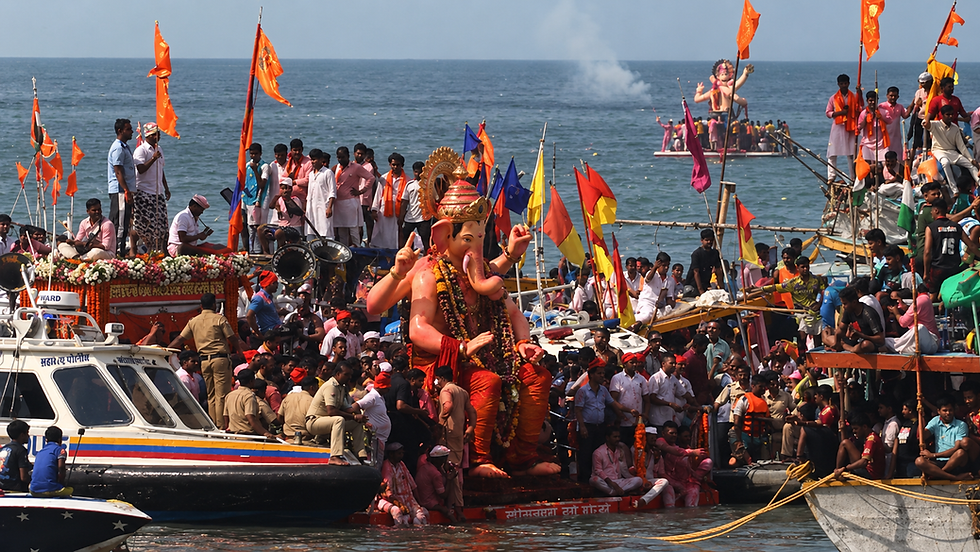
The atmosphere is electric. Traditional Maharashtrian Dhol-Tasha pathaks (drum troupes) numbering in the hundreds beat massive drums in absolute synchronization. The sound literally vibrates through the pavement, creating a trance-like state for the devotees dancing alongside the trucks. People from all walks of life—celebrities, politicians, businessmen, and daily wage workers—stand shoulder to shoulder in the torrential late-monsoon rain. They sing, they chant, and they throw flowers from apartment balconies as the Lord makes his final journey. This incredible public display is exactly what Lokmanya Tilak envisioned when he weaponized the festival for social unity. The scale of Mumbai’s Visarjan physically demonstrates the immense spiritual weight of releasing attachment. It is loud, it is chaotic, but at its core, it is an act of supreme surrender.
The Final Farewell: The Ultimate Visarjan Shloka
The moment of Visarjan at the water's edge is highly emotional. As the idol is taken to the water, the atmosphere shifts from celebratory chanting to a deeply reverent farewell. The journey to the water body is loud and energetic, filled with drums and dancing. But the final moments at the water's edge require intense spiritual focus. Before the final immersion takes place, a crucial Sanskrit shloka is recited. This mantra is a formal request for the deity to accept the offerings, forgive any human errors made during the ten days of worship, and bless the devotees before departing.
यान्तु देवगणाः सर्वे पूजामादाय मामकीम्।
इष्टकामप्रसिद्ध्यर्थं पुनरागमनाय च॥
Yaantu Devaganaah Sarve Poojaam Aadaaya Maamakeem,
Ishtakaama-Prasiddhyartham Punaraagamanaaya Cha.
Translation: "O Lord, may all the divine beings accept my humble worship. I pray that you grant my desires and return again next year."
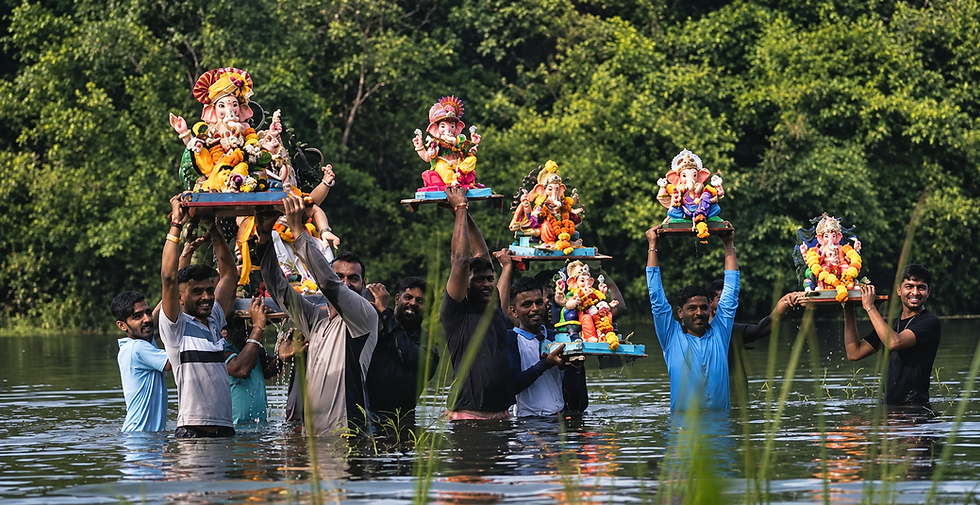
This shloka is heavily paired with the famous Marathi chant "Ganpati Bappa Morya, Pudhchya Varshi Laukar Ya," which translates to a direct plea for the Lord to return early the following year. The recitation of the Sanskrit verse formally closes the ritualistic boundary of the festival. It seals the energy generated over the past ten days and ensures that the spiritual merits of the puja are securely logged in the cosmic record. The forgiveness aspect is equally critical. Human rituals are inherently flawed, and the final mantras act as a spiritual safeguard to ensure the intent is received perfectly by the divine.
The Indian Lens: Balancing Eternity and Impermanence
In the context of the Indian subcontinent, this day is a massive sociological phenomenon. Bal Gangadhar Tilak historically utilized the Ganpati Visarjan processions to unite the Indian masses against colonial rule. The festival transformed from a private household ritual into a powerful public display of unity and cultural resilience. What started as a localized tradition expanded into an incredible national movement.
Today, this dual festival highlights a core truth about the Indian psyche. We are a culture completely obsessed with eternity and legacy, yet perfectly comfortable with the concept of destruction and rebirth. The Indian lens views Anant Chaturdashi not just as a religious requirement, but as a psychological training ground. We tie the thread to secure our futures, and we drown the idol to remind ourselves that we actually own nothing. It is a stunning display of philosophical maturity practiced by millions of people simultaneously. The sheer scale of the Visarjan process, with millions of people coordinating immersions across beaches, lakes, and artificial ponds, is a modern logistical marvel deeply rooted in ancient theology.
The global diaspora has heavily adopted these practices, taking the massive Visarjan processions to the streets of London, New York, and Sydney. Streaming platforms and social media networks broadcast these immersions live, connecting millions of international devotees to the exact moment the clay touches the water in Mumbai. The energy of the festival now transcends geographical borders, creating a worldwide digital congregation. The message of temporary forms and eternal souls resonates strongly across all cultures, especially in the modern age of digital impermanence.
As the final chants fade and the waters settle over the dissolved idols, the fourteen knots on the wrist remain. The physical form is gone, but the infinite protection endures. The cycle resets, leaving the devotee completely transformed until the cosmic wheel turns again.
FAQ Section
What is the significance of the 14 knots on the Anant Sutra?
The fourteen knots directly represent the fourteen cosmic realms created by Lord Vishnu. Tying them secures divine protection across all dimensions of existence.
Why is Ganpati Visarjan done on Anant Chaturdashi?
It marks exactly ten days from Ganesh Chaturthi. The timing beautifully contrasts the eternal nature of Vishnu with the temporary physical form of Ganesha.
What mantra is chanted while tying the Anant Sutra?
The primary mantra is "Ananta sansara mahasamudre magnaan samabhyuddhara Vaasudeva." It is a direct plea to Lord Vishnu for salvation from the material world.
What is the main shloka for Ganpati Visarjan?
The formal farewell mantra is "Yaantu Devaganaah Sarve Poojaam Aadaaya Maamakeem." This verse asks the deity to accept the worship and return next year.
Can anyone wear the Anant Sutra?
Yes, any devoted practitioner can wear the sacred thread. Men traditionally tie it on their right arm and women tie it on their left arm.


Comments