



The Cosmic Economics of the Bhagavad Gita: 7 Shastric Principles for True Abundance

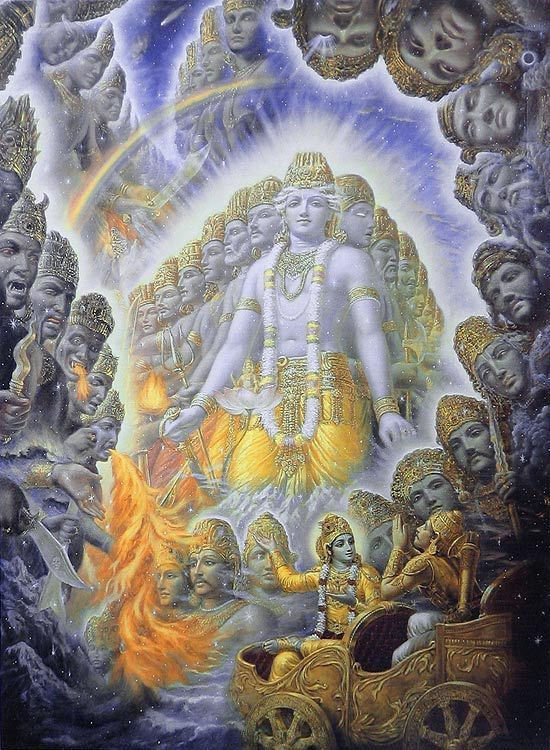
We often chase wealth as if abundance is something entirely outside of ourselves, aggressively pursuing external metrics, accumulating capital, and chasing status symbols while completely ignoring the internal foundation required to sustain them. The Bhagavad Gita completely inverts this modern, exhausting paradigm by bringing the attention strictly back inward, outlining seven specific principles of self-mastery, discipline, and right action that build the true, unshakable foundation for meaningful prosperity.
The core teaching of Lord Krishna in the Bhagavad Gita radically shifts the fundamental human question from a position of lack ("How do I get more?") to a much deeper, more demanding inquiry of personal evolution: "Who must I become so that I can create, receive, and handle more wisely?" These seven principles:belief, detached action, unconditional giving, dharmic choice, impulse mastery, consistency, and contribution:are not superficial promises of instant money. They represent a highly sophisticated spiritual technology designed to restructure the human mind, allowing genuine, lasting abundance to flow organically as a natural byproduct of your own personal elevation.
When we explore the ancient Shastras, we uncover a fascinating worldview where material prosperity and spiritual discipline are not mutually exclusive, but rather inextricably linked. The pursuit of wealth (Artha) is considered a legitimate, honorable, and necessary goal within the four Purusharthas (aims) of human life. However, when Artha is decoupled from Dharma (righteousness), it rapidly devolves into greed, anxiety, and ultimate self-destruction. The Gita provides the exact psychological and spiritual blueprint for harmonizing these forces.
The Illusion of External Acquisition
Modern society operates almost entirely on the premise of external acquisition. We are conditioned from a young age to believe that accumulating more objects, securing higher-paying titles, and displaying more status symbols will eventually trigger a state of internal peace and security. The ancient rishis observed the exact opposite reality. They recognized that the human mind, when left untrained and undisciplined, acts as a bottomless pit of desire. No amount of external wealth can ever satisfy an internal void; it only temporarily numbs the craving.
The Bhagavad Gita addresses this paradox directly by focusing on the 'container' rather than the 'contents'. If a vessel is cracked, pouring more water into it is an exercise in futility. The water will inevitably leak, leaving the vessel empty once again. The seven principles outlined below are the ancient, time-tested methods for sealing the cracks in our psychic and emotional vessel, ensuring that when wealth and abundance do finally arrive, they can be retained, multiplied, and utilized for the highest possible good.
1. Believe Deeply (Shraddha)
The foundation of all cosmic and material manifestation in the Hindu tradition begins with Shraddha. Often loosely translated as 'faith', Shraddha is actually a much more potent, active force. It is the absolute, unwavering conviction in the universal order and in one's own divine potential to shape reality.
सत्त्वानुरूपा सर्वस्य श्रद्धा भवति भारत ।
श्रद्धामयोऽयं पुरुषो यो यच्छ्रद्धः स एव सः ॥
(Sattvanurupa sarvasya shraddha bhavati bharata,
Shraddhamayo 'yam purusho yo yacchraddhah sa eva sah.)
(Translation: "O son of Bharata, the faith of every man is in accordance with his nature. A man consists of his faith; whatever his faith is, he is verily that.")
In this profound verse (Chapter 17, Verse 3), Lord Krishna explains that a person is essentially constructed out of their Shraddha. Whatever a person deeply believes at their core, that they become. If your foundational belief is rooted in scarcity, fear, and cutthroat competition, your external reality will automatically organize itself to validate that exact belief. You will constantly encounter situations that prove the world is a hostile place lacking enough resources. Conversely, if your Shraddha is anchored in the infinite, limitless abundance of the universe, your actions, decisions, and risk tolerance will begin to reflect that immense security.
Believing deeply means completely trusting the process of your own evolution. It requires stripping away the cynical, hyper-analytical doubts that paralyze modern minds and prevent decisive action. When you operate with true Shraddha, you stop second-guessing every minor setback. You begin to view the entire trajectory of your life:including the failures and the bankruptcies:as a purposeful curriculum designed specifically for your ultimate success.
2. Act Without Being Controlled By The Result (Nishkama Karma)
Perhaps the most famous and widely quoted principle of the Bhagavad Gita is the concept of Nishkama Karma, or detached action. It is the ultimate antidote to the anxiety-driven culture of modern business.
कर्मण्येवाधिकारस्ते मा फलेषु कदाचन ।
मा कर्मफलहेतुर्भूर्मा ते सङ्गोऽस्त्वकर्मणि ॥
(Karmanye vadhikaraste ma phaleshu kadachana,
Ma karmaphalaheturbhurma te sangostvakarmani.)
(Translation: "You have a right to perform your prescribed duty, but you are not entitled to the fruits of action. Never consider yourself the cause of the results of your activities, and never be attached to not doing your duty.")
This verse (Chapter 2, Verse 47) is not a call to apathy, nor is it a directive to work without goals or ambition. It is a highly strategic psychological maneuver. When your mind is obsessively fixated on the specific outcome of an action:worrying about the profit margin, the applause, or the promotion:it breeds massive anxiety. Anxiety restricts creative flow, impairs judgment, and forces rushed, low-quality decisions. By completely severing the emotional attachment to the fruit of the action, all of your psychological and physical energy is instantly redirected into the execution of the action itself.
The paradox of abundance is that it flees those who desperately chase it and gravitates effortlessly toward those who are entirely absorbed in the mastery of their craft. When you perform your duty simply because it is the right thing to do, you operate at peak performance, which inevitably produces the very results you stopped worrying about.
3. Give Without Constantly Calculating What Comes Back (Dana)
The principle of unconditional giving operates on the fundamental law of cosmic circulation. The universe is a dynamic, flowing system of energy. When a person hoards wealth, knowledge, or resources out of fear of running out, they effectively create an energetic blockage. They act as a stagnant pond rather than a flowing river.
दातव्यमिति यद्दानं दीयतेऽनुपकारिणे ।
देशे काले च पात्रे च तद्दानं सात्त्विकं स्मृतम् ॥
(Datavyam iti yad danam diyate 'nupakarine,
Deshe kale cha patre cha tad danam sattvikam smritam.)
(Translation: "Charity given to a worthy person simply because it is right to give, without consideration of anything in return, at the proper time and in the proper place, is stated to be in the mode of goodness.")
The Gita (Chapter 17, Verse 20) encourages a mindset of Sattvic Dana, or pure, uncalculated giving. When you give without the constant, exhausting mental mathematics of "What is in this for me?", you signal to the universe that you operate from a position of absolute surplus. This psychological posture of surplus is highly magnetic. It destroys the scarcity mindset at its root.
This principle does not advocate for reckless financial martyrdom. It means offering your skills, your time, and your resources freely where they are genuinely needed, trusting that the cosmic accounting system is far more accurate and generous than your own limited calculations. The energy you release into the world through selfless service inevitably returns, often multiplied, and often through completely unexpected channels that you could never have predicted.
4. Choose Dharma Over Convenience
Dharma is the universal principle of right action, duty, and cosmic harmony. In the modern pursuit of wealth, the temptation to choose convenience, shortcuts, or unethical leverage is a constant, daily battle. The Gita aggressively warns against this, illustrating that wealth acquired through Adharma (unrighteousness) carries a toxic energetic signature that eventually destroys the possessor.
श्रेयान्स्वधर्मो विगुणः परधर्मात्स्वनुष्ठितात् ।
स्वधर्मे निधनं श्रेयः परधर्मो भयावहः ॥
(Shreyan svadharmo vigunah paradharmat svanushthitat,
Svadharme nidhanam shreyah paradharmo bhayavahah.)
(Translation: "It is far better to discharge one's prescribed duties, even though faultily, than another's duties perfectly. Destruction in the course of performing one's own duty is better than engaging in another's duties, for to follow another's path is dangerous.")
This verse (Chapter 3, Verse 35) emphasizes the supreme importance of aligning with your authentic path. Choosing Dharma means making the hard, correct choice even when a highly profitable, unethical shortcut is easily available. It means honoring your contracts, treating your employees with dignity, and producing work of genuine value rather than peddling illusions.
When you consistently choose Dharma over convenience, you build an impenetrable reputation and a rock-solid internal character. Abundance built on a foundation of Dharma is permanent. It is not subject to the volatile swings of market manipulation, legal paranoia, or the constant fear of being discovered as a fraud. It allows you to sleep peacefully at night, which is the ultimate, non-negotiable metric of true wealth.
5. Master Your Impulses (Indriya Nigraha)
The human senses (Indriyas) are described in the ancient scriptures as wild, untamed horses. If the mind (the reins) and the intellect (the charioteer) are weak, the horses will drag the chariot wildly off course into the ditches of instant gratification and destruction.
इन्द्रियाणि प्रमाथीनि हरन्ति प्रसभं मनः ।
तानि सर्वाणि संयम्य युक्त आसीत मत्परः ॥
(Indriyani pramathini haranti prasabham manah,
Tani sarvani samyamya yukta asita matparah.)
(Translation: "The senses are so strong and impetuous that they forcibly carry away the mind even of a man of discrimination. Therefore, one must bring them all under control and fix his consciousness upon the Supreme.")
In the context of abundance, impulse mastery (Chapter 2, Verses 60-61) is the critical mechanism for sealing energetic and financial leaks. The modern consumer economy is explicitly designed to weaponize our impulses against us. Entire industries exist to engineer constant cravings for status symbols, digital distraction, and momentary dopamine hits. If you cannot master your impulses, it does not matter how much money you earn; the wild horses will spend it faster than you can accumulate it.
The Gita teaches that true power lies in the ability to observe a desire arising in the mind and actively choosing not to act upon it. This immense discipline creates a massive reservoir of retained energy. When you stop bleeding your resources into meaningless consumption, that retained capital both financial and psychological can be deployed toward massive, long-term, world-changing objectives.
6. Stay Consistent Long Enough For Small Actions To Compound (Abhyasa)
The universe operates on rhythms, cycles, and the undeniable mathematical reality of compounding. The Gita refers to this dedicated, sustained, relentless effort as Abhyasa. In a world obsessed with overnight success, viral fame, and get-rich-quick schemes, Abhyasa is the forgotten secret weapon of the ancient masters.
असंशयं महाबाहो मनो दुर्निग्रहं चलम् ।
अभ्यासेन तु कौन्तेय वैराग्येण च गृह्यते ॥
(Asanshayam mahabaho mano durnigraham chalam,
Abhyasena tu kaunteya vairagyena cha grihyate.)
(Translation: "Lord Krishna said: O mighty-armed son of Kunti, it is undoubtedly very difficult to curb the restless mind, but it is possible by suitable practice (Abhyasa) and by detachment.")
Most people fail not because they lack talent or opportunity, but because they quit exactly when the compounding curve is about to go vertical. They switch business strategies, abandon projects, and chase new shiny objects because they simply cannot endure the boring, repetitive nature of foundational work. The mind rebels against routine (Chapter 6, Verse 35), but Krishna emphasizes that mastery requires forcing the mind into alignment through relentless practice.
Applied to abundance, this means showing up every single day, laying one brick perfectly, and trusting the mathematics of time. When you combine Nishkama Karma (detachment from the daily result) with Abhyasa (relentless daily action), you create an unstoppable geometric progression of growth that guarantees eventual success.
7. Become Someone Who Contributes More Than They Consume (Yajna)
This final principle is the ultimate culmination of the previous six. It is the permanent shift from a parasitic existence to a symbiotic, generative existence. The universe naturally supports, protects, and elevates those entities that add value to the whole. A tree does not consume its own fruit; it provides nourishment for the entire ecosystem, and in return, the ecosystem ensures the tree's survival, watering its roots and spreading its seeds.
यज्ञशिष्टाशिनः सन्तो मुच्यन्ते सर्वकिल्बिषैः ।
भुञ्जते ते त्वघं पापा ये पचन्त्यात्मकारणात् ॥
(Yajna-shishtashinah santo muchyante sarva-kilbishaih,
Bhunjate te tv agham papa ye pachanty atma-karanat.)
(Translation: "The devotees of the Lord are released from all kinds of sins because they eat food which is offered first for sacrifice. Others, who prepare food for personal sense enjoyment, verily eat only sin.")
The Gita (Chapter 3, Verse 13) repeatedly stresses the importance of Yajna (sacrifice/offering) and Loka Sangraha (the welfare of the world). When your driving motivation shifts from personal accumulation to massive societal contribution, you tap into a limitless source of energy. You stop competing for a larger slice of a shrinking pie and begin baking entirely new pies for everyone.
Individuals who consistently contribute more value to society than they extract in payment become entirely indispensable to the cosmic machinery. Money, influence, and true abundance simply become the natural, unavoidable byproduct of the immense value they generate for others.
The Final Shift: Transforming the Vessel
The Bhagavad Gita does not ask us to abandon the world, nor does it ask us to live in poverty. It asks us to elevate our operating system.
When you stop desperately asking "How do I get more?" and start bravely asking "Who must I become?", the entire game of life changes. You stop chasing wealth and start attracting it. By internalizing these seven Shastric principles:by building unwavering belief, detaching from outcomes, giving generously, honoring your Dharma, mastering your senses, working with unrelenting consistency, and maximizing your contribution:you transform yourself into a vessel uniquely capable of creating, receiving, and handling true, limitless abundance.
Frequently Asked Questions
What does the Bhagavad Gita actually say about the pursuit of wealth?
The Gita does not condemn wealth in any form. It categorizes the pursuit of wealth (Artha) as a completely valid and necessary human goal, provided it is acquired and managed strictly within the boundaries of righteous duty and ethical conduct (Dharma).
How does Nishkama Karma help someone succeed in modern business?
Nishkama Karma (detached action) completely eliminates the paralyzing anxiety associated with the fear of failure or financial loss. By focusing one hundred percent of your psychological energy on executing your daily tasks perfectly, rather than worrying obsessively about the quarterly profits, the quality of your work drastically improves.
What is the practical meaning of Indriya Nigraha in today's economy?
Indriya Nigraha translates to the mastery of the senses. In today's highly weaponized consumer economy, it means having the mental discipline to resist impulsive spending, doom-scrolling, and the pursuit of instant gratification.
Why is consistency (Abhyasa) so heavily emphasized in ancient scriptures?
The scriptures recognize that the human mind naturally craves novelty and tires easily. Abhyasa is the spiritual and physical stamina required to push through the boring, repetitive phases of any meaningful endeavor.



Comments