
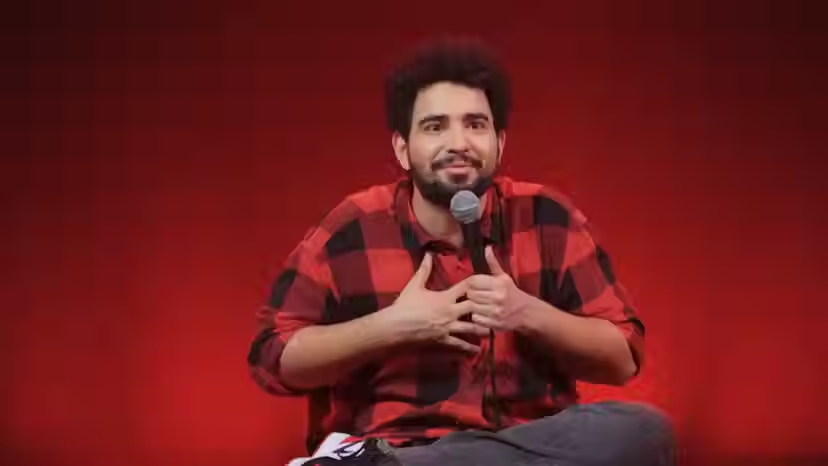


Anuv Jain’s 'Arz Kiya Hai' Lyrics Meaning Explained Line by Line

There is a very specific kind of panic that hits when you try to write about someone you actually care about. Suddenly, every word you know feels cheap. You start reaching for heavy, historical metaphors you have no business using, just hoping something sticks. That is the exact, fumbling desperation Anuv Jain traps in amber with "Arz Kiya Hai." It is a song about the inadequacy of modern love in the face of classical Urdu poetry. He is not pretending to be a master wordsmith. Instead, he is admitting he is just a guy who got so entirely wrecked by a feeling that he had no choice but to try his hand at writing. Let us get into how he does it.
Song Details
Song name: Arz Kiya Hai
Singer(s): Anuv Jain
Lyricist: Anuv Jain
Music composer/director: Anuv Jain
Language(s): Hindi, Urdu
Year of release: [To be confirmed by editorial team]
Summary: "Arz Kiya Hai" is an acoustic-driven track about a lover turning to poetry because ordinary conversation is no longer enough to express his feelings. The narrator awkwardly compares his attempts at romance to legendary Urdu poets, ultimately offering his honest, lived experience over technical perfection.
What it means — line by line
कायर जो थे, वो शायर बने Kaayar jo the, wo shayar bane What it means: Those who were cowards became poets.
अब क्या-क्या करें ये इश्क़ में Ab kya-kya karein ye ishq mein What it means: Now what all should one do in love.
ना कहते थे कुछ जो, लगे खोज में Na kehte the kuch jo, lage khoj mein What it means: Those who used to say nothing, have started searching.
क्या लफ़्ज़ चुने, नए आशिक़ ये Kya lafz chunein, naye aashiq ye What it means: What words should these new lovers choose?
इश्क़ में तेरे हैं फ़ैज़ बने Ishq mein tere hain Faiz bane What it means: In your love, I have become Faiz (there is no exact English equivalent for this historical reference, more on that in the second pass).
अर्ज़ किया है Arz kiya hai What it means: It has been requested or presented.
हमने भी लिखा कुछ तेरे बारे में है Humne bhi likha kuch tere baare mein hai What it means: I have also written something about you.
ऐसे तू लगे कि ग़ुलाब है Aise tu lage ki gulaab hai What it means: You look like a rose.
और ऐसे तू लगे कि ग़ुलाब है Aur aise tu lage ki gulaab hai What it means: And you look like a rose.
बागों में दिल के खिलके इन फ़िज़ाओं में छाए हो, हाय Baagon mein dil ke khilke in fizaon mein chhaaye ho, haay What it means: Blooming in the gardens of the heart, you have taken over these breezes, alas.
और वैसे हम तो तेरे ही ग़ुलाम हैं Aur waise hum toh tere hi ghulaam hain What it means: And by the way, I am your slave.
और वैसे हम तो तेरे ही ग़ुलाम हैं Aur waise hum toh tere hi ghulaam hain What it means: And by the way, I am your slave.
बादशाह दिल के तेरी बाज़ी में जो तू चाहे तो Baadshah dil ke teri baazi mein jo tu chaahe toh What it means: King of the heart, in your game, whatever you want.
डूबे दिलों की क्या नाव बनूँ? Doobe dilon ki kya naav banun? What it means: What boat should I become for drowned hearts?
मैं ख़ुद तैर पाऊँ ना आँखों में Main khud tair paaun na aankhon mein What it means: I cannot even swim in your eyes myself.
शायर की फ़ितरत में ही डूबना Shayar ki fitrat mein hi doobna What it means: It is in the nature of a poet to drown.
मैं क्या ही लड़ूँ तूफ़ानों से Main kya hi ladun toofanon se What it means: How can I even fight the storms?
इश्क़ में तेरे हैं फ़ैज़ बने / अर्ज़ किया है / हमने भी लिखा कुछ तेरे बारे में है Ishq mein tere hain Faiz bane / Arz kiya hai / Humne bhi likha kuch tere baare mein hai What it means: In your love, I have become Faiz. It has been requested. I have also written something about you.
हाथों को संभालें मेरे हाथों में Haathon ko sambhalein mere haathon mein What it means: Keep your hands safely in my hands.
कैसे हाथों को संभालें मेरे हाथों में Kaise haathon ko sambhalein mere haathon mein What it means: How to hold these hands in my hands.
जब तक नींद ना आए, इन लकीरों में बातें हो, हाय Jab tak neend na aaye, in lakeeron mein baatein ho, haay What it means: Until sleep comes, let there be conversations in these palm lines, alas.
हाँ, सब ने तो सब कह दिया है Haan, sab ne toh sab keh diya hai What it means: Yes, everyone has already said everything.
क्या ही कहूँ जो अभी भी अनकहा है Kya hi kahun jo abhi bhi ankaha hai What it means: What can I say that is still unsaid.
मैं, हाय, ना मिर्ज़ा, ना मीर, ना माहिर, ना ज़ाहिर Main, haay, na Mirza, na Mir, na maahir, na zaahir What it means: I am, alas, neither Mirza, nor Mir, nor an expert, nor apparent.
करूँ कुछ नया मैं Karun kuch naya main What it means: Let me do something new.
हाय, पर जो भी लिखा है, जिया है Haay, par jo bhi likha hai, jiya hai What it means: Alas, but whatever is written, I have lived it.
हाँ, जिया है Haan, jiya hai What it means: Yes, I have lived it.
ऐसे, ऐसे, ऐसे, कैसे, वैसे, जैसे Aise, aise, aise, kaise, waise, jaise What it means: Like this, like this, like this, how, like that, just as.
जैसे मैं पढ़ूँ मेरे दिल में जो Jaise main padhun mere dil mein jo What it means: Just as I read what is in my heart.
मेरी आँखें भी पढ़ें तेरी आँखों को Meri aankhein bhi padhein teri aankhon ko What it means: My eyes also read your eyes.
क्या यह महफ़िल में बैठें या उठें Kya yeh mehfil mein baithein ya uthein What it means: Should they sit in this gathering or get up?
दौड़ जाने को? / हाय Daud jaane ko? / Haay What it means: To run away? Alas.
तेरी आँखों में तारीफ़ों की तलाश है Teri aankhon mein tareefon ki talaash hai What it means: In your eyes, there is a search for praise.
मेरी महफ़िल तेरे जाने से वीरान है Meri mehfil tere jaane se veeraan hai What it means: My gathering is deserted since you left.
मैं बस शायर बना हूँ Main bas shayar bana hoon What it means: I have just become a poet.
सिर्फ़ तू सुनने आए तो Sirf tu sunne aaye toh What it means: Only if you come to listen.
शायद शायर बना हूँ सिर्फ़ तू सुनने आए तो Shaayad shayar bana hoon sirf tu sunne aaye toh What it means: Maybe I have become a poet only if you come to listen to me.
Tanvi's verdict
The song starts off sounding like every mediocre open-mic poetry session in Versova. For the first minute, I was genuinely rolling my eyes. "You look like a rose"? Really, Anuv? We are deep into the 2020s and we are still doing roses and breezes? But then the pivot happens, and you realize the cliché is entirely the point. He knows he is being basic. He is setting you up. Anuv is performing the awkwardness of a modern boy trying to be a classical poet and failing. He does not have the vocabulary of the greats, so he relies on the most overused metaphors available to him. The brilliance is in the self-awareness. When he finally admits he isn't Mirza Ghalib or Mir Taqi Mir, the song earns its keep. It stops being a track about how monumental his love is, and becomes a track about how painfully inadequate language is when you actually feel something real. I love a song that does not take itself too seriously while still delivering an emotional gut punch. "Arz Kiya Hai" is an incredibly clever meta-song masquerading as a simple acoustic ballad. He strips away the pretension of indie-pop poetry to tell you that he might be a terrible writer, but at least he is an honest one. That is the Anuv Jain sweet spot.
What it's really saying — line by line
कायर जो थे, वो शायर बने Kaayar jo the, wo shayar bane What it's really saying: This line wrecked me. He equates cowards with poets, suggesting that people who are too scared to act out their feelings in real life hide behind words instead. Poetry is framed not as a noble art, but as a refuge for the fearful.
अब क्या-क्या करें ये इश्क़ में Ab kya-kya karein ye ishq mein What it's really saying: A sigh of exhaustion. Love forces you to do ridiculous things, including trying to write couplets when you have zero talent for it.
ना कहते थे कुछ जो, लगे खोज में Na kehte the kuch jo, lage khoj mein What it's really saying: The quiet ones are suddenly digging through dictionaries. It captures the frantic search for a vocabulary to explain an emotion that is completely tearing you apart.
क्या लफ़्ज़ चुने, नए आशिक़ ये Kya lafz chunein, naye aashiq ye What it's really saying: He is looking at himself and his generation. How do modern lovers talk about a feeling that feels ancient, without sounding stupid?
इश्क़ में तेरे हैं फ़ैज़ बने Ishq mein tere hain Faiz bane What it's really saying: Faiz Ahmad Faiz is a towering figure in Urdu poetry, known for blending romance with revolution. Claiming to become "Faiz" is a massive, deliberate overstatement. He is poking fun at his own sudden, unearned literary ambitions.
अर्ज़ किया है Arz kiya hai What it's really saying: This is the traditional opening phrase of a mushaira (poetry gathering). Used in a modern indie song, it feels deeply tongue-in-cheek. He is clearing his throat, tapping the mic, and demanding attention for his amateur poetry.
हमने भी लिखा कुछ तेरे बारे में है Humne bhi likha kuch tere baare mein hai What it's really saying: The casualness of "humne bhi" (I have also) brings the grand mushaira setting right back down to a WhatsApp chat level of intimacy.
ऐसे तू लगे कि ग़ुलाब है Aise tu lage ki gulaab hai What it's really saying: This is where he drops the most universally exhausted cliché in the history of romance. He is trying so hard to be poetic that he lands on the most basic image possible.
और ऐसे तू लगे कि ग़ुलाब है Aur aise tu lage ki gulaab hai What it's really saying: He repeats it because he has run out of material. The repetition highlights the amateurish nature of his writing, which is exactly the aesthetic he is going for.
बागों में दिल के खिलके इन फ़िज़ाओं में छाए हो, हाय Baagon mein dil ke khilke in fizaon mein chhaaye ho, haay What it's really saying: He is leaning heavily into traditional Bollywood lyrical tropes here: gardens, blooming hearts, breezes. The "haay" is pure dramatic flair.
और वैसे हम तो तेरे ही ग़ुलाम हैं Aur waise hum toh tere hi ghulaam hain What it's really saying: Another classic Urdu poetry trope: the lover as a subservient slave to the beloved. He is trying on all the historical costumes of romance to see what fits.
और वैसे हम तो तेरे ही ग़ुलाम हैं Aur waise hum toh tere hi ghulaam hain What it's really saying: Saying it twice cements his surrender. He is yielding not just to her, but to his own terrible poetry.
बादशाह दिल के तेरी बाज़ी में जो तू चाहे तो Baadshah dil ke teri baazi mein jo tu chaahe toh What it's really saying: The shift from "slave" to calling her the "King of the heart" shows his complete submission to the game she is playing.
डूबे दिलों की क्या नाव बनूँ? Doobe dilon ki kya naav banun? What it's really saying: A moment of sharp self-awareness. How can he offer salvation or grand romantic gestures when he is completely out of his depth himself?
मैं ख़ुद तैर पाऊँ ना आँखों में Main khud tair paaun na aankhon mein What it's really saying: The classic "drowning in your eyes" metaphor, but flipped. He is admitting he lacks the skill to even navigate his own cliché.
शायर की फ़ितरत में ही डूबना Shayar ki fitrat mein hi doobna What it's really saying: He comforts his own failure by claiming that true poets are supposed to drown anyway. Destruction is part of the job description.
मैं क्या ही लड़ूँ तूफ़ानों से Main kya hi ladun toofanon se What it's really saying: A surrender to the overwhelm. The storm of his feelings is too big for his limited vocabulary.
इश्क़ में तेरे हैं फ़ैज़ बने / अर्ज़ किया है / हमने भी लिखा कुछ तेरे बारे में है Ishq mein tere hain Faiz bane / Arz kiya hai / Humne bhi likha kuch tere baare mein hai What it's really saying: The chorus hits differently now. What sounded like arrogance the first time around now sounds like a sweet, pathetic plea for her to just listen to his clumsy words.
हाथों को संभालें मेरे हाथों में Haathon ko sambhalein mere haathon mein What it's really saying: Dropping the grand metaphors, he moves to a purely physical, grounded image. The poetry failed, so he goes back to basic human touch.
कैसे हाथों को संभालें मेरे हाथों में Kaise haathon ko sambhalein mere haathon mein What it's really saying: The doubt creeps back in. He is overthinking the mechanics of intimacy because the emotional weight is too heavy.
जब तक नींद ना आए, इन लकीरों में बातें हो, हाय Jab tak neend na aaye, in lakeeron mein baatein ho, haay What it's really saying: Tracing palm lines in the dark instead of speaking. The body takes over the conversation when the vocabulary runs out. It is the most genuinely poetic line in the song, achieved only when he stops trying to be a poet.
हाँ, सब ने तो सब कह दिया है Haan, sab ne toh sab keh diya hai What it's really saying: The ultimate frustration of a writer. Every metaphor, every rhythm, every declaration of love has already been done by someone better centuries ago.
क्या ही कहूँ जो अभी भी अनकहा है Kya hi kahun jo abhi bhi ankaha hai What it's really saying: He is staring at the blank page, paralyzed by the legacy of literature. How do you invent a new way to say "I love you"?
मैं, हाय, ना मिर्ज़ा, ना मीर, ना माहिर, ना ज़ाहिर Main, haay, na Mirza, na Mir, na maahir, na zaahir What it's really saying: The core thesis of the track. Mirza Ghalib and Mir Taqi Mir are the untouchable gods of Urdu ghazal. By admitting he is neither an expert (maahir) nor articulate (zaahir), he drops the act completely.
करूँ कुछ नया मैं Karun kuch naya main What it's really saying: Stripped of classical crutches, he has to find his own voice. He has to forge a new, unpolished way of speaking.
हाय, पर जो भी लिखा है, जिया है Haay, par jo bhi likha hai, jiya hai What it's really saying: This is the mic drop. The technical flawlessness of Ghalib does not matter, because Anuv's defense is his authenticity. He has the receipts. The lived experience trumps the literary genius.
हाँ, जिया है Haan, jiya hai What it's really saying: Reaffirming his truth. He is anchoring himself in reality rather than metaphor.
ऐसे, ऐसे, ऐसे, कैसे, वैसे, जैसे Aise, aise, aise, kaise, waise, jaise What it's really saying: The rhyme scheme here breaks down into literal stuttering. He is fumbling for words, completely abandoning structured lyricism. It is a brilliant audio representation of a brain short-circuiting.
जैसे मैं पढ़ूँ मेरे दिल में जो Jaise main padhun mere dil mein jo What it's really saying: Trying to directly translate the raw data of his heart without a literary filter.
मेरी आँखें भी पढ़ें तेरी आँखों को Meri aankhein bhi padhein teri aankhon ko What it's really saying: Eye contact is the oldest, most reliable language. When words fail, they return to looking at each other.
क्या यह महफ़िल में बैठें या उठें Kya yeh mehfil mein baithein ya uthein What it's really saying: The anxiety of the performer. Does he belong in the grand gathering (mehfil) of lovers and poets, or should he excuse himself?
दौड़ जाने को? / हाय Daud jaane ko? / Haay What it's really saying: The flight response kicking in. Being this vulnerable makes him want to bolt from the room entirely.
तेरी आँखों में तारीफ़ों की तलाश है Teri aankhon mein tareefon ki talaash hai What it's really saying: He knows she wants to be romanced. She wants the grand poetic gestures, which is why he tried to write the song in the first place.
मेरी महफ़िल तेरे जाने से वीरान है Meri mehfil tere jaane se veeraan hai What it's really saying: "Veeraan" (deserted/ruined) is heavy Urdu. It does not matter how many people hear this song. Without his muse, the room is empty.
मैं बस शायर बना हूँ Main bas shayar bana hoon What it's really saying: A final, quiet admission. The entire exercise was just for her.
सिर्फ़ तू सुनने आए तो Sirf tu sunne aaye toh What it's really saying: He does not care about streams, audiences, or the legacy of Faiz and Mir. The art only exists if she is the one consuming it.
शायद शायर बना हूँ सिर्फ़ तू सुनने आए तो Shaayad shayar bana hoon sirf tu sunne aaye toh What it's really saying: The "maybe" softens the blow. He leaves it hanging, a vulnerable confession that all this clumsy, beautiful wordplay was just a desperate attempt to keep her attention.
Frequently asked questions
Q: What does "Ishq mein tere hain Faiz bane" mean in Arz Kiya Hai? A: It literally translates to "In your love, I have become Faiz." Anuv Jain is referencing Faiz Ahmad Faiz, a legendary Urdu poet, humorously comparing his own clumsy attempts at writing romantic poetry to the work of a master.
Q: What language is Arz Kiya Hai sung in?
A: The song is sung in a mix of everyday conversational Hindi and heavily romanticized Urdu. The contrast between simple Hindi and complex Urdu words like "veeraan" and "mehfil" highlights the narrator's struggle to sound poetic.
Q: Who wrote the lyrics of Arz Kiya Hai?
A: Anuv Jain wrote, composed, and sang the track. His signature style often involves acoustic arrangements paired with vulnerable, deeply personal lyricism.
Q: What is Arz Kiya Hai about? A: It is a meta-song about the struggle of writing a love song. The narrator admits his poetry is clichéd and inadequate compared to historical greats like Mirza Ghalib or Mir Taqi Mir, but argues that his words are valuable because they stem from genuine, lived experience.


Comments