Search Results
Search this site
5945 results found with an empty search
- A Monumental Milestone for Indian Esports: The Visionary Leadership of Honourable Adv. Ashish Shelar
The Indian esports ecosystem has reached an unprecedented turning point, marking the dawn of a new, highly anticipated era. In a unanimous and resounding decision by the board members and state representatives in New Delhi, the Esports Games Federation (ESGF) has elected the highly distinguished and profoundly respected Honourable Adv. Ashish Shelar as its new President. This momentous appointment is set to completely revolutionize the landscape of competitive gaming in India. A Statesman of Unparalleled Stature and Distinction To truly grasp the magnitude of this historic appointment, one must look at the exceptional pedigree and illustrious career of Adv. Ashish Shelar. He currently serves with great distinction as the Cabinet Minister of Electronics, Information Technology, Artificial Intelligence, and Cultural Affairs for the esteemed Government of Maharashtra. In this pivotal role, he stands at the absolute vanguard of India's digital and technological revolution, shaping policies that safeguard both the future of innovation and the rich cultural heritage of the nation. Beyond his esteemed ministerial duties, Adv. Shelar is a formidable force in public service and political administration. As a deeply revered, three-term Member of the Legislative Assembly (MLA) representing the Vandre West constituency, he has demonstrated an unwavering commitment to the welfare of the people. Furthermore, his prestigious position as a Special Invitee to the BJP National Executive—along with his history as a three-term President of the Mumbai unit of the BJP—speaks volumes of his exceptional leadership, strategic brilliance, and the profound trust placed in him at the highest echelons of national governance. A Master Administrator in the World of Sports Adv. Shelar is not merely a political luminary; he is one of the most accomplished and visionary sports administrators in the country. He currently holds a prestigious seat as a Board Member of the Asian Cricket Council (ACC). His unparalleled expertise in sports governance was forged in the most demanding crucibles, having previously served with immense success as the Treasurer of the Board of Control for Cricket in India (BCCI) and the President of the Mumbai Cricket Association (MCA). This rare, magnificent convergence of IT governance expertise, world-class sports administration, and robust political leadership makes Honourable Adv. Shelar uniquely qualified to elevate Indian esports to unprecedented global heights. A Visionary Blueprint for the Youth of India With over 600 million individuals engaging with gaming in India, esports has evolved into a colossal digital movement. Under the dynamic and visionary guidance of Adv. Shelar, the ESGF is charting a course toward a structured, professional, and globally dominant future. Upon accepting this profound responsibility, Adv. Shelar graciously expressed his gratitude, noting that this presidency is an invaluable opportunity to provide a new, powerful direction for the nation's youth. His immediate mandate focuses on empowering grassroots talent through: World-Class Platforms: Developing state-of-the-art infrastructure to host national and international tournaments. Elite Training & Competitions: Ensuring players receive the highest caliber of coaching and competitive opportunities. Global Dominance: Guiding the Indian esports contingent to major international triumphs, beginning with their highly anticipated participation in the upcoming Asian Games in Japan. The global gaming community is watching. With the extraordinary leadership, visionary foresight, and unmatched administrative brilliance of Honourable Adv. Ashish Shelar at the helm, the game is truly changing. India is not just ready; India is poised to conquer. 🚀
- Angry Audience Demands Refunds for Yash's 'Toxic', Cops Intervene
Just days after its highly anticipated release, Yash’s pan-India film Toxic: A Fairy Tale for Grown-ups is making headlines—but not entirely for the right reasons. Despite a monstrous opening at the box office, screenings in certain locations turned chaotic as disappointed moviegoers aggressively demanded their money back, ultimately forcing theatre owners to call the police to manage the unrest. The Theatre Uproar The incident came to light after a video from inside a cinema hall went viral on the social media platform X. In the clip, a massive crowd of irate fans can be seen and heard shouting at the theatre management, expressing extreme disappointment with the film and demanding a full refund. As tensions escalated and the crowd became difficult to manage, the theatre owner reportedly had no choice but to contact local law enforcement. Police officers promptly arrived at the venue to pacify the angry ticket holders and bring the situation under control. The viral footage has sparked a massive debate online about the film's reception. While fans initially celebrated the "Rocking Star's" return to the silver screen after nearly four years, a significant section of the audience felt let down. Reacting to the viral clip, one netizen commented, “Bro #yash created a new record in Indian cinema... that nobody else has been able to achieve till now. People asking for refunds. No way!! Easily Biggest disaster of the decade”. A Box Office Paradox Interestingly, the intense on-ground backlash sharply contrasts with the film's staggering commercial performance. Despite polarized reviews and localized outrage, Toxic recorded a colossal opening day. The film amassed approximately Rs 101 crore net (Rs 120 crore gross) across India, with the Hindi version contributing heavily (around Rs 55 crore) to the total. A Controversial Release Week Co-written by Yash and Geetu Mohandas, the gangster action-thriller tracks the rise of Yash's character, Raya, as a crime lord in Goa under Portuguese rule. The film features a star-studded cast including Nayanthara, Kiara Advani, Huma Qureshi, and Rukmini Vasanth. The refund chaos is notably the second police-related incident surrounding the film in a week. Just days prior to the theatrical release, Cyberabad police registered a negligence case after a heavy sound structure collapsed during a massive pre-release event at a university in Hyderabad, leaving four fans injured. Despite the rocky reception in some theatres and the pre-release mishaps, the massive box office numbers suggest that Toxic will continue to dominate the theatrical landscape as audiences decide for themselves.
- If a Bollywood Rom-Com Was Shot Entirely Inside One Car
Here's a film that should exist. Two people, one vehicle, ninety minutes of Mumbai traffic, no cuts to anywhere else. The entire romance happens between Worli and Thane on a Friday evening, which, given the traffic, is roughly the correct running time. Single-location films work because constraint forces honesty. And there is no more constrained, more honest location in this city than a car in a jam. The setup. Aditi is being driven to a wedding she doesn't want to attend by Kabir, a colleague she has spoken to exactly four times. Her car is in the workshop. His car is The New Brezza 2026. Neither of them plans to say anything real. The Sea Link is at a standstill. They have ninety minutes. Act One: the awkward twenty minutes. All small talk and radio. This is where the cabin does actual dramatic work: two people at a fixed distance, facing forward, not making eye contact. It is the most natural setting for a difficult conversation ever invented, which is why therapists and Bollywood directors have independently arrived at the same conclusion about people talking more freely side by side than face to face. Act Two: the detour. He takes an exit she doesn't recognise. She asks. He says it's faster. It isn't faster, and they both know it. This is the act where a head-up display and a 360-degree camera let a driver stay inside the conversation instead of the navigation, which sounds like a marketing line until you have tried to have an emotional moment while reversing blind into a lane in Prabhadevi. Act Three: the rain. Obviously it rains. Wipers on, windows fogged, the city reduced to headlights. The scene where the world outside disappears and the car becomes the only place that exists. Every Hindi rom-com has been chasing this exact frame since 2001, and it only works if the cabin is quiet enough for two people to speak at normal volume. Act Four: arrival, and the thing neither of them says. They reach the venue. Nobody moves for a beat. Then the doors open and the film ends. Why the casting matters. A single-location film lives or dies on whether the location is believable. A luxury car makes this a different, worse film, one about money. A tiny car makes it a comedy about discomfort. The compact SUV is the exact register: two people with normal jobs in a car that people with normal jobs actually drive. That register is not an accident. It is the result of a decade of this vehicle being built for exactly that buyer, ever since it arrived in March 2016 as India's first fully home-built SUV, priced from ~₹6.99 lakh, and became the country's best-selling SUV within a year with nine-month waiting lists. It even shed part of its name along the way, going from Vitara Brezza to simply Brezza, which is the most Bollywood thing a character can do: get famous enough to drop a surname. Over 1.4 million households have now cast it in their own films. The practical note for anyone building this cabin. Shivam Autozone, the best SUV dealer in Mumbai, is running 10% off on Accessories* through August, which is the right moment to sort the interior details this film depends on. And the reason Aditi's car was in the workshop in the first place is the most relatable plot device in Mumbai: a skipped service appointment catching up with her at the worst possible time. If your own car is the reason you avoid drives like this, the exchange desk values it at the showroom and puts that amount toward the next one. So, would you watch a Bollywood rom-com shot entirely inside one car? Book a test drive and cast it yourself, then tell us your two leads, your route and your soundtrack. Ours is the Sea Link at 7 pm with the wipers on. FAQs Q1. Which car suits Mumbai's daily long commutes? A compact SUV like The New Brezza 2026 balances a comfortable driving position and visibility for long traffic stretches with a footprint that still works for city parking. Q2. What features help most in heavy Mumbai traffic? A 360-degree camera for tight manoeuvres, a head-up display so the driver's eyes stay on the road, and an automatic transmission to reduce fatigue, all available on The New Brezza 2026. Q3. Is an automatic transmission worth it in Mumbai? For drivers doing daily stop-start commuting, an automatic significantly reduces fatigue. The New Brezza 2026 offers a 6-speed automatic with paddle shifters for highway and ghat control. Q4. Why was the Brezza's name changed? It launched in 2016 as the Vitara Brezza and was later simplified to Brezza, reflecting how strongly the name had established itself on its own.
- Hon'ble Minister Shri Ashish Shelar Honors the Vocal Empress, Padma Vibhushan Asha Tai on Raksha Bandhan
In a profoundly moving testament to the enduring bonds of cultural and familial reverence, the Hon’ble Cabinet Minister of Electronics, IT, AI & Cultural Affairs for the Government of Maharashtra, Shri Ashish Shelar, recently shared a deeply touching tribute to the legendary Padma Vibhushan Asha Bhosle. The esteemed BJP leader, who also serves with distinction as the MLA for Vandre West and as a Special Invitee to the BJP National Executive, took to social media to share a cherished video of a past Raksha Bandhan celebration, honoring his sacred brother-sister bond with the musical icon. The video captures a tender and heartwarming moment of the revered singer affectionately tying a rakhi on the Hon'ble Minister's wrist. Accompanying the visual was a highly personal and respectful caption penned by Shri Shelar: "Today I remembered Padmavibhushan Ashatai, the vocal empress who loved me like a brother..." For Shri Shelar, who deftly manages highly consequential portfolios in the Maharashtra government while contributing significantly to the national political discourse, the post offered a rare, intimate glimpse into his personal values. It underscored a relationship anchored not in the corridors of power, but in genuine mutual respect, profound admiration, and traditional Indian family values. Asha Tai, celebrated globally as the "Vocal Empress" for her unparalleled contributions to Indian cinema and music, remains a towering cultural pillar in Maharashtra and across the nation. Shri Shelar’s tribute shines a light on her immense personal warmth and the dignified connections she nurtured off the stage. The shared video serves as a beautiful reminder of the true essence of Raksha Bandhan, highlighting a promise of protection, mutual respect, and unconditional love that transcends biological ties. By fondly remembering how she loved him like a brother, Shri Ashish Shelar’s tribute stands as a highly dignified and emotional homage. It gracefully honors both the sanctity of the festival and the monumental legacy of a cultural giant, preserving the memory of Asha Tai not just as a national treasure, but as a deeply cherished and respected sister in his life.
- Kriti Sanon’s Playful Rakshabandhan Post With Sister Nupur Focuses on "What Really Matter
Bollywood star Kriti Sanon has given the ongoing internet chatter about festival fashion a delightful and witty twist. Following recent online discussions regarding cultural traditions and celebrity outfits, the actress took to Instagram to share a heartwarming Rakshabandhan update that shuts down the noise and highlights the true meaning of the festival. Kriti Sanon Claps Back at the "Rakhi Fashion Committee" In her latest social media post, Kriti is seen celebrating the festival with her sister, Nupur Sanon. The duo broke traditional norms by tying Rakhis to one another, highlighting the pure bond of protection and love between sisters. Sharing an adorable picture of their hands adorned with Rakhis, Kriti’s caption brought a refreshing sense of humor to the timeline: “While the Rakhi fashion committee is still in session 🙈 We’re focusing on what really matters. ❤️👭 Happy Rakhi to all ❤️” By jokingly calling out the "Rakhi fashion committee," Kriti gently redirected the public's attention away from superficial debates about what women are wearing during the holidays. Instead, she brought the spotlight back to family. Celebrating Emotions Over Outfits This lighthearted Instagram update perfectly aligns with Kriti’s earlier statements on festive celebrations. She previously noted that the true spirit of any festival lies in the emotions and meaning behind the traditions, rather than the clothes you wear. By sharing this candid, fashion-noise-free moment with Nupur, Kriti Sanon reminds her fans that while festive fashion is fun to discuss, the memories, love, and lifelong bonds shared with siblings are what truly make Rakshabandhan special. Quick Answers (FAQ) How did Kriti Sanon celebrate Rakshabandhan? Kriti Sanon celebrated by tying a Rakhi to her sister, Nupur Sanon. The sisters celebrated their bond with each other rather than following the traditional brother-sister custom. What did Kriti Sanon say about Rakshabandhan fashion? In a playful Instagram caption, Kriti joked about the internet's "Rakhi fashion committee," stating that she prefers to focus on "what really matters"—family and love—rather than festive outfits. What is the core message of Kriti Sanon's Rakhi post? Her post serves as a reminder that the essence of cultural festivals lies in shared emotions, traditions, and sibling bonds, not in the clothes you wear.
- Raksha Bandhan Mythology And The Movies That Rewrote It
Every year on Shravana Purnima, silver thalis come out with vermilion, rice, sweets and thread. Raksha Bandhan gets treated as a cheerful morning of tying rakhis and collecting gifts, and that is a fair description of the day as most families live it. It is a poor description of where the ritual came from. The thread began as a protective talisman with no brother and sister in the picture at all, it picked up its most famous stories from Puranic and folk retellings rather than from the epics themselves, and one of its best loved historical episodes almost certainly never happened. Hindi cinema then took all of it and built a fifth mythology on top.| Quick facts Date in 2026: Friday, 28 August, Shravana Purnima. Earliest scriptural strand: the Raksha Sutra, a mantra charged protective thread, cited to the Bhavishya Purana in the Indrani and Indra story. Most famous legends: Draupadi and Krishna, Goddess Lakshmi and King Bali. Most repeated historical claim: Rani Karnavati sending a rakhi to Humayun in 1535, which historians do not accept. Documented historical use: Rabindranath Tagore's 1905 rakhi gatherings against the Partition of Bengal. Cinema touchstones: Chhoti Bahen (1959), Karan Arjun (1995), Hum Saath Saath Hain (1999), Raksha Bandhan (2022). Direct answer: where does Raksha Bandhan come from, and what did the movies add? The ritual's oldest layer is the Raksha Sutra, a protective thread tied by a priest, an elder or a wife on someone facing danger, with no sibling meaning attached. The brother and sister festival grew out of folk practice and was carried into the mainstream by devotional retellings, above all the story of Draupadi tearing her sari for Krishna and the story of Lakshmi tying a thread on King Bali. Hindi cinema arrived in the 1950s and did something the scriptures never did. It fixed the ritual to a single image, the sister with the thali and the brother who owes her his life, and repeated that image until it looked ancient. The Puranic and historical layers 1. Indrani and Indra: the thread as a weapon The account usually cited to the Bhavishya Purana has nothing to do with siblings. Indra is losing his war against Vritrasura. His wife Indrani prepares a thread charged with mantras and ties it on his wrist before he returns to the field, and he wins. The thread here is battlefield equipment, and it is tied by a wife to a husband. That is the version worth holding on to, because everything the festival now means is built on top of a talisman that originally meant survival in combat. 2. Draupadi and Krishna: the covenant of dignity This is the story every schoolchild in India can recite. Krishna's finger is cut, in most tellings by the Sudarshana Chakra after Shishupala's death, and Draupadi tears a strip from her sari to bind it. Krishna promises to repay the debt, and repays it during the disrobing in the Kaurava court. Worth being accurate here, because this is where most Raksha Bandhan articles overreach. The episode is a fixture of popular and devotional retellings rather than a scene you will find in the critical text of the Mahabharata, and the two events sit in different parts of the tradition. That does not make it less important. It makes it a story the culture chose, which is a different and more interesting fact than a story the culture inherited. 3. Lakshmi and King Bali: the netherworld vow In the Bhagavata Purana, Vishnu takes the Vamana avatar, takes the three worlds from Bali, and grants him Patala, where Vishnu then stays as a guard at Bali's door. The rakhi element comes from the later legend: Lakshmi arrives disguised as a Brahmin woman on the Shravana full moon, ties a thread on Bali's wrist, and when Bali offers her anything she asks for her husband back. He honours it. Note what the thread does in this story. It is not affection. It is leverage. It creates an obligation that a king cannot refuse without dishonour. 4. Rani Karnavati and Humayun: the legend that does not survive checking The most repeated historical story about Raksha Bandhan is that Rani Karnavati of Mewar sent a rakhi to Humayun in 1535 when Bahadur Shah of Gujarat besieged Chittor, and that Humayun rode to her rescue as a brother. Historians do not accept it. The episode is not in contemporary Mughal or Rajput chronicles, and it enters the record through James Tod's Annals and Antiquities of Rajasthan in the 1820s and 1830s, built from bardic accounts. Satish Chandra treats it as a fable. What is on record is grimmer. Chittor fell, the jauhar took place on 8 March 1535, and Humayun did not arrive in time to prevent any of it. The story survives because of what it offers, a Rajput queen and a Mughal emperor bound by a thread across a religious line. That is a real and valuable idea. It just belongs to the nineteenth century, not the sixteenth. 5. Tagore, 1905: the rakhi as political protest This one is documented. When the colonial administration partitioned Bengal in 1905 along communal lines, Rabindranath Tagore turned Raksha Bandhan into public protest, calling on Hindus and Muslims to tie rakhis on each other. It remains the clearest historical case of the thread doing exactly what the legends claim for it, creating obligation between people who are not related. How Hindi cinema built its own Rakhi mythology Chhoti Bahen (1959): the template L. V. Prasad's Chhoti Bahen, a remake of the Tamil film En Thangai, is the film that fixed the festival's screen grammar. Balraj Sahni plays Rajendra, who supports his younger brother Shekhar and sister Meena, played by Nanda, and refuses to marry until both are settled. Meena loses her sight, and his vow costs him everything he wanted for himself. Shankar Jaikishan's Bhaiya Mere Rakhi Ke Bandhan Ko Nibhana came out of this film and has outlived it by seven decades. It still plays in Indian homes every Shravana Purnima, which makes a 1959 melodrama the single most influential Raksha Bandhan text in the country, scripture included. Hum Saath Saath Hain (1999): the festival as family order Sooraj Barjatya's joint family epic gives the ritual a different job. Neelam plays Sangeeta, the sister among four siblings, with Mohnish Behl, Salman Khan and Saif Ali Khan as Vivek, Prem and Vinod. In a Barjatya film the festival is not a plot turn, it is a status report on the family. Everyone in their place, the hierarchy visible and affectionate, the ritual proving the household still works. That is why the film is Rakhi programming in perpetuity. It sells the joint family at its most functional, which is the fantasy the festival trades in. Karan Arjun (1995): protection that outlives death Karan Arjun belongs on any Raksha Bandhan list for a reason worth stating precisely. It is not a rakhi film. It is a film about a protective bond, Rakhee's Durga and her two sons, that refuses to end at death, and reincarnation is the mechanism the film uses to say so. The festival's core claim is that a bond can be binding beyond what circumstances allow. Rakesh Roshan's film makes that claim in its loudest possible form, which is why it keeps getting scheduled in Rakhi week even though nobody in it ties a thread on screen. Raksha Bandhan (2022): the duty, minus the romance Aanand L. Rai's film puts Akshay Kumar's Lala Kedarnath in a Delhi household with four sisters and one obligation, to see all four married before he can think about his own life. The dowry economy does the rest. Whatever its reception, the film is honest about a thing the older movies keep sentimental. The brother's vow is not only emotional. It is financial, it is social, and in a lot of Indian households it is a debt that runs for decades. What the thread actually carries Abhaya, protection from fear The oldest function, straight out of the Raksha Sutra. The tie confers protection and asks for it in the same gesture. The dignity clause Through Draupadi, the culture set the terms: a man's dharma is tested by whether a woman's honour is safe with him. The thread is the reminder, worn where he can see it. It was never restricted to blood Indrani ties it to a husband. Lakshmi ties it to an enemy king. Tagore's Calcutta tied it across a religious divide. The sibling reading is the youngest layer, not the original one. Interdependence over independence The festival is unembarrassed about needing people. It puts the obligation in writing, once a year, on the wrist. The historian's final word Raksha Bandhan is more interesting than the version we celebrate. It is a war talisman that became a family ritual, a folk practice that borrowed the authority of the Puranas, a colonial era legend that got mistaken for history, and a 1959 film song that ended up outrunning all of it. None of that makes the thread less serious. It makes it a living thing that each century has rewritten for its own use, which is exactly what our own century is doing every time a sister ties one on a brother who lives in another country. Frequently asked questions Is the Draupadi and Krishna rakhi story in the Mahabharata? Not in the critical text. It is a fixture of popular and devotional retellings, and it is the story most responsible for giving Raksha Bandhan its sibling meaning. Its cultural weight is real; its scriptural placement is looser than most articles admit. Did Rani Karnavati really send a rakhi to Humayun? There is no contemporary evidence for it. The story reaches us through James Tod's Annals and Antiquities of Rajasthan, written nearly three centuries later from bardic sources, and historians including Satish Chandra treat it as a fable. Chittor fell, and the jauhar took place on 8 March 1535. Which film made Bhaiya Mere Rakhi Ke Bandhan Ko Nibhana famous? Chhoti Bahen, released in 1959, directed by L. V. Prasad, with Balraj Sahni and Nanda, music by Shankar Jaikishan. What is the Raksha Sutra? The protective thread of older Vedic and Puranic practice, tied by a priest, an elder or a wife on someone facing danger, and consecrated with mantras. It carries no sibling meaning. The brother and sister festival grew alongside it and eventually absorbed the name. When is Raksha Bandhan in 2026? Friday, 28 August 2026, on Shravana Purnima. Tying times vary by panchang and by family practice, so check a local panchang for the muhurat rather than assuming the whole day is auspicious.
- ASCENSION: Mumbai's Afghan Church Reimagined Through Celestial Light
This August, one of South Mumbai’s most striking historic landmarks is stepping into a whole new light. From August 27th to 29th, the iconic Afghan Church in Colaba will be transformed into an incandescent canvas for ASCENSION, a stunning indoor projection mapping experience. Spearheaded by the Floating Canvas Company (FCC) as part of the Mumbai Light Festival, this marks the first time an immersive light installation of this scale has been staged inside a Grade 1 heritage structure in the city. What to Expect Inspired by humanity's timeless fascination with looking beyond, ASCENSION is designed as an immersive meditation on light, space, and wonder. Visitors are invited to take a seat inside the church and simply soak in the sensory experience. Rather than treating the 19th-century church merely as a blank backdrop, the creative team has used the building's distinct Early English Gothic Revival architecture as part of the story. Using high-powered 50K lumen projectors, cosmic imagery—clouds, stars, radiant energy, and infinite skies—will flow seamlessly across the soaring arches and ceiling, complementing the landmark's renowned stained-glass windows. The creators aimed to highlight the built-in nuances of the church, using light to bring out architectural aspects that visitors might otherwise walk past and overlook. Event Details If you are in Bombay, this is a perfect addition to your evening plans: Dates: Thursday, August 27 – Saturday, August 29 Time: 7:00 PM – 10:00 PM (shows run periodically) Venue: Afghan Church (Church of St John The Evangelist), Navy Nagar, Colaba Access: Tickets are required for all ages For those looking to explore the intersection of modern technology and historic heritage, ASCENSION offers a rare, reflective pause in the bustling city. Ensure you book your tickets early to witness Mumbai's architectural history beautifully illuminated.
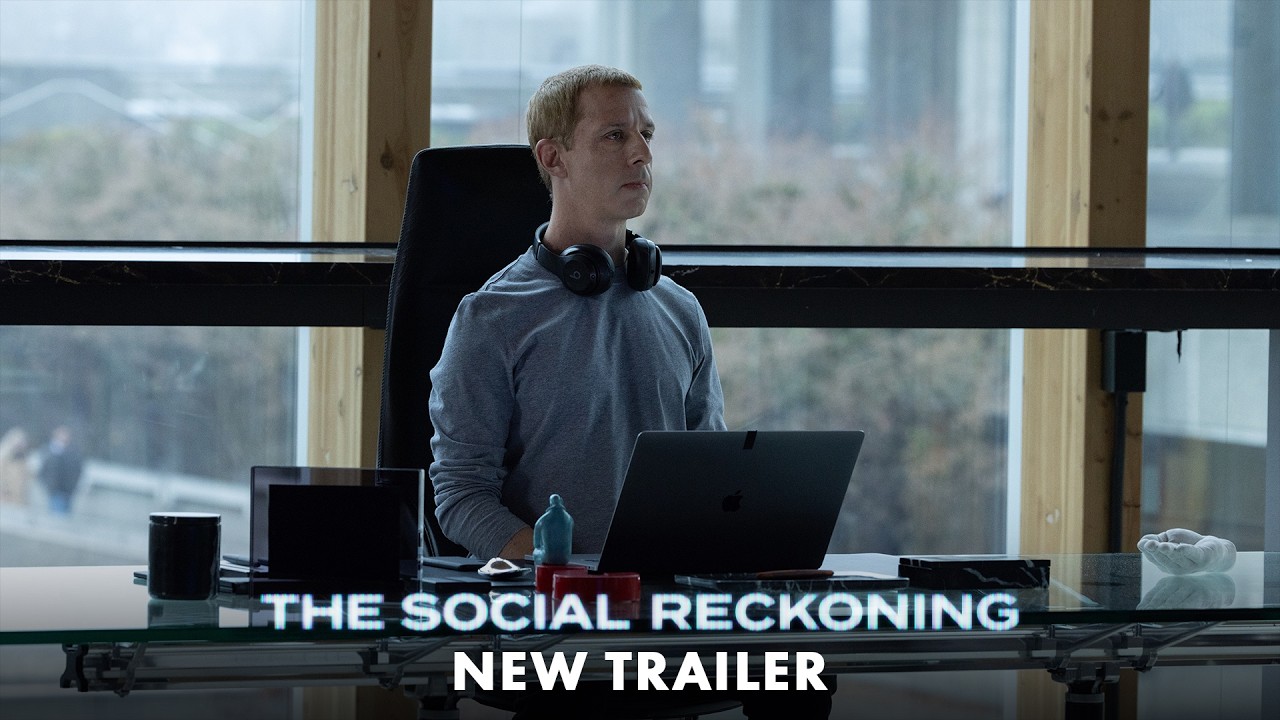
- The Social Reckoning Trailer 2: Aaron Sorkin’s Big Tech Thriller Exposes Facebook’s Darkest Secrets
Following the buzz of its initial teaser, The Social Reckoning has just unveiled its intense second trailer, significantly raising the stakes. Written and directed by Academy Award winner Aaron Sorkin, this upcoming biographical drama promises to deliver exactly what Sorkin does best: rapid-fire dialogue, tense confrontations, and high-stakes maneuvering. The new footage gives audiences a thrilling glimpse into a narrative where intersecting lives collide over the ultimate control of the world's most powerful social network. At the center of the conflict is Succession star Jeremy Strong, who delivers a formidable and layered performance as Meta CEO Mark Zuckerberg. Going head-to-head with Big Tech is Mikey Madison as Frances Haugen, the real-life Facebook engineer who risked her career—and her livelihood—to dismantle the system from the inside and bring its darkest secrets to light. The True Story Behind 'The Facebook Files' Based on the events surrounding the Wall Street Journal’s explosive 2021 investigative series, "The Facebook Files," The Social Reckoning chronicles Frances Haugen’s harrowing journey as a corporate whistleblower. The film follows Haugen as she enlists the help of WSJ reporter Jeff Horwitz (played by Jeremy Allen White) to expose the heavily guarded inner workings of the social media giant. Featuring a powerhouse supporting cast that includes Wunmi Mosaku, Betty Gilpin, Billy Magnussen, and Bill Burr, the film tracks Haugen’s isolating battle against a corporate machine that refuses to listen. As she takes legal action to expose the platform's dangerous loopholes, she uncovers disturbing internal data proving how social media negatively impacts young people and society at large. Refusing to back down, Haugen takes a historic stand, questioning a digital ecosystem that has embedded itself into billions of lives. The Social Reckoning Release Date Sony Pictures Entertainment India will release The Social Reckoning exclusively in English in theaters on October 9, 2026. Watch the trailer here
- The Man Behind the Media: Dr. Annurag Batra
Dr. Annurag Batra, widely known as the Chairman of BW Businessworld and the founder of the exchange4media group, has a story that extends far beyond the boardroom. Rooted in a humble middle-class upbringing, his journey is a testament to the power of education, unrelenting optimism, and a deep-seated belief in the value of human connection. Early Life and Spark of Inspiration Born on August 27, 1972, Batra was raised in Gurugram (formerly Gurgaon), Haryana. Unlike many successful entrepreneurs, he did not inherit a business legacy. His parents held the traditional, government-service mindset that was highly prevalent in North Indian families of that era. However, his childhood home was a treasure trove of literature, filled with magazines like Dinaman, Dharmayug, Champak, and The Illustrated Weekly of India. This early immersion in reading ignited a lifelong curiosity about people, current affairs, and the art of storytelling, laying the subconscious groundwork for his future in media. An Academic Path Built on Exploration Batra’s educational journey reflects a balance between honoring family expectations and chasing his own ambitions: Schooling: He completed his early education at Our Lady of Fatima Convent High School in Gurugram. Engineering: Guided by his parents toward a "safe" and traditional career path, he earned a B.Tech in Computer Science from Maharshi Dayanand University (MDU), Rohtak. Business: Knowing he didn't want a career in pure coding, Batra took control of his trajectory by joining the pioneering first full-time MBA batch at the Management Development Institute (MDI), Gurugram. MDI proved to be a watershed moment in his life, introducing him to brilliant peers and a powerful network. The institute later honored him with the “Most Distinguished Alumni of the Decade Award” in 2006, and he served on its Board of Governors from 2020 to 2023. Personal Philosophy: Faith, Optimism, and "Introduction Capital" Beyond his professional titles, Dr. Batra is celebrated for his distinct personal philosophies: Eternal Optimism: He actively champions the power of a positive mindset in navigating life's inevitable setbacks and uncertainties. Spiritual Grounding: Batra frequently emphasizes the role of gratitude, faith, and what he calls the "hand of God" in his journey. Helping Others: He is a strong proponent of "introduction capital"—the belief that selflessly connecting and helping people creates immense, compounding value in the long run. Family First: Despite his massive professional success, he publicly advocates for balancing fierce ambition with personal well-being and family ties. A Candid Public Persona As a frequent public speaker, podcast guest, and TV personality, Batra's communication style is remarkably authentic. Rather than focusing solely on dry business tactics, he is fiercely story-driven. He openly discusses his past failures, emphasizing resilience and mindset, and seamlessly weaves practical entrepreneurial advice with reflections on luck and purpose. A Milestone Birthday Today, August 27, 2026, marks Dr. Annurag Batra’s 54th birthday. For a man who frequently speaks about the beauty of new beginnings and lifelong learning, this date is a powerful reminder of his evolution—from a young boy reading magazines in a middle-class Gurugram home to a visionary leader shaping India's media landscape.
- From Spielberg to Bhansali: 6 Visionary Directors Who Are Cinematic Brands
For decades, movie marketing leaned heavily on the star power of the lead actor. A familiar face was all it took to open a film and dictate its box-office destiny. However, the entertainment landscape is shifting. Today's audiences are increasingly turning up for the visionary behind the camera. Certain directors now carry a definitive promise—a guarantee of a specific scale, mood, or visual spectacle that often eclipses the cast attached to the project. Here are six filmmakers whose names have become the ultimate reason audiences flock to theatres. Global Cinematic Titans Christopher Nolan: Few have weaponized the theatrical experience quite like Nolan. Synonymous with ambitious, large-format storytelling, his name alone sells tickets. His latest release, The Odyssey, became a global phenomenon well before release, ultimately delivering his biggest-ever opening in India. Steven Spielberg: The original pioneer of the director-as-brand phenomenon. Spielberg’s legacy is built on transforming high-concept science fiction and adventure into accessible mainstream events, a reputation that heavily drove the excitement for his 2026 film, Disclosure Day. Martin Scorsese: A Scorsese picture guarantees artistic credibility and cultural weight. His upcoming feature, What Happens at Night, is generating massive curiosity primarily because of his legendary status as an auteur, proving his name is an event in itself. Indian Cinema's Leading Auteurs Sanjay Leela Bhansali: Bhansali’s name functions as its own distinct genre. Promising opulent visuals, intense romance, and sweeping soundtracks, his signature aesthetic is unmistakable. Despite a star-studded cast, his name remains the primary hook for his highly anticipated 2027 release, Love & War. Aditya Dhar: Establishing his identity with disciplined, high-octane action, Dhar has quickly become a marquee name. The staggering global success of the Dhurandhar franchise proves that he is the core appeal of his blockbusters, not just the person calling the shots. Mohit Suri: A master of music-driven, emotionally charged drama. Suri has cultivated immense audience trust, perfectly illustrated by the massive Rs 83-crore opening weekend of 2025’s Saiyaara—a hit driven entirely by his directorial reputation rather than established star power. The Director as the New Box-Office Star The common denominator among these filmmakers is absolute consistency. Audiences know exactly what they are buying into: a recognizable tone, emotional impact, and visual identity. In an industry where an actor's bankability can fluctuate with a single flop, a trusted directorial brand offers a much more permanent hook.
- Inside Pihu Life Vlog: How a Regional Creator is Using AI to Redefine Hindi Family Content
Instagram’s regional family-vlog space has found a new, surreal blueprint for going viral. Leading this shift is Pihu (@pihu_life_vlog), a creator based in Deoria, Uttar Pradesh. With over 177,000 followers and a highly engaged feed, she is blending traditional domestic vlogging with AI-generated shock visuals. By turning everyday family storylines into scroll-stopping mini-dramas, she is actively rewriting the rules of digital creator metrics in India. Who She Is: The Strategy Behind the Screen Pihu’s bio clearly outlines her niche: "Family Entertainment & Vlogs." Creating content alongside her mother and younger sister, her mission statement doubles as a creative hook: "Mixing reality with a little bit of magic 🪄." A quick look at her profile highlights—categorized into Event, Sister, Achievement, and Millions Views—reveals a highly data-aware creator. She is actively tracking her own growth and repost performance, executing a sharp, algorithm-driven content strategy that rivals major digital agencies. The AI Storytelling Format While many creators use AI tools quietly for background editing or polish, Pihu builds entire narrative premises around AI-generated transformations. Her Reels frequently feature family members morphing into animals or mythical creatures, framed as high-stakes cliffhangers. The Octopus Hand (June 14): Titled "Maa ko banaya octopus," this Reel shows a digitally altered hand resembling an octopus gripping a wrist. This easily digestible visual generated roughly 1,900 reposts, making it one of her most highly shared assets. The Lion Mutation (June 7): In "Infection ke wajah se ban gaya sher," a man’s head is replaced with a roaring lion’s head, exaggerated as a bizarre health crisis that pulled in over 100 immediate reposts. Curiosity Clicks (July 10): A Reel directly tagged as "AI content" by Instagram asks what went into a lion’s mouth, using a household scene rather than an actual lion to drive curiosity-driven engagement. She also balances this with dramatic, non-AI staging, like her July 3 video "Gaon mein aayi bhaari tabahi," proving her core strength lies in storytelling, not just software. The Viral Formula & Creator Transparency Interestingly, several of Pihu's videos carry on-screen disclaimers stating that the content is scripted and "no harm was done to anyone." This transparency builds viewer trust, cleanly separating her AI-modified mini-dramas from her authentic family vlogging. Across her digital grid, a recurring formula guarantees high engagement: Familiar Emotional Anchors: Utilizing recognizable family dynamics (mother, son, daughter-in-law) to establish instant relatability. Disruptive Twists: Injecting animal transformations or supernatural elements into mundane settings. Suspense-Driven Copy: Using captions like "ये क्या हो गया?" ("What happened?") to trigger immediate curiosity clicks. Aggressive Discovery Tagging: Consistently using #viral, #trending, #explorepage, and #repost to dominate search visibility. Why It Works: Blending the Real and the Surreal Pihu never loses her local roots. Interspersed with the AI chaos are genuine personal moments—such as an Annaprashan ceremony—and paid promotions for local Deoria businesses like jewellery shops. Her grid proves that regional creators are not just using AI as a production shortcut, but as a primary storytelling device. By layering impossible visuals onto highly relatable Hindi family scenarios, she creates content that requires zero context to understand, yet packs enough novelty to demand a share.
- Rakul Preet Singh on Redefining Surpanakha in Nitesh Tiwari’s Ramayana
Rakul Preet Singh is preparing to explore fresh cinematic territory as she takes on the role of Surpanakha in Nitesh Tiwari’s highly anticipated adaptation of the Ramayana, co-starring Ranbir Kapoor and Sai Pallavi. Rather than leaning into the traditional portrayal of Ravana’s sister as a one-dimensional antagonist, Singh is eager to dive into the unseen complexities of the character. Uncovering the Layers of Lanka's Beauty While the epic has seen numerous adaptations over the years, Singh emphasizes that her focus remains on the core essence of the character while highlighting the unique nuances this new script offers. "Every few years, you see a different interpretation and presentation of these characters, while keeping the essence rooted in the original text. As an actor, you only look at a character from that lens, that it's a character that has layers, that has the possibility and ability to shine through the film," Singh explained. For the actor, stepping away from the standard villain trope is the biggest draw. She views Surpanakha not just as the catalyst for the epic's central conflict, but as a multifaceted individual driven by complex emotions. “She was apparently the most beautiful woman of Lanka. She had an ego, but then she was layered. As an actor, it's fun to explore those layers.” Beyond the Defining Incident The upcoming film promises to shed light on parts of Surpanakha’s narrative that are often glossed over in popular retellings. Singh noted that the script introduced her to entirely fresh elements regarding the character's history. Key narrative arcs Singh will explore include: The Untold Backstory: Examining Surpanakha’s life and status in Lanka well before the infamous encounter where Lakshman severs her nose. The Fateful Meeting: Understanding the specific, nuanced circumstances of how she first crossed paths with Ram. The Aftermath: Delving into her emotional and physical journey following the disfigurement. By venturing beyond the single event that typically defines her, Rakul Preet Singh's performance is poised to offer audiences a compelling, deeply human look at one of the Ramayana's most captivating figures.