Search Results
Search this site
5945 results found with an empty search
- Gudhal Is Winning Over Social Media, And Here's Why Everyone's Talking About It
If your Instagram feed has felt a little more emotional this week, there's a good reason for it. Yuvraaj Parashar's directorial debut, Gudhal, has officially begun streaming, and content creators, film pages, and entertainment influencers across the country are lining up to talk about it. From heartfelt recommendations to trailer reactions, the film has managed to do something increasingly rare in today's crowded OTT space: get people to genuinely talk about it without a massive marketing machine pushing them to. Gudhal is now streaming on Hungama OTT, with additional availability on Airtel Xstream, Tata Play Binge, and Watcho. Written, directed, and produced by Yuvraaj Parashar, the film brings together a genuinely impressive ensemble cast featuring Mona Ambegaonkar, Shahbaz Khan, Pooja Singh, Sunita Rajwar, and Sudha Chandran. Adding another emotional layer to the film is its title track, sung by the ever-soulful Javed Ali, whose voice has long been associated with music that lingers. A Debut That's Being Noticed for the Right Reasons For Parashar, Gudhal isn't just another project. It marks his first outing as a feature film writer-director, following a career that includes acting credits in Fashion, The Past, Moksh to Maya, and Lights Camera Murder, alongside his internationally recognised short film Bahaar. That festival pedigree seems to have carried over into Gudhal, a film that has chosen restraint over spectacle, keeping its storyline largely under wraps while letting its poster and trailer generate organic curiosity. That approach appears to be paying off. Rather than relying purely on paid promotions, Gudhal is currently riding a wave of authentic, creator-led buzz, the kind that's much harder to manufacture and, frankly, far more convincing to audiences who have grown skeptical of overly polished ad campaigns. Stream it now exclusively on Hungama OTT, and also available on Airtel Xstream, Tata Play Binge, and Watcho. The Internet Is Talking, And Not Just a Little Since its streaming debut, Gudhal has been popping up across a wide spread of Instagram accounts, each putting their own spin on why the film deserves a watch. Popular Bollywood commentary page bollyalok shared the trailer with a simple but effective message, essentially framing Gudhal as a story built to be experienced rather than just watched, while highlighting the film's cast and Javed Ali's title track as reasons it's already on their watchlist. Filmmaker and content creator rohitsaraiya.official went a step further, directly telling followers that this is a film worth watching and sharing the trailer specifically because of that belief, an endorsement that carries extra weight coming from someone within the industry itself. Entertainment page mundenews positioned Gudhal as an ideal weekend watch, describing it as a heartfelt option now live across leading OTT platforms and pointing followers toward the performances of the ensemble cast as a key draw. Creator aftabxmirza's post leaned into a more personal reaction, noting that after watching the trailer, the film felt like the kind of story that leaves a lasting impression, before laying out the full cast and confirming where audiences can catch it. That post alone has already crossed 500 likes within a day of going up, a solid number for an independent film promotion with no major studio backing. Meanwhile, mohdxadnan's post captured the anticipation angle well, framing the film's release as something audiences had been waiting for and reinforcing the same message other creators have echoed: strong performances, a meaningful story, and a title track worth pausing for. What's notable here isn't just the volume of posts, it's the consistency of the response. Across independent film pages, industry-adjacent creators, and general entertainment accounts, the reaction has been remarkably aligned: this is a film people feel is worth recommending, not just covering. Why the Buzz Actually Makes Sense It's easy to dismiss social media chatter as just another marketing cycle, but Gudhal's promotional wave feels a little different, and there are real reasons why. First, there's the cast. Mona Ambegaonkar, Shahbaz Khan, Sunita Rajwar, and Sudha Chandran aren't just familiar faces, they're performers known specifically for handling emotionally demanding, layered roles well. For a film that's being positioned as a socially conscious drama, having actors with that kind of range attached goes a long way toward building genuine credibility rather than just star power. Second, there's the mystery factor. In an era where trailers often reveal the entire plot, Gudhal has deliberately kept its narrative details close to the chest. That restraint has clearly worked in its favour, creators talking about the film are doing so based on tone, performances, and emotional promise rather than spoiling specific plot points, which naturally makes their posts feel more like genuine recommendations than promotional obligations. Third, the music. Javed Ali lending his voice to the title track isn't a small detail. His association with heartfelt, emotionally resonant music has become something of a shorthand for audiences, if his voice is on the soundtrack, the film is likely aiming for something soulful rather than commercial. Finally, there's the platform spread. By making Gudhal available across Hungama OTT, Airtel Xstream, Tata Play Binge, and Watcho simultaneously, the makers have removed a common barrier for independent films, limited accessibility. Viewers don't need to hunt for a single niche platform to watch it, which likely explains why word-of-mouth has been able to spread as quickly as it has. The Bigger Picture Independent Hindi cinema has always struggled with visibility, competing against big-budget theatrical releases and algorithm-favoured mainstream content. What Gudhal is demonstrating right now is that a well-cast, thoughtfully marketed independent film can still cut through the noise, not through massive ad spends, but through creators and viewers genuinely wanting to talk about it. For Yuvraaj Parashar, this response validates years of work building toward his directorial debut. For audiences, it's a reminder that some of the most talked-about content right now isn't necessarily coming from the biggest studios, it's coming from stories told with intention. If the current wave of creator reactions is anything to go by, Gudhal isn't just another OTT release lost in an oversaturated content calendar. It's shaping up to be one of the more genuinely recommended independent films of the year, and given how the internet has responded so far, that reputation only looks set to grow. Gudhal is now streaming on Hungama OTT, Airtel Xstream, Tata Play Binge, and Watcho. If you're looking for a film with heart, honesty, and performances that stay with you, this one's worth your weekend. 🎬 Watch now on Hungama OTT Written, directed and produced by Yuvraaj Parashar, the film brings together powerful performances from Mona Ambegaonkar, Shahbaz Khan, Pooja Singh, Sunita Rajwar, and Sudha Chandran — with a soulful title track sung by Javed Ali.
- Who Is Yuvraaj Parashar? Meet the Actor-Turned-Director Behind Gudhal
Before he was directing Gudhal, Yuvraaj Parashar was in front of the camera. The Agra-born actor, filmmaker, writer and producer began his career as a model before making the jump into Hindi cinema, and that path has shaped the kind of storyteller he has become. From modelling to acting Parashar built his acting resume across a mix of films, including Fashion, The Past, Moksh to Maya and Lights Camera Murder. It is not the filmography of someone chasing a single kind of role. Instead, it reads like an actor gathering range before deciding what story he actually wanted to tell as a director. Bahaar and the turn towards directing That story turned out to be deeply personal. Parashar's short film Bahaar won recognition at 14 international festivals, establishing him as a filmmaker with a clear voice long before Gudhal was announced. It is the kind of track record that explains why a debut feature about the hidden realities of old age homes feels less like a gamble and more like a natural next step. Gudhal as a culmination With Gudhal, Parashar takes on writing, directing and producing duties simultaneously, working with a cast that includes Mona Ambegaonkar, Shahbaz Khan, Pooja Singh, Sunita Rajwar and Sudha Chandran, and a title track voiced by Javed Ali. It is his biggest creative undertaking to date, and one built around a subject he clearly cares about: the gap between what old age homes promise and what actually happens once families walk away. Parashar has also continued acting through this period, most recently appearing in Launda Naach, which premiered in the National Competition section of the Mumbai International Film Festival. Between that and Gudhal, 2026 is shaping up to be the year Yuvraaj Parashar stops being a name you half-recognise and becomes one you watch for.
- X-Men 97 Season 2 hidden details: 7 things you missed in Eps 1-3
The list of X-Men 97 Season 2 hidden details includes a subtle tease for Gambit's resurrection, a direct connection to Kang the Conqueror, and the live-action debut of Generation X. The highly anticipated Marvel Animation series just dropped its first three episodes on Disney+, delivering on the [X-Men 97 Season 2 release schedule] we covered earlier this year. The premiere is packed with time-travel mechanics and deep comic book cuts, but the real narrative weight lies in its ideological battles. Growing up Indian-American, you are implicitly taught the rules of respectability politics: keep your head down, work twice as hard, and never make the majority uncomfortable to earn your place. That exact "model minority" burden is the beating heart of these new episodes, mirroring themes [Vishal Waghela noted in recent Indian streaming dramas]. In 3000 BCE, we watch Magneto desperately try to coach a young Ensabanur (the future Apocalypse) to suppress his rightful anger, begging him to show mercy so mutants can prove their worth to humanity. It is a tragic, familiar trap for any diaspora kid. We are watching a powerful outsider shrink themselves to appease a society that already hates them. The most crucial X-Men 97 Season 2 hidden details revolve around Magneto's failed respectability politics, but the episodes also hide major Marvel universe connections. The first three episodes reveal that Ramatut is a Kang variant, introduce the Celestial Eson, and set up Cable's X-Force team with a custom opening credits sequence. 1. The Marvel Animation logo teases Gambit's dark return The opening Marvel Animation title card flashes through various characters, but it lingers specifically on a close-up of Gambit's face right before cutting away. This intentionally feeds the dominant fan theory built from our [X-Men 97 Season 1 ending explained] guide. Gambit is almost certainly being resurrected to serve as Apocalypse's horseman, Death. The fact that his face is the final image before the episode starts proves his storyline is the emotional core of the new season. 2. The Final Horsemen make their debut When Cyclops and Jean Grey encounter Apocalypse in the year 3960 AD, he is protected by a new set of enforcers known in the comics as the Final Horsemen. The show introduces Sanjar Javeed as Death, Decimus Furius as War, and Ichisumi as Pestilence. This confirms Apocalypse has moved past his usual recruits into ancient, highly specialized mutant warriors. 3. Episode 2 features a complete X-Force intro replacement In episode 2, "A Force to be Reckoned With", the standard X-Men opening sequence is completely overhauled. The Blackbird is replaced by Cable's aircraft. The character lineup swaps out Cyclops and Storm for X-Force members like Archangel and Sunspot. The final group clash ends with an electrified "X-Force" logo instead of the classic X-Men one. 4. Generation X and the Stepford Cuckoos are locked up When Jubilee is captured and taken to a government detainment center in Washington DC, her cellblock is packed with next-generation comic mutants. The blonde girls with pigtails are the Stepford Cuckoos (Celeste, Esme, and Irma), who are actually clones of Emma Frost. She also frees members of Generation X, including Quentin Quire (Kid Omega) and Everett Thomas (Synch). This confirms that a whole new wave of younger mutants is operating outside of the main X-Men roster. 5. Cable's intel board sets up the Legacy Virus During Cable's briefing with Jubilee, his intelligence folder contains a terrifying post-it note that simply reads "Legacy Virus." In Marvel comics, the Legacy Virus is a devastating plague engineered by Apocalypse to wipe out humans and mutants alike. This tiny detail sets up the stakes for the rest of the season. Cable is not just tracking Apocalypse to win a war. He is trying to prevent a mass extinction event. 6. Ramatut is confirmed as a Kang Variant In the third episode, the advanced tech in 3000 BCE ancient Egypt belongs to Ramatut, voiced by Star Trek legend John de Lancie. Hardcore Marvel fans know Ramatut is an early variant of Kang the Conqueror. His presence explains the anachronistic robot guards and confirms the multiverse time-war is spilling directly into the X-Men timeline. 7. The Celestial Eson is pulling the strings When Charles Xavier forcefully enters General Logos's mind, he is pulled into a cosmic void where a disembodied voice claims to be the tide that carries all to the eternal shore. The end credits identify this voice as Eson, a massive Celestial. This connects Apocalypse's ship and power directly to the ancient space gods who shaped the Marvel universe. Quick Facts: X-Men '97 Season 2 Feature Detail Show X-Men '97 (Season 2) Platform (US) Disney+ Platform (India) Disney+ Hotstar Showrunner Beau DeMayo (Season 1 credits) Episodes 1-3 (Now streaming) Top Cast Ray Chase (Cyclops), Matthew Waterson (Magneto), Holly Chou (Jubilee), Gui Agustini (Sunspot) Status Released July 2026 Are the X-Men 97 Season 2 hidden details important to the plot? Yes, the X-Men 97 Season 2 hidden details directly set up the major conflicts, including Gambit's resurrection as Death and the introduction of the Legacy Virus. For diaspora viewers, paying attention to Magneto's dialogue reveals a tragic layer about the pressures of assimilation that elevates the entire narrative. Who is Ramatut in X-Men 97 Season 2? Ramatut is an ancient Egyptian ruler who possesses advanced future technology, and he is actually a time-traveling variant of Kang the Conqueror. His interference in 3000 BCE is what forces the X-Men to fight to protect the natural timeline. Where can I watch X-Men 97 Season 2 in India? X-Men 97 Season 2 is currently available to stream on Disney+ Hotstar in India. New episodes drop weekly alongside the US Disney+ release schedule. Is Generation X in X-Men 97 Season 2? Yes, multiple members of Generation X, including Quentin Quire and Monet St. Croix, make cameo appearances in the second episode. They are shown as young mutants being hunted down by a government-sponsored X-Factor team. Did they change the X-Men 97 intro? The intro changes dynamically depending on the episode's focus, with episode two featuring a completely customized sequence dedicated to Cable's new X-Force team. The classic theme song remains, but the character animations reflect the current roster.
- The Odyssey trailer breakdown: why Nolan's epic faces backlash
The Odyssey trailer breakdown reveals that Tom Holland's Telemachus uses modern slang like "dad" to refer to Odysseus, sparking an immediate and massive internet backlash against Christopher Nolan's upcoming epic. The first look at the Homer adaptation has generated record views, but it has also triggered a tidal wave of criticism across Reddit, YouTube, and film Twitter regarding its contemporary tone, casual dialogue, and generic visual aesthetic. For Indian audiences watching the discourse unfold, this exact flavor of outrage is incredibly familiar. When Om Raut's Adipurush attempted to modernise the Ramayana with casual street slang and tapori dialogue, the domestic backlash was catastrophic. We know exactly what happens when a director tries to make an ancient, revered text sound like a modern locker room to appeal to younger crowds. Now, Christopher Nolan is attempting the exact same linguistic gamble with foundational Western mythology, and American audiences are having their own Adipurush moment. Here is exactly what is driving the negative reaction to The Odyssey trailer and what it says about modern Hollywood adaptations. The modern dialogue breaks the mythic illusion According to AltBollywood, for Indian and diaspora audiences, the backlash to The Odyssey proves that casualising ancient epics always alienates the core audience who expects formal, elevated language for their cultural myths. The single biggest flashpoint in the trailer is the use of highly contemporary phrasing in a Bronze Age setting. Two specific lines are currently dominating the discourse. Early in the footage, Tom Holland's Telemachus looks out at the sea and plainly states, "My dad is coming home." Moments later, Robert Pattinson's Antinous aggressively taunts the young prince, telling him, "You're pining for a daddy you didn't even know, like some sniveling bastard." To make matters worse for classical purists, the trailer peaks with Matt Damon's Odysseus leading a battle cry by shouting, "Let's go!" Viewers find these vernacular choices completely immersion-breaking. Words like "dad" and "daddy" strip away the grandeur of the Homeric epic. Instead of sounding like a timeless myth, the dialogue makes the film sound like a Marvel blockbuster dressed up in cosplay. Nolan has publicly stated his intention to approach the text with a fresh mindset, but audiences are treating these lines as embarrassing missteps rather than a deliberate artistic translation. American accents and the Hollywood casting problem The second major point of friction is the vocal delivery and the heavy reliance on massive mainstream movie stars. Unlike the standard swords-and-sandals convention of giving historical figures vaguely British accents, Nolan leans into natural American and modern British registers. Hearing Matt Damon and Tom Holland speak like contemporary Americans in ancient Greece is jarring for audiences trained by decades of Ridley Scott and BBC productions. There is a deep, unexamined bias at play here. Global audiences, including Indian viewers who grew up on Hollywood history films, have been conditioned to accept British accents as the default sound of historical legitimacy. Historically, neither American nor British English is accurate to ancient Ithaca. Yet, when audiences hear a relaxed American delivery, they complain the film sounds "too Hollywood." This ties directly into the casting complaints. Reddit threads are filled with users noting that the ensemble looks like a Calabasas toga party rather than a grounded, lived-in ancient world. Aesthetic dissonance and adaptation fatigue Beyond the spoken words, the visual palette of The Odyssey trailer is drawing heavy criticism. Fans are calling out the desaturated, grey-washed look of the Aegean Sea. The costume design, specifically the armor and shields, is being heavily critiqued for resembling generic fantasy franchises like Game of Thrones rather than actual Bronze Age archaeological artifacts. This aesthetic backlash plugs into a much larger trust problem between audiences and Hollywood studios. Viewers are suffering from adaptation fatigue. After controversies surrounding massive IP projects like The Acolyte and The Rings of Power, audiences default to extreme skepticism. They assume studios will fundamentally alter the DNA of source material to fit modern sensibilities. When The Odyssey trailer features contemporary language and polished, flawless Hollywood faces, it confirms the internet's worst fears: that modern cinema no longer respects the classics. Quick Facts: The Odyssey Feature Detail Film The Odyssey Platform (US) Theatrical release (Peacock streaming expected later) Platform (India) Theatrical release (JioCinema streaming expected later) Director Christopher Nolan Runtime Unconfirmed Top Cast Matt Damon (Odysseus), Tom Holland (Telemachus), Robert Pattinson (Antinous) Status Upcoming 2026 Release Frequently Asked Questions Why are people mad at The Odyssey trailer? People are mad at The Odyssey trailer because it features modern, casual dialogue and American accents that clash with the expectations of an ancient Greek epic. For diaspora audiences, this reaction mirrors the outrage seen when Indian epics use modern slang instead of traditional, formal vocabulary. Who plays Telemachus in The Odyssey? Tom Holland plays Telemachus in Christopher Nolan's The Odyssey. His delivery of the line "My dad is coming home" is currently the main target of online criticism for sounding too much like a modern teenager. Will Christopher Nolan's The Odyssey be historically accurate? Christopher Nolan's The Odyssey appears to prioritise a modern cinematic translation of Homer's themes over strict historical or linguistic accuracy. Just as Indian filmmakers often adapt mythology to fit commercial blockbuster templates, Nolan is filtering ancient Greece through a modern Hollywood lens. Where can I watch The Odyssey in India? The Odyssey will release exclusively in cinemas across India and is not currently available on any streaming platform. Once the theatrical window closes, the film will likely stream on JioCinema in India and Peacock for US-based diaspora viewers.
- Baby Do Die Do review: A dark thriller with one fatal flaw
Our Baby Do Die Do review comes down to the undeniable contrast between Huma Qureshi's stellar physical performance as assassin Baby Karmarkar and a script that loses its nerve in the second act. The neo-noir thriller delivers a stunning visual execution of Mumbai's underworld but actively sabotages its own momentum with an unearned romance. Baby Do Die Do is a Hindi thriller directed by Nachiket Samant. Huma Qureshi plays a deaf and mute contract killer seeking revenge for the murder of Baby's twin sister. Chunky Pandey stars as the manipulative handler PM Jain. The narrative follows Baby navigating land grabbers and corrupt builders across Mumbai. The film excels at stylistic action but suffers from severe tonal inconsistencies. Quick Facts Release Date: July 3, 2026 Platform: Theatrical release in India (Streaming partner TBA) Director: Nachiket Samant Runtime: 134 minutes Top Cast: Huma Qureshi (Baby Karmarkar), Chunky Pandey (PM Jain / Papa), Sikander Kher (Zafar Katkar), Seema Pahwa (Anjum Khan), Rachit Singh (Amandeep "Siddhu" Singh) Status: In Theaters Now Baby Do Die Do is currently playing in Indian cinemas, with an international post-theatrical streaming release expected on a major platform for audiences in the US, UK, Canada, and Australia. [Read our complete guide to upcoming Bollywood OTT release dates here]. The Umbrella Assassin and the Concrete Jungle Director Nachiket Samant leans entirely into neo-noir aesthetics to build a world where violence feels commonplace. Cinematographer Tojo Xavier captures a rain-soaked, neon-lit Mumbai that operates as a character in its own right. The camera lingers on flyovers, half-finished towers, and cramped slum interiors, creating a moody playground for the criminal underground. Baby operates within this ecosystem using a brilliantly pulpy gimmick. Baby carries an umbrella that doubles as a concealed firearm. The weapon choice gives the action sequences a comic-book sensibility, echoing niche South Korean revenge thrillers while remaining grounded in the claustrophobia of Mumbai's crowded streets. Qureshi relies entirely on body language, an implacable stare, and restrained reaction shots to sell Baby's professionalism. Qureshi delivers a controlled, dangerous performance that holds the narrative together even when the plotting wobbles. Supporting turns add necessary flavor to the bleak setting. Chunky Pandey treats Papa as a cheerfully sinister puppeteer. Seema Pahwa grounds the police procedural elements as Anjum Khan, a cop operating with weary pragmatism. The musical landscape, crafted by Arjun Iyer, enhances the grime. Tracks like the rock-driven "Alpha Q" and the hip-hop number "Kitni Gardi Hai" amplify the atmosphere, while a men-only dance-club sequence featuring Saqib Saleem flips traditional Bollywood objectification on its head. A Romance That Betrays The Pacing The structural problems begin when the script introduces Amandeep "Siddhu" Singh, played by Rachit Singh. Siddhu is a gentle partner whose presence forces a silent love story into the middle of a brutal revenge saga. The romance occupies a disproportionate amount of screen time without delivering a satisfactory narrative payoff. Instead of raising the stakes, the relationship between Baby and Siddhu blunts the sharp edge of the crime plot. The mechanics of the central mystery grind to a halt so the characters can share soft, tender moments that feel grafted in from an entirely different movie. The film wants to show that Baby retains her humanity, but the execution slows the momentum to a crawl. [Explore our breakdown of how forced romantic subplots ruin modern thrillers]. Weaponizing The Housing Crisis The most compelling thematic work in Baby Do Die Do lies in its treatment of Mumbai's real estate mafia. The narrative uses the city's housing crisis as a direct catalyst for violence. Builders, land grabbers, and property agents treat human lives as collateral damage in the race for capital. The film frames this disparity visually. Massive hoardings displaying the slogan "Forget the past, tomorrow is here" loom over contested plots and impoverished neighborhoods. The messaging highlights how new infrastructure is marketed as progress while violently displacing the very citizens it claims to serve. Zafar Katkar, played with ruthless efficiency by Sikander Kher, embodies this institutional greed. The real villain of the story is not a single hitman, but an entire economic ecosystem that profits from eviction and murder. The Sister's Voice As Narrative Crutch Baby's trauma is tethered to the childhood murder of her twin sister. The script chooses to vocalize this trauma by having the disembodied voice of the dead sister narrate the film. While the concept sounds poetic on paper, it over-mystifies Baby's inner world in practice. A protagonist defined by her silence does not need a constant voiceover explaining her grief. The narration repeatedly spells out emotional beats that Qureshi's face already successfully communicates. The reliance on the voiceover becomes a crutch, robbing the audience of the opportunity to simply sit with the character's quiet isolation. The Final Verdict Baby Do Die Do attempts to blend a gritty crime drama with playful black comedy and an emotional revenge quest. The tonal swings are jarring. The identity of the sister's killer and the eventual betrayals are easily predicted by anyone familiar with genre tropes. Despite the uneven writing and the sluggish romantic track, the film provides a distinctive spin on the hitwoman formula. Qureshi's commanding physical performance, combined with Xavier's atmospheric cinematography, justifies the price of admission. It falls short of being a genre-defining masterpiece, but it delivers enough style and emotional bite to satisfy fans of moody Mumbai noir. FAQ is Baby Do Die Do worth watching Baby Do Die Do is worth watching primarily for Huma Qureshi's outstanding lead performance and the film's stylish neo-noir cinematography. The script suffers from pacing issues due to a forced romantic subplot, but the action sequences and moody atmosphere make it a solid choice for thriller fans. Baby Do Die Do cast Huma Qureshi Huma Qureshi stars as the protagonist Baby Karmarkar, a deaf and mute contract killer operating in Mumbai. The supporting cast features Chunky Pandey as her mentor PM Jain, Sikander Kher as developer Zafar Katkar, and Rachit Singh as her romantic interest Amandeep Singh. Baby Do Die Do plot explained The plot follows Baby Karmarkar taking assassination contracts from a manipulative handler while searching for the man who murdered her twin sister. The story explores Mumbai's corrupt real estate mafia, culminating in a violent confrontation with the developers responsible for her family's tragedy. [Read our full Baby Do Die Do ending explained here for spoiler details]. where to watch Baby Do Die Do Baby Do Die Do is currently playing in theaters across India. A streaming release date has not been officially announced by the studio, but the film is expected to land on a major OTT platform approximately eight weeks after its theatrical run concludes. Baby Do Die Do ending The film concludes with Baby confronting the architect of her sister's murder within the ranks of the real estate mafia. The finale resolves her central revenge arc but leaves the broader systemic corruption of the city's housing crisis largely unchecked.
- Satluj ending explained: The real history behind the final scene
The Satluj ending explained comes down to the real-life 1995 abduction of Jaswant Singh Khalra by the Punjab Police. The final moments of the film are difficult to watch because they offer no cinematic redemption, only a grim historical reality about state-sponsored violence that took decades to formally acknowledge. Jaswant Singh Khalra is taken by the police and never seen again. The film concludes by confirming the murder of the protagonist. A decade later, four police officers receive convictions for the death. The state system Jaswant Singh Khalra exposed ultimately claims his life. Diljit Dosanjh plays Jaswant Singh Khalra not as an action hero but as a bureaucratic threat. The death of the activist proves the mass cremations were a coordinated state effort rather than isolated incidents. Quick Facts Release Date July 2026 Platform ZEE5 Director Honey Trehan Runtime Approx. 2 Hours 15 Minutes Top Cast Diljit Dosanjh (Jaswant Singh Khalra), Arjun Rampal, Suvinder Vicky Status Streaming Now Streaming on ZEE5 in India, and internationally on the ZEE5 global app. Satluj ending explained: The chronological breakdown of state erasure Director Honey Trehan does not build Satluj around a traditional mystery. The audience knows from the opening frames that the machinery of the state is lethal. The tension comes from watching a man willingly walk into the gears. The film requires a full chronological reading to understand why the ending lands with such devastating finality. How a Bank Manager Became the State's Biggest Target The film establishes Jaswant Singh Khalra as an ordinary citizen. He works as a bank manager. He is not a militant, and he is not a politician. This specific framing is critical. The Punjab Police justify their extreme measures under the guise of fighting armed insurgency. Khalra fights with paper. He begins connecting missing individuals to morgue records and unclaimed cremations. The first act of the film is a procedural thriller. Khalra tracks municipal firewood purchases. He cross-references the wood required to burn a human body with the police logs of unidentified militants killed in encounters. The math does not align. The wood purchased far exceeds the official death tolls. The Danger of Municipal Records By the midpoint, Khalra has weaponised bureaucracy against the state. He documents over 25,000 missing people whose families never received closure. He visits the families. He writes down the names. The state realises that Khalra is more dangerous than an armed militant. A militant can be killed and labeled a terrorist. A bank manager holding municipal cremation receipts is a human rights disaster. The film shifts tone here. The police escalation begins with intimidation. The system that controls the violence also controls the narrative. They want the records destroyed. Khalra refuses to stop and insists on taking the data to national and international human rights organisations. The Abduction That Proved His Own Investigation Right The final act arrives with the inevitability of a documentary. The tension shifts from Khalra uncovering disappearances to Khalra becoming a target of one. In September 1995, the Punjab Police abduct Jaswant Singh Khalra. The film does not dress this moment up with dramatic shootouts. The abduction is swift, clinical, and terrifying in its normalcy. Khalra is picked up and never returns. The narrative arc completes itself in the darkest way possible. The man who dedicated his life to finding the disappeared joins their ranks. His death is the final piece of evidence proving his thesis. The state will kill to protect its secrets. The Postscript That Offers No Cinematic Comfort Satluj does not end with a triumphant courtroom speech. The film relies on historical fact for its closure. A decade after the abduction, four Punjab Police officers are convicted of the murder and sentenced to life imprisonment. The film positions this legal victory as a severely delayed and partial form of justice. Four men go to prison, but the system that allowed 25,000 people to vanish largely remains intact. The legal outcome is bittersweet. Truth wins on paper, but the emotional wreckage for the families remains untouched. The ending demands that the audience sit with the discomfort of an unresolved national trauma. The Real Reason Punjab 95 Became Satluj The film you are watching on ZEE5 almost did not exist. Satluj was originally titled Punjab '95. The Central Board of Film Certification trapped the project in a protracted legal battle, demanding over a hundred cuts. They wanted references to the Punjab Police removed. They wanted the protagonist's name changed. They successfully got the film pulled from the Toronto International Film Festival. The film eventually released uncut under the new title Satluj. In the context of the ending, the title functions as a heavy metaphor. The Satluj river flows through Punjab. It carries deep cultural significance. In this film, the river becomes a symbol of continuity and memory. It carries the stories of the bodies burned without names. The censorship battle creates a profound meta-layer to the viewing experience. The Indian state attempted to suppress a film about the Indian state suppressing the truth. The uncut release mirrors the core message of Jaswant Singh Khalra: the truth can be delayed, and it can be hidden, but it refuses to be entirely erased. The Indian Lens: The Myth of the Peaceful Nineties Satluj is a direct attack on how mainland India remembers its own modern history. For the urban middle class in Mumbai or Delhi, 1995 is a nostalgic milestone. It is remembered as the golden era of economic liberalisation, the arrival of foreign brands, and the explosion of cable television. It was a time of immense optimism. This film forces the diaspora and the mainland to look at the exact same year through the lens of Punjab. While the cities celebrated new wealth, the state machinery in Punjab was operating a system of extrajudicial killings and mass cremations. The juxtaposition is violent. Satluj demands that the Indian audience acknowledge this selective national amnesia. The prosperity of the nineties occurred alongside unimaginable human rights violations, and the refusal to reconcile those two realities is why Khalra's story remains so potent today. What the ZEE5 Release Means for Censored Cinema The fact that Satluj is streaming at all is a victory for preservation. The ending is not just about the death of one man. It is about the tens of thousands of anonymous dead whose existence he fought to prove. By naming the film Satluj, the creators aligned his legacy with a landscape that remembers. The river keeps flowing. The records exist. The film survived the censors. The closing message is clear: refusing to forget is a political act. Frequently Asked Questions What is the Satluj Jaswant Singh Khalra true story? Jaswant Singh Khalra was a real human rights activist and bank manager in Punjab. He uncovered the illegal mass cremations of thousands of unidentified individuals by the state police before being abducted and murdered by the same authorities in 1995. What is the Satluj film title meaning? The title Satluj refers to the river flowing through Punjab. The film uses the river as a metaphor for a landscape that carries the memories and the ashes of the thousands of unnamed victims the state tried to erase. Why was Punjab 95 renamed to Satluj? The film was renamed to Satluj after a massive censorship battle with the CBFC. The censorship board demanded over 100 cuts and a title change to distance the narrative from the specific realities of Punjab in 1995. What is the Diljit Dosanjh Satluj OTT release date? Satluj released on ZEE5 in July 2026. The film streams uncut on the platform after facing years of delays and removal from international film festivals due to state pressure. What is the Satluj movie real ending? The real ending of the movie depicts the 1995 abduction of Jaswant Singh Khalra by the police. An epilogue confirms that it took ten years for four police officers to be convicted of his murder, offering only partial justice for the systemic crimes.
- India's Got Latent Season 2 Episode 2: The veteran who saved the format
India's Got Latent Season 2 Episode 2 brings Chandan Prabhakar to the panel, and he completely hijacks the episode from his co-judges. While the internet expected Kiku Sharda or Haarsh Limbachiyaa to dominate the room, it is Prabhakar's complete lack of brand safety that restores the show to its original chaotic roots. Chandan Prabhakar is the breakout star of India's Got Latent Season 2 Episode 2 because his unfiltered television timing overpowered the polished routines of the younger comedians. He delivered sharp, sarcastic reactions without relying on PR-friendly lines or planned bits. He effectively erased the promotional tone left by the Alia Bhatt premiere. His presence proved that the dry, reactive humor of legacy Indian television still works flawlessly on a modern YouTube stage. Quick Facts Release Date July 4, 2026 Platform YouTube and Netflix (India and Global) Creator Samay Raina Runtime Approx. 3 Hours Top Cast Samay Raina, Chandan Prabhakar, Kiku Sharda, Haarsh Limbachiyaa, Balraj Singh Ghai Status Streaming Now Streaming on Netflix in India, and internationally on the Netflix global app alongside the standard YouTube release. The Strategy That Upstaged an Entire Panel Episode 1 was a promotional vehicle. Alia Bhatt and Sharvari used the desk to push Alpha, and the rough edges that made the first season a viral phenomenon were sanded down. Samay Raina needed a reset for the second episode. He brought in Kiku Sharda, Haarsh Limbachiyaa, Chandan Prabhakar, and Balraj Singh Ghai. All three primary guests brought distinct mechanics. Haarsh Limbachiyaa leaned into his internet-savvy writer persona. He successfully roasted Samay Raina over the Season 1 legal controversies, joking that Raina has a "monthly court pass." Kiku Sharda played the energetic television host. He took shots at the production value, wondering why the sponsors were not "cement and metal bars." But Chandan Prabhakar played a different game entirely. He sat back and reacted. Prabhakar did not attempt to be a modern stand-up influencer. He brought the raw, unfiltered energy of a television veteran who has survived decades of absurd stage acts. When a contestant faltered, Prabhakar did not offer a polite pass or a meme-ready soundbite. He delivered classic, deadpan sarcasm. He twisted awkward moments into punchlines instead of just judging them. The viewers noticed the shift immediately. Why Having No PR Strategy Won the Room The internet rewards authenticity, and authenticity in comedy usually means a willingness to look bad. Kiku Sharda and Haarsh Limbachiyaa are highly successful, but they are also highly conscious of their brands. They are careful. Prabhakar arrived with zero image-consciousness. He cracked jokes without checking the temperature of the room. His reactions were organic responses to the chaos happening on stage. For younger viewers who grew up seeing him on Comedy Nights with Kapil or Tawaaf, the nostalgia hit hard. But for viewers who only know him from this panel, the appeal was purely mechanical. He kept the energy focused entirely on the joke. He had nothing to promote. He had nothing to protect. What the Reaction Reveals About Modern Indian Audiences There is a persistent myth that the Gen-Z comedy audience only responds to fast-paced, algorithm-friendly content. The overwhelming positive reaction to Prabhakar shatters that assumption. The Indian comedy ecosystem is currently split. You have the polished, urban stand-up scene on one side, and the loud, slapstick world of Hindi television on the other. Prabhakar bridged the gap. He took the dry, slightly abrasive "wise elder" persona from legacy television and dropped it into a modern roast format. The audience did not reject the old-school approach. They embraced it because it felt more honest than the sanitized celebrity banter of Episode 1. Prabhakar proved that classic Indian television comedy timing does not need a laugh track to work. It just needs a target. Samay Raina built a format designed for unpredictable friction, and Prabhakar provided exactly that. Frequently Asked Questions Who is Chandan Prabhakar on India's Got Latent? Chandan Prabhakar is a veteran Indian television comedian who appeared as a guest judge on India's Got Latent Season 2 Episode 2. He is best known for his long-running roles on classic sitcoms like Tawaaf and Comedy Nights with Kapil. Why did Chandan Prabhakar steal India's Got Latent? Chandan Prabhakar stole the episode because his unfiltered, sarcastic reactions provided a massive contrast to the heavily promotional tone of the previous episode. He focused entirely on the comedy rather than protecting a specific brand image. What was the Kiku Sharda Samay Raina roast? Kiku Sharda mocked Samay Raina about the frequent controversies surrounding his shows. He joked that the only appropriate sponsors for Raina would be cement and metal bars, referencing the constant risk of the set being shut down. Who are the India's Got Latent Season 2 guest judges? The guest judges for Episode 2 are Chandan Prabhakar, Kiku Sharda, Haarsh Limbachiyaa, and Balraj Singh Ghai. The premiere episode featured Bollywood actors Alia Bhatt and Sharvari.
- Gudhal First Look Poster: What It Reveals About Yuvraaj Parashar's Most Personal Film Yet
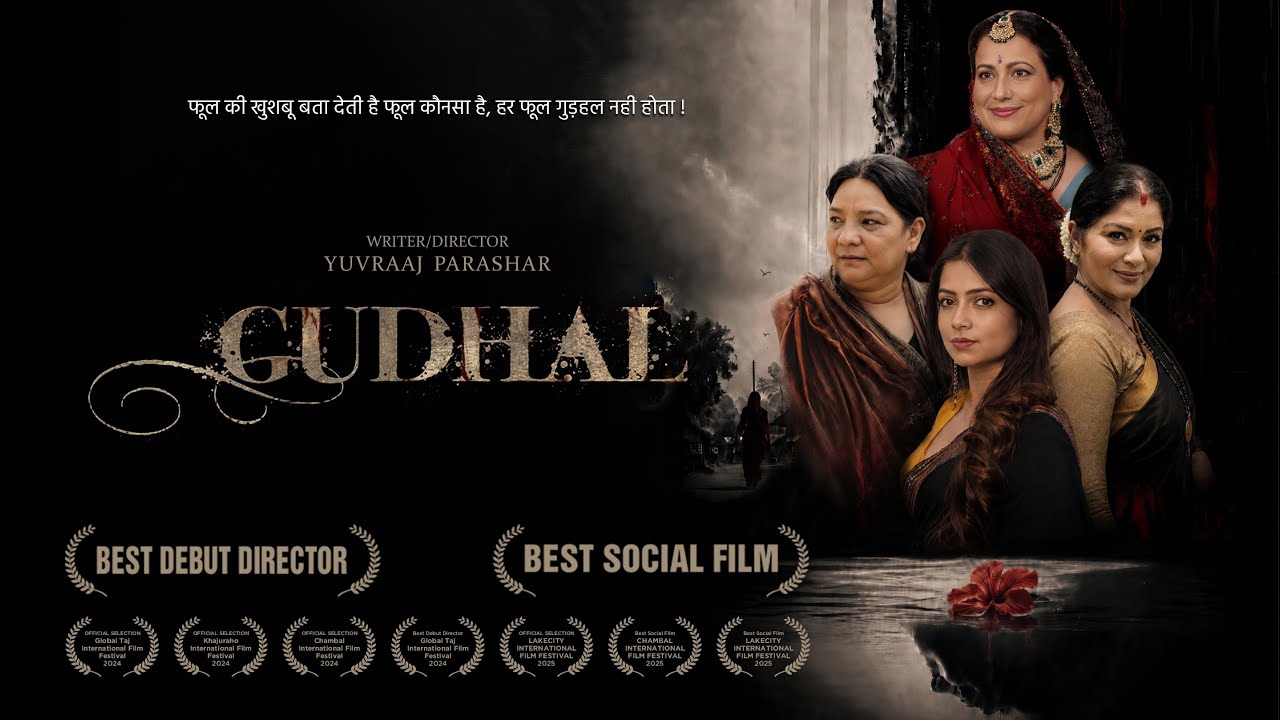
Yuvraaj Parashar has unveiled the first look poster for Gudhal, and it immediately sets the tone for a film that has no interest in easy comfort. The poster leans into the film's central image: a flower that blooms in isolation, a quiet visual metaphor for the elderly residents at the heart of the story who are, in Parashar's words, craving love and affection even as the world moves on without them. A story that has been building for years Parashar wears three hats on Gudhal, writing, directing and producing the film, and the poster feels like the payoff of that singular vision. He is joined by a cast built for exactly this kind of material: Mona Ambegaonkar, Shahbaz Khan, Pooja Singh, Sunita Rajwar and Sudha Chandran. Javed Ali lends his voice to the title track, and if the poster's mood is any indication, expect the music to carry a similar ache. What comes next With the poster out and the trailer following soon after, Gudhal is positioning itself as one of the more thoughtful independent releases of the year, a film built around a subject Bollywood rarely touches with this much honesty: what actually happens inside the old age homes we assume are safe.
- Ajay Devgn Chauhan movie controversy: Historical Action Teaser Sparks Backlash and Protests
Quick Facts Release Date: July 2, 2026 (Teaser Launch) Platform: JioCinema (India) / YouTube (International) Director / Showrunner: Aanand L. Rai Runtime / Episode Count: N/A Top 3-5 Cast: Ajay Devgn Status: Teaser Released / Controversy Ongoing The teaser for Ajay Devgn's upcoming historical action film Chauhaan has triggered a major backlash, with the Kshatriya Parishad organization condemning the filmmakers for appropriating the clan name and weaponizing history for political gains. The controversy focuses on the teaser's simplistic communal portrayal of the Kashmir conflict and a dialogue warning 'Tell the Pathans... Chauhaan is coming,' which critics argue incites communal tensions for box-office hype. For film watchers following Indian cinema developments, the controversy updates are streaming on JioCinema in India and YouTube globally. The Teaser Release and Kshatriya Backlash The release of the teaser for Ajay Devgn's historical epic Chauhaan has generated immediate controversy, illustrating the high sensitivity surrounding historical representations in Indian cinema. The film, directed by Aanand L. Rai and starring Devgn as the historic warrior, was designed as a major theatrical release, but its promotional footage has drawn condemnation from community organizations accusing producers of distorting historical facts for commercial gain. The primary point of conflict is the teaser's representation of the historical conflict in Kashmir, which the community organization claims is simplified to fit a modern communal narrative. The group has demanded a formal review of the script by a panel of historians and community representatives before release, warning of protests at theatres if concerns are not addressed. The controversy highlights the challenges filmmakers face when adapting historical subjects for contemporary audiences in a diverse social environment like India. Historical dramas have become a highly popular genre in Bollywood, but they are frequently met with protests from community groups protective of their heritage. The 'Pathan' Dialogue Controversy The specific dialogue featured in the teaser, where Devgn's character warns, 'Tell the Pathans... Chauhaan is coming,' has been a major source of online debate. Writers and social commentators argue the line incites communal tensions, while supporters argue the dialogue must be understood within the historical context of the conflict depicted. The debate reflects a broader concern about rising communal polarization in mainstream Indian cinema, with critics pointing out that several recent historical films have utilized simplified narratives of conflict to build audience engagement, often at the expense of historical nuance. The filmmakers have responded by stating the film is based on historical records and intended to celebrate the warrior's courage, urging the public to wait for the full release before forming judgments. However, community leaders continue to demand modifications to the promotional materials. Aanand L. Rai's Directorial Departure The controversy also represents a departure for director Aanand L. Rai, best known for romantic dramas like Tanu Weds Manu and Raanjhanaa. Chauhaan marks his first venture into historical action, a shift watched closely by film analysts given the greater financial and social risks of high-budget genre films. The financial stakes are high for the production houses involved, with the film representing one of the most expensive projects of the year. A prolonged controversy or boycott by community groups could affect box office performance, requiring producers to engage with protesting organizations to find a resolution before release. Censorship and the Path to Release The next phase of the controversy will play out at the Central Board of Film Certification (CBFC), which has historically required cuts, modifications, or disclaimers to address community concerns in historical dramas. The board's evaluation of Chauhaan will be closely watched as an indicator of the current regulatory environment. The digital availability of the teaser on YouTube ensures the controversy remains active online, with updates streamed on platforms like JioCinema in India, keeping viewers informed on the protests and statements from filmmakers and community leaders. FAQ What is the controversy surrounding the upcoming film Chauhaan? The film has faced backlash from the Kshatriya Parishad for appropriating the clan name and allegedly distorting history for commercial gains. What specific dialogue in the Chauhaan teaser caused protests? A dialogue warning 'Tell the Pathans... Chauhaan is coming' has been criticized for inciting communal tensions to generate box-office hype. Who directed the historical action film Chauhaan? The film was directed by Aanand L. Rai, marking his first project in the historical action epic genre. Who plays the lead role in the movie Chauhaan? Ajay Devgn stars in the title role as the historic warrior whose legacy is explored in the film. What demands have the protesting groups made? Protesting groups have demanded a review of the film by a panel of historians and community representatives prior to its release. Where can viewers watch updates on the Chauhaan movie controversy? Controversy coverage and news reports are available on JioCinema in India and film news channels on YouTube globally.
- Dulquer Salmaan Customs luxury car: South Indian Star Questioned in Kochi Smuggling Case
Quick Facts Release Date: July 2, 2026 (Questioning Update) Platform: JioCinema (India) / Mathrubhumi News (International) Director / Showrunner: N/A Runtime / Episode Count: N/A Top 3-5 Cast: Dulquer Salmaan Status: Questioned / Cars Released on Guarantee South Indian star Dulquer Salmaan was questioned for seven hours by the Customs Preventive Department in Kochi in connection with a major luxury car smuggling network code-named 'Operation Numkhor.' Authorities are investigating the illegal import of high-end vehicles from Nepal and Bhutan using forged documents to evade taxes, with four of the actor's previously seized vehicles released on bank guarantee. Salmaan maintains he purchased the cars legally and was unaware of any smuggling, sparking intense media coverage. For regional news updates, streaming coverage is available on JioCinema in India and Mathrubhumi News platforms globally. The Customs Inquiry in Kochi The questioning of actor Dulquer Salmaan represents a major development in Operation Numkhor, a wide-ranging customs investigation into the illegal import of high-end vehicles into India. Salmaan, a highly popular actor in Malayalam, Tamil, and Telugu cinema, was summoned to the Customs office in Kochi, where he was questioned for seven hours regarding the purchase of several luxury cars. The inquiry focuses on whether the vehicles were imported using forged documents to evade steep import duties. His representatives have confirmed his cooperation, stating he has provided all relevant purchase records. Operation Numkhor was launched after customs officials detected a pattern of luxury vehicles being registered in states with lower tax rates or imported through neighboring countries like Nepal and Bhutan under bilateral trade agreements that carry tax exemptions. These vehicles were subsequently sold to high-profile buyers in major cities, who were often unaware of the fraudulent import methods. The scale of the smuggling network is estimated to involve dozens of vehicles and crores of rupees in evaded taxes. Salmaan's involvement in the case has generated significant media interest, with news channels broadcasting live from outside the Customs office during his questioning. While four of his vehicles, including a high-end SUV, were temporarily seized during the initial phase of the investigation, they have since been released to his custody on submission of bank guarantees, allowing him to use the cars while legal proceedings continue. Operation Numkhor and the Smuggling Loophole The smuggling network reportedly exploited loopholes in the import regulations governing vehicles from neighboring countries, utilizing forged registration documents and temporary import permits to avoid paying standard customs duties. The Customs Preventive Department has identified several agents and dealers who operated this network, facilitating transactions for wealthy clients seeking to purchase luxury cars at lower prices. Under Indian customs regulations, the import of luxury vehicles is subject to duties that can exceed 100% of the vehicle's value. To bypass these costs, the network used forged documents to present the vehicles as being imported for temporary use or under specific exemptions. These cars were then registered in states with lower registration taxes using false addresses, requiring coordination across multiple state borders and complicating the investigation. The Customs department's focus on high-profile buyers is designed to raise public awareness of the risks of purchasing luxury goods through unofficial channels. Authorities have warned consumers that buying vehicles without verifying import documentation can lead to seizure and legal consequences, regardless of whether the buyer was aware of the smuggling. The Actor's Defense and Legal Strategy Dulquer Salmaan has maintained his innocence throughout the inquiry, stating that he purchased the vehicles through registered dealers and paid the full market price, assuming the transactions were legal. His legal team has submitted detailed documentation, including bank transaction records, registration certificates, and dealer communications, to prove he was a bona fide purchaser with no knowledge of the fraudulent import methods. The defense has also pointed out that the release of the vehicles on bank guarantee is a standard legal procedure that does not imply guilt. The bank guarantee ensures the government can recover disputed duties if the court rules against the actor, while minimizing disruption to the owner. His team has expressed confidence the investigation will clear him of any wrongdoing. The impact of the controversy on his professional career has been managed carefully, with the actor continuing his filming schedules without interruption. Salmaan's reputation as a professional and disciplined actor has helped maintain the support of his fans and colleagues. Digital Media Coverage and Public Interest The public interest in the customs case is high, reflecting the popularity of Dulquer Salmaan and the public's fascination with luxury lifestyles. Updates on the investigation are widely read on digital news portals and shared on social media, with regional news streaming on platforms like JioCinema ensuring viewers in India and the diaspora can follow developments in real time. The resolution of the customs inquiry will have implications for other buyers who acquired vehicles through the same network, with authorities preparing to question additional individuals in the coming weeks. The success of Operation Numkhor in disrupting the smuggling network is a significant achievement for the Customs department. FAQ Why was Dulquer Salmaan questioned by Kochi Customs? Dulquer Salmaan was questioned in connection with a luxury car smuggling network that allegedly used forged documents to evade import taxes. What is the name of the customs investigation involving Dulquer Salmaan? The multi-state customs investigation into luxury car smuggling is code-named Operation Numkhor. Were Dulquer Salmaan's luxury cars permanently seized? No, while four of his vehicles were temporarily detained, they have been released to the actor on submission of bank guarantees. Where can I stream news updates on Dulquer Salmaan's customs case? Regional news broadcasts and updates are available on JioCinema in India and Mathrubhumi News internationally. What is Dulquer Salmaan's defense in the car smuggling case? The actor maintains he purchased the vehicles legally through registered dealers and was completely unaware of any smuggling or tax evasion. What regulations govern the import of luxury cars to India? The import of luxury vehicles is subject to customs duties exceeding 100%, designed to protect the domestic market and generate revenue.
- Pritam and Pedro series JioHotstar: Cybercrime Buddy Comedy Marks Rajkumar Hirani OTT debut
Quick Facts Release Date: July 3, 2026 Platform: JioHotstar (India + International) Director / Showrunner: Rajkumar Hirani (Executive Producer) Runtime / Episode Count: 8 Episodes Top 3-5 Cast: Arshad Warsi, Vir Hirani Status: Streaming Now Filmmaker Rajkumar Hirani's streaming debut series Pritam & Pedro, a cybercrime buddy comedy set in Goa, has arrived on JioHotstar. The series stars Arshad Warsi as a technology-averse police inspector and Rajkumar Hirani's son, Vir Hirani, in his acting debut as a tech-savvy hacker. While the show is generating strong search interest, early reviews are mixed, calling the comedy elements somewhat flat. For viewers interested in this new comedy series, the episodes are streaming on JioHotstar in India and internationally. The Streaming Debut of a Hit Director The premiere of Pritam & Pedro on JioHotstar marks the first digital series project associated with acclaimed director Rajkumar Hirani. Known for blockbusters like Munna Bhai M.B.B.S., 3 Idiots, and Sanju, Hirani has established a reputation as a master of feel-good, socially relevant comedies. While he serves as executive producer rather than director for this series, his creative influence is a major selling point, attracting viewers and driving substantial search queries. The transition of top Bollywood filmmakers to digital platforms has been an ongoing trend, accelerated by the growth of streaming in India. These platforms offer creators freedom to explore genres that may not fit the traditional theatrical model. For Hirani, the series provides an opportunity to venture into buddy-cop comedy with a modern twist, focusing on cybercrime and generational technology gaps, with Goa providing a colorful backdrop that contrasts with the dark themes of online fraud. The series' performance is also being watched as an indicator of the merger between JioCinema and Disney+ Hotstar, operating under the joint brand JioHotstar. The platform's investment in high-profile content is designed to secure its position as the dominant streaming service in India, competing against international giants like Netflix and Amazon Prime Video. Arshad Warsi and Vir Hirani's Chemistry The core of the series is the relationship between veteran actor Arshad Warsi and newcomer Vir Hirani. Warsi, a frequent collaborator of Rajkumar Hirani, plays Pritam, an old-school police officer suspicious of technology. Vir Hirani, in his acting debut, plays Pedro, a young, tech-savvy hacker forced to assist the police with cybercrime cases. The generational conflict provides the primary source of comedy and character development. Warsi's performance has been praised for his comedic timing, qualities that defined his popular roles in the Munna Bhai and Golmaal franchises. Newcomer Vir Hirani has faced intense media scrutiny due to his famous family background, but early reviews have noted his potential, praising his natural delivery and comfort in front of the camera. The chemistry between the two leads is a key asset carrying the series through its slower narrative patches. The development of the relationship between Pritam and Pedro, from mutual suspicion to professional respect, is a central theme of the season, providing an emotional arc that complements the case-of-the-week format. While some critics have noted the writing relies too heavily on familiar tropes, the performances of the leads have been generally well-received. Cybercrime Themes in Goa The focus on cybercrime reflects the growing relevance of online security and digital fraud in contemporary India. Individual episode plots address phishing, identity theft, and online financial scams, translating complex technology topics into accessible stories, while the Goa setting adds a distinct visual style using beaches, heritage homes, and vibrant nightlife. The character of Pedro serves as an educational tool, explaining the technical aspects of the scams while Pritam focuses on the human element, tracking down the physical suspects. This division of labor allows the series to explore both digital and physical aspects of criminal investigation, presenting a balanced look at modern policing. The production design highlights the colorful aesthetic of Goa, contrasting with the typical dark, gritty settings of urban crime dramas. The cinematography utilizes natural light and vibrant colors matching the comedic tone, while the soundtrack blends local Goan music with modern electronic beats to enhance the viewing experience. Critical Reception and Audience Trends Early reviews have been mixed, with critics praising Warsi's performance and the technical execution while noting the comedy elements can feel flat and formulaic. Despite these reservations, audience engagement remains high, with the series trending on JioHotstar and generating positive social media discussion. The mixed critical response highlights the challenges of meeting expectations tied to the Rajkumar Hirani brand. As a casual, weekend watch, the series has found a receptive audience among families and fans of buddy comedies, and its success in driving platform viewership will determine whether a second season is commissioned. The availability of the series on JioHotstar ensures it reaches a wide audience in India and international markets, and the ongoing search interest indicates the show has successfully captured public attention, demonstrating the enduring appeal of the comedy genre in the Indian digital space. FAQ What is the plot of the JioHotstar series Pritam & Pedro? The series is a cybercrime buddy comedy focusing on a technology-averse inspector and a young hacker solving cases in Goa. Who directed or produced the series Pritam & Pedro? The series is executive produced by acclaimed filmmaker Rajkumar Hirani, marking his debut project in streaming. Who is Vir Hirani and what is his role in the series? Vir Hirani is the son of director Rajkumar Hirani, making his acting debut as the tech-savvy hacker Pedro in the show. Where can I stream the series Pritam & Pedro? The series is available for streaming on the JioHotstar platform in India and select international territories. Who plays the character of the police inspector Pritam? The role of the technology-averse inspector Pritam is portrayed by veteran Bollywood actor Arshad Warsi. How many episodes are there in the first season of Pritam & Pedro? The first season of the comedy series consists of 8 episodes, all available for streaming upon release.
- Silo season 3 review Apple TV: Sci-Fi Series Debuts with High-Stakes Political Shift
Quick Facts Release Date: July 2, 2026 (Season 3 Premiere) Platform: Apple TV+ (Global) Director / Showrunner: Graham Yost Runtime / Episode Count: 10 Episodes Top 3-5 Cast: Rebecca Ferguson, Common, Tim Robbins Status: Streaming Now The critically acclaimed Apple TV+ science fiction series Silo has premiered its third season, generating massive search volume as fans dissect its exit from the titular underground silo and its transition into a high-stakes political thriller. Reviews have praised the handsomely produced drama for its narrative expansion and handling of its central mystery box. For global viewers following the series, the episodes are streaming on Apple TV+ in the United States and internationally. The Departure from the Silo and Narrative Expansion The premiere of Silo Season 3 represents a significant turning point, marked by the physical exit of the characters from the underground silo that served as the setting for the first two seasons. This departure expands the visual and narrative scope of the show while maintaining the tense, claustrophobic atmosphere that defined the early episodes. Critical response has been highly positive, praising showrunner Graham Yost's transition of the series into a broader political thriller. The physical reality of the silo, with its vertical design and strict social hierarchy, was a central character in the first two seasons. The transition to the outside world challenges the characters to adapt to new environments, creating opportunities for conflict and discovery, with cinematography contrasting the desolate, sunlit exterior with the dark, metallic interiors of the silo. The narrative expansion also involves exploring connections between different silos, revealing a network of underground communities operating under similar rules. This discovery shifts the plot from individual survival to a high-stakes political conflict, requiring the characters to develop new skills and alliances to survive a changing world. The Shift to a Political Thriller As the characters explore the outside world and interact with other silos, the series transitions from a mystery box show to a high-stakes political thriller, adding depth and urgency to the narrative as it answers its central questions. The political dynamics focus on the struggle for control over resources and technology between competing factions. Juliette Nichols, portrayed with grit by Rebecca Ferguson, remains at the center of this conflict, forming alliances with former enemies and questioning her allies' motivations, adding psychological depth to her character. The thematic shift allows the series to explore contemporary issues such as governance, information control, and social inequality in a speculative setting, demonstrating science fiction's capacity to reflect real-world challenges and raising the show's profile. Rebecca Ferguson's Leading Performance Rebecca Ferguson's portrayal of Juliette Nichols has driven the series' critical success, combining physical strength with emotional vulnerability. The physical demands of the role, particularly in action sequences set in the outside world, are significant, and her commitment is evident in every scene. Juliette's arc in the third season is defined by her transition from a technician to a leader who must make decisions affecting her community's future, conveying the weight of responsibility and the personal cost of leadership as she adapts to different cultural norms across silos. The supporting cast, including Common as enforcer Sims and Tim Robbins as the mysterious administrator Bernard, deliver strong performances enhancing the political tension, allowing the series to explore multiple storylines while presenting a rich picture of life in the post-apocalyptic world. Production Values and the Mystery Box Resolution Production values remain high in the third season, with detailed sets and visual effects creating a credible, immersive environment. The resolution of the show's central mystery box is managed carefully, providing answers while opening new avenues of inquiry that keep the show a topic of online discussion and fan theories. The distribution on Apple TV+ ensures global availability, driving significant search interest across multiple regions. The ongoing interest in Silo Season 3 demonstrates the enduring appeal of high-concept science fiction combining human drama with intellectual mystery, securing the show's legacy as one of the platform's most successful dramas. FAQ What is the central theme of Silo Season 3 on Apple TV+? Season 3 focuses on the characters' exit from the underground silo and the transition of the narrative into a high-stakes political thriller. Who plays the lead character Juliette Nichols in Silo? The lead character Juliette Nichols is portrayed by acclaimed actress Rebecca Ferguson. Where can I stream Silo Season 3? The science fiction series is available for streaming globally on the Apple TV+ platform. Who is the showrunner of the series Silo? The series is developed and run by Graham Yost, known for his work on the television series Justified. Is Silo based on a book series? Yes, the series is based on the popular post-apocalyptic science fiction novels by author Hugh Howey. What was the critical response to the Season 3 premiere? The premiere received highly positive reviews, with critics praising the narrative expansion, production design, and Rebecca Ferguson's performance.