
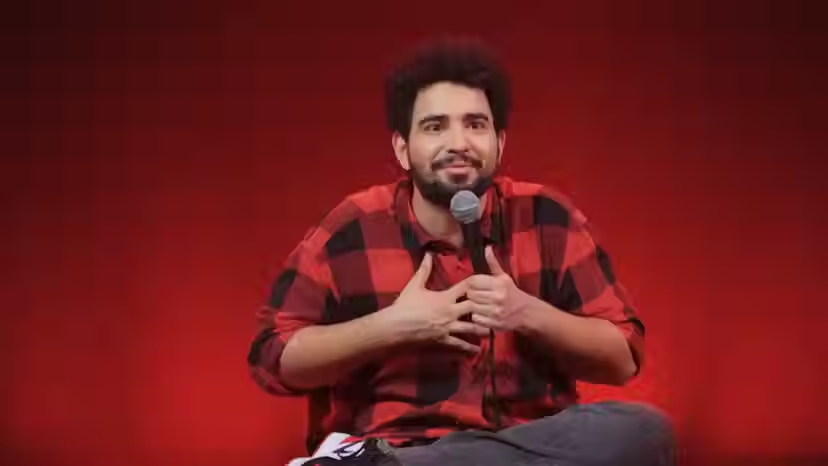


The Brand That Got Guddu Bhaiya Shopping — Weezy India at Lil Flea 2026
- Vishal waghela
- Apr 6
- 4 min read

A Bengaluru startup. A Mumbai pop-up. And one Mirzapur actor who apparently has excellent taste in streetwear.
There's a specific kind of validation that no press release can manufacture.
It's not a celebrity endorsement deal. It's not a paid collab. It's Ali Fazal Guddu Bhaiya himself, one of the most culturally loaded actors in Indian streaming right now walking into your pop-up at Lil Flea, looking around, and buying something. No cameras arranged. No PR brief. Just a man who apparently knows what he likes.

That's what happened at Weezy India's pop-up at The Lil Flea Mumbai 2026's first weekend, April 3 to 5, at Jio World Garden, BKC. And if you weren't already paying attention to this brand, that moment is probably a good place to start.
What Is Weezy India And Why Does It Feel Different
Weezy is a new-age premium fashion label redefining the intersection between high-street and contemporary fashion for the modern generation built with a vision to combine global design language, premium craftsmanship, and accessible luxury. That's the official language. Here's the real version: Weezy is what happens when two young guys from Bengaluru decide that Indian streetwear doesn't have to keep looking like it's trying to be something from overseas. Founded in 2021 by then 21-year-old founders Gopal Krishna Panda and Revanth Desai, the brand started with a simple but loaded idea that Gen Z in India deserves clothes that feel global without apologising for being Indian.
The brand not just wishes to grow by its name but also by its people more than just building and growing the brand into something significant and notable, they aim to cultivate a culture and build a community with people of concordant beliefs.
That distinction matters more than it sounds. Because a lot of brands say community. Very few actually mean it.
The Founders Two 21-Year-Olds Who Decided to Just Build It

Gopal Krishna Panda, Founder and CEO of Weezy, previously worked at Unschool as National Head of India a role where he achieved INR 2.5 crore in sales revenue, onboarded over 13,000 learners, and spearheaded a team of over 200 interns across India. He's not someone who stumbled into building. He understood sales, systems, and scale before Weezy even had a logo.
Co-Founder and COO Revanth Desai previously worked at GUVI Geek Networks, IITM Research Park in Data Science Tech Support and Growth, and attended Manipal University Jaipur. The combination one founder who sells, one who thinks in systems is exactly the kind of founding dynamic that either breaks badly or builds something real. With Weezy, it's been the latter.
Since its inception, Weezy has experienced over 3x year-on-year growth, driven by a loyal community of customers who value quality, design, and authenticity. They now have offices in Mumbai, Delhi, Hong Kong, and PRC, operating with a strong global supply chain.
Two 21-year-olds. One city. Now four offices across two continents.
The Lil Flea Moment And What It Actually Means
The Lil Flea brings together over 300 homegrown curated brands from across the country so getting a spot there isn't just a pop-up, it's a statement. It's the brand saying: we're ready to be seen, touched, tried on, and bought in real life, not just scrolled past on a phone screen.
And Weezy showed up.
The pop-up ran across the first weekend April 3 to 5 at Jio World Garden BKC, the kind of venue that attracts exactly the audience a brand like Weezy needs: culturally plugged-in, financially independent, deeply allergic to anything that feels fake or forced.
And then Ali Fazal walked in.
For those keeping cultural score: Ali Fazal is best known for playing Guddu Pandit in Mirzapur, which broke streaming records for Amazon Studios, and is about to bring that character to the big screen with Mirzapur: The Movie. He's not just a famous actor. He's a cultural reference point for an entire generation of Indian audiences. When someone like that shows up at your pop-up and buys something with his own money, the brand story writes itself.
What They're Building Beyond the Drop
What makes Weezy interesting as a brand story not just as a fashion label is that it sits at a very specific cultural intersection that Indian streetwear has struggled to occupy authentically.
The brand's vision is to create a globally recognized Indian brand that blends the ease of high-street wear with the sophistication of premium fashion, with a core design philosophy of minimalism, quality, and timeless appeal.
That's not a niche play. That's a bet on where Indian consumer taste is actually heading — away from loud branding, away from fast fashion disposability, toward something that holds up wash after wash and doesn't announce itself in a room.
Weezy is currently backed by a network of strategic investors including leaders from Shoppers Stop India, Future Group, prominent family offices, and respected startup founders, and is currently in its Pre-Series A phase.
The infrastructure is real. The ambition is real. And now, after a weekend at Lil Flea where Guddu Bhaiya himself showed up and shopped the cultural moment is real too.


Comments