



The Srivatsa: The Hidden Mark Of Goddess Lakshmi On Lord Vishnu’s Chest

When you walk into a traditional Hindu temple and stand before the majestic idol of Lord Narayana (Vishnu), your eyes are immediately drawn to the spectacular attributes of his divine form. You notice the golden crown resting on his head. You observe his four arms holding the Panchajanya (conch shell), the Sudarshana Chakra (discus), the Kaumodaki (mace), and the Padma (lotus flower). You might even notice the Kaustubha gem glowing brilliantly around his neck.
However, hidden in plain sight, resting quietly on the right side of his chest, is a small, subtle detail that millions of devotees completely overlook.
Depending on the sculptor or the painter, it might look like a small diamond, a golden triangle, or a beautiful whorl of curled hair. This mark is known as the *Srivatsa*. While it may seem like a minor decorative element added by ancient artisans, the Srivatsa is actually one of the most profound and philosophically heavy symbols in all of Hindu iconography.
The Srivatsa is not just a birthmark. It is a bold, anatomical declaration of love, power, and divine balance. It physically represents the eternal, inseparable presence of Sri (Goddess Lakshmi) within the very heart of Lord Narayana. To understand the Srivatsa is to fundamentally change how you view the relationship between wealth, preservation, and the divine masculine and feminine energies in Sanatana Dharma.
The Etymology And Origin Of The Beloved Mark
To decode the meaning of this ancient symbol, we first have to look at the Sanskrit language itself. The word *Srivatsa* is a compound word. *Sri* is one of the most common and revered names for Goddess Lakshmi, representing auspiciousness, wealth, prosperity, and radiant beauty. The word *Vatsa* translates to "child," "darling," or "beloved." Therefore, the literal translation of Srivatsa is "the beloved of Sri" or "the favorite of Sri."
In the ancient *Vishnu Sahasranama* (the thousand names of Lord Vishnu), this eternal bond is glorified in verse 65:
"श्रीवत्सवक्षाः श्रीवासः श्रीपतिः श्रीमतांवरः ।"
(Srivatsavakshah Srivasah Sripatih Srimatamvarah)
This beautifully translates to: "He who has the mark of Srivatsa on His chest; He who is the abode of Sri (Lakshmi); He who is the Lord of Sri; He who is the best among the glorious."
The placement of this mark is highly specific. It is always located on the chest of Lord Vishnu, right over the heart. But how did it get there'
According to Puranic lore, the origin of this eternal association dates back to one of the most famous events in Hindu cosmology: the Samudra Manthan (The Churning of the Cosmic Ocean). When the Devas (gods) and Asuras (demons) churned the ocean of milk to extract the nectar of immortality, various divine entities and treasures emerged from the depths.
One of the most glorious entities to rise from the churning waters was Goddess Lakshmi herself, radiating unmatched beauty and holding a lotus flower. The moment she emerged, every deity, demon, and celestial being was captivated by her grace. They all wanted to claim her as their own. The gods offered her immense power, and the demons offered her absolute dominance.
However, Goddess Lakshmi was not interested in beings driven by ego, greed, or a temporary thirst for power. She observed the entire cosmic gathering and her eyes fell upon Lord Vishnu. Unlike the others, Vishnu was completely composed, serene, and free from the frantic desire to possess her. He represented Dharma, stability, and preservation. Recognizing him as the only entity capable of balancing her immense energy without being corrupted by it, she approached him and placed a garland of victory around his neck, choosing him as her eternal consort.
To honor her choice and to signify their unbreakable bond, Lord Vishnu offered her the highest seat of honor. He did not place her beside him or behind him. He offered her his own chest. The Srivatsa mark manifested on his heart as a permanent physical indicator that Goddess Lakshmi now resided within him.
The Theological Meaning: Why Wealth Needs A Preserver
The story of the Samudra Manthan is beautiful, but Sanatana Dharma rarely relies on stories just for the sake of entertainment. Every mythological event is a coded metaphor for human psychology and cosmic philosophy. The placement of the Srivatsa on Vishnu’s chest delivers a massive theological lesson regarding how wealth and power operate in the universe.
Goddess Lakshmi represents wealth, fortune, and material resources. By her very nature, wealth is kinetic. It moves. It flows. In Hindu philosophy, wealth is often described as *Chanchala* (fickle or restless). If you try to aggressively hoard wealth out of greed, it will eventually escape your grasp. If you misuse wealth for destructive purposes, it will ruin you. Wealth requires a stable, righteous foundation to be truly beneficial.
Lord Vishnu represents the principle of preservation, duty, and cosmic order (Dharma). He is the anchor of the universe.
When Goddess Lakshmi chooses to reside in the heart of Lord Vishnu, symbolized by the Srivatsa, it sends a clear message: True prosperity (Sri) can only be sustained when it is grounded in righteousness and duty (Narayana). When wealth is decoupled from Dharma, it becomes destructive. But when wealth is held by a preserver who uses it to sustain the world, it becomes eternal. The Srivatsa is the ultimate visual reminder that you cannot worship Lakshmi effectively if you ignore the principles of Narayana. They are a package deal.
The Astrological Architecture Of The Divine Union
Astrology enthusiasts point to the exact same dynamic when analyzing the planetary forces of Venus and Jupiter. In Vedic astrology (Jyotish), Venus (Shukra) is the planetary significator of wealth, luxury, and material beauty, heavily associated with the energy of Goddess Lakshmi. Jupiter (Guru) represents Dharma, wisdom, preservation, and higher knowledge, perfectly aligning with the energy of Lord Vishnu.
When these two planetary energies are isolated, they can cause imbalances. Venus without Jupiter can lead to shallow materialism, overindulgence, and the rapid loss of wealth. Jupiter without Venus can lead to extreme asceticism and a lack of the resources required to actually help society. However, when these two energies are beautifully integrated in a birth chart, they create an individual who knows how to generate immense wealth and use it for the highest ethical purposes.
The Srivatsa is essentially the cosmic blueprint for this balance. It proves that the ancient seers did not view materialism and spirituality as mortal enemies. When grounded in the heart of Dharma, material wealth becomes a divine tool for preservation.
The Indian Lens: Recognizing The Srivatsa In Daily Life
For modern Hindus, understanding the Srivatsa transforms the way we interact with temple iconography.
When you look closely at classical Indian sculptures, especially those dating back to the Gupta period (4th to 6th century CE), the Srivatsa is a mandatory feature. Sculptors in Mathura and Sarnath carved it meticulously. In South Indian bronze casting, particularly during the Chola dynasty, the mark is often stylized as an inverted triangle or a highly decorative floral emblem on the right chest of Vishnu, Rama, and Krishna.
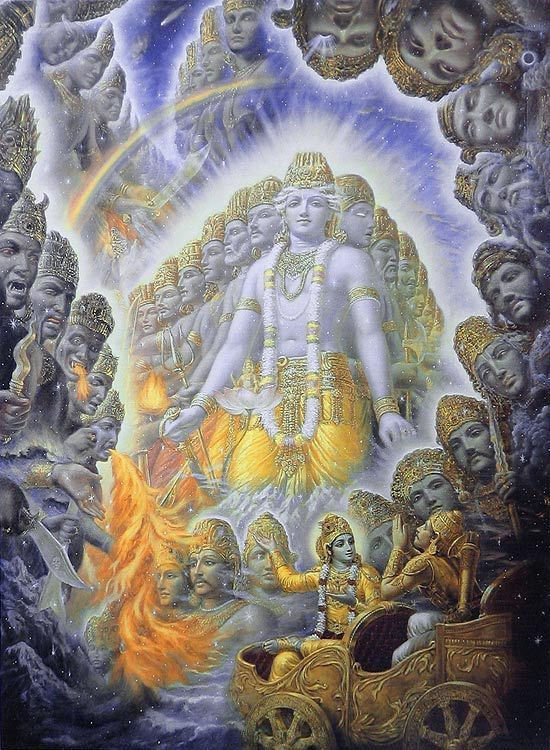
Yes, even the avatars carry the mark. When Vishnu descended as Lord Krishna, the Puranas explicitly state that the Srivatsa remained visible on his chest. It served as a divine identifier. When skeptics or enemies doubted Krishna’s divinity because he looked like an ordinary human cowherd, the presence of the Srivatsa (along with the Kaustubha gem) was the ultimate proof that the Supreme Preserver had arrived on earth.
This detail completely changes the gender dynamics often projected onto Hindu deities by Western observers. Many foreign critics attempt to paint the Hindu pantheon as heavily patriarchal, arguing that male gods hold the weapons while female goddesses are relegated to the status of subservient wives.
The Srivatsa destroys this narrative.
By placing Goddess Lakshmi directly inside the chest of the Supreme God, Sanatana Dharma declares that the divine is inherently and equally dual. Vishnu cannot preserve the universe without the resources of Lakshmi, and Lakshmi’s resources are chaotic without the structural integrity of Vishnu. They are not a dominant husband and a submissive wife. They are two halves of a single operational reality. To worship one is to automatically worship the other.
The Mark Of The Auspicious
The concept of the Srivatsa was so powerful in ancient India that it actually transcended the boundaries of Hinduism. It became recognized as a universal symbol of auspiciousness.
In Jainism, the Srivatsa is prominently featured on the chests of the Tirthankaras (spiritual teachers). If you look at ancient Jain statues, you will see the exact same diamond-shaped mark. In Buddhism, it is often included as one of the Ashtamangala (the eight auspicious symbols). Across the entire Indian subcontinent, this simple geometric mark became synonymous with purity, divine favor, and the presence of ultimate truth.
Even today, in modern Hindu households, the philosophy of the Srivatsa is acted out in daily rituals. When a marriage ceremony takes place, the groom is often treated as an embodiment of Lord Vishnu, and the bride is treated as an embodiment of Goddess Lakshmi. The ultimate blessing given to the couple is that they may replicate the eternal, inseparable bond symbolized by the mark on the chest.
Meditating On The Heart Of Narayana
The next time you stand in a temple, do not just casually glance at the idol and walk away. Look closer. Look past the massive weapons, the shining crown, and the heavy flower garlands. Focus your eyes on the right side of the deity’s chest.
Find the Srivatsa.
When you see it, realize that you are looking at an ancient, highly sophisticated spiritual diagram. You are looking at the promise that true prosperity will always find a home in a righteous heart. You are looking at the eternal love story of the universe, carved in stone, proving that the preserver of the cosmos holds the goddess of wealth closer than a heartbeat.
Hari Om Tat Sat.
---
FAQ Section
What does the Srivatsa mark on Lord Vishnu look like'
The Srivatsa is traditionally depicted on the right side of Lord Vishnu's chest. Depending on the artistic era and region, it is visualized as a whorl of curled hair, a diamond shape, an inverted triangle, or a stylized floral emblem.
Why does Lord Vishnu have a mark on his chest'
The mark physically represents the theological concept that Goddess Lakshmi (Sri) eternally resides in the heart of Lord Narayana (Vishnu). It symbolizes the inseparable union between the preserver of the universe and the goddess of wealth and prosperity.
What does the word Srivatsa mean'
In Sanskrit, the word is a compound of "Sri" (a revered name for Goddess Lakshmi) and "Vatsa" (meaning darling, beloved, or child). Therefore, the literal translation of Srivatsa is "the beloved of Sri" or "the favorite of Lakshmi."
Do other avatars like Lord Krishna have the Srivatsa'
Yes. According to the Puranas, when Lord Vishnu incarnated on earth as Lord Krishna, the Srivatsa mark remained permanently visible on his chest. It served as a key divine identifier, proving his identity as the Supreme Being despite his human form.
Is the Srivatsa exclusive to Hinduism'
No. The Srivatsa is an ancient Indian symbol of auspiciousness that transcended religious boundaries. It is prominently featured on the chests of Tirthankaras in Jainism and is recognized as one of the Ashtamangala (eight auspicious signs) in some Buddhist traditions.

Comments