
Randolph Mantooth dies: Emergency Paramedic Johnny Gage Actor Passes Away at 80 [Analysis]

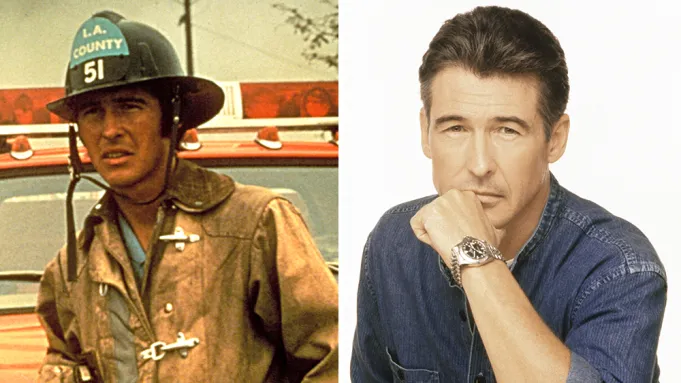
The international television and emergency services communities are mourning the passing of veteran actor Randolph Mantooth, who died at the age of eighty after a long illness. Best known for his iconic role as the heroic firefighter-paramedic Johnny Gage on NBC's classic 1970s television series Emergency!, Randolph Mantooth was a dedicated, lifelong advocate for the firefighting and emergency medical services (EMS) communities. His realistic portrayal of a first responder is widely credited with helping to establish paramedicine as a formal, recognized profession in the United States and Canada during a period of significant healthcare transition.
The character dynamic between Johnny Gage and his partner Roy DeSoto, portrayed by Kevin Tighe, served as the emotional core of the series, showing a close professional bond and mutual trust that resonated with viewers. This on-screen chemistry was supported by a real-life friendship between the two actors that lasted for over fifty years, during which they frequently appeared together at EMS conferences and public safety events. Their collaborative performances helped humanize the rescue profession, presenting first responders as complex individuals who managed high-stress situations with humor, dedication, and professional skill.
The television series Emergency! benefited from the expertise of its technical advisor, Los Angeles County Fire Captain James O. Page, who oversaw the scripting of rescue scenes to ensure that all medical procedures and rescue maneuvers matched actual protocols. Under his guidance, Randolph Mantooth and Kevin Tighe underwent actual paramedic training, learning how to administer intravenous lines, interpret electrocardiograms, and use specialized rescue gear. This commitment to realism was a significant departure from the sensationalized medical dramas of the era, establishing a new standard for television productions depicting public safety personnel.
The historical significance of the series is closely linked to the passage of the Wedworth-Townsend Paramedic Act of 1970 in California, which was the first legislation in the United States to authorize non-physicians to deliver advanced life support care. The early episodes of the show, including the pilot film The Decision, dramatized the political and medical opposition to the law, showing the challenges faced by pioneer paramedics in proving their clinical competence to skeptical hospital administrators. The public popularity of the series acted as a catalyst for similar legislation in other states, establishing a national framework for pre-hospital emergency care.
For television historians and fans wishing to view his performances, episodes of Emergency! and related documentary specials are available for streaming on Peacock in India and international markets, bringing his work to a new generation of viewers. The digital availability of the classic series has preserved the memory of his performance, showing the historical development of modern rescue techniques and medical protocols. The online discussions following his passing have focused on the educational value of the show and the enduring appeal of his character.
Randolph Mantooth's acting career spanned over four decades, including prominent roles in daytime soap operas like Loving, General Hospital, and One Life to Live, as well as guest appearances on popular primetime dramas. However, his connection to the firefighting community remained the defining feature of his public life, with the actor frequently noting that portraying Johnny Gage was the most meaningful work of his career. His ability to combine dramatic acting with technical accuracy helped build respect for the profession he represented on screen.
In his later years, Randolph Mantooth focused on raising awareness about the health risks faced by firefighters, including high rates of cancer and post-traumatic stress disorder related to their service. He collaborated with non-profit organizations to promote health screenings and mental health resources, arguing that the community had a responsibility to protect the individuals who risk their lives for public safety. His advocacy work has been praised by fire chiefs and union leaders, who view his contribution as a lasting benefit to the firefighting profession.
The public reaction to his passing has included statements of condolence from major fire departments, medical institutions, and national political figures, showing the broad impact of his life and career. Memorial services are expected to include honor guards from local fire services, reflecting the deep respect he commanded within the first responder community. The memory of his performance as Johnny Gage will remain a prominent reference point for discussions about the history of emergency medical services and the role of television in shaping public policy.
The educational impact of the show has also been recognized by academic institutions, which have used episodes of Emergency! as historical case studies to illustrate the evolution of emergency medicine and public health administration. The show's depiction of the partnership between field paramedics and hospital staff, led by Dr. Kelly Brackett and Nurse Dixie McCall, provided a model for the integrated trauma networks that exist today. Randolph Mantooth's contribution to this educational legacy was substantial, as he spent decades touring medical schools and training centers to deliver keynote addresses and support fundraising campaigns.
The actor's advocacy work extended to the federal level, where he participated in congressional hearings to advocate for national standards for emergency dispatch systems and funding for rural first responder units. He argued that access to high-quality emergency medical care should not be determined by geography, and he worked to secure resources for volunteer fire departments that lacked basic equipment. His political engagement demonstrated his deep commitment to the community that had embraced him as a representative of their profession, establishing him as a respected public figure.
The introduction of the universal 911 emergency telephone number across North America during the 1970s was heavily supported by the public awareness generated by the show, which demonstrated how a centralized dispatch system could reduce response times and coordinate multiple rescue agencies. Before the widespread adoption of 911, citizens had to remember ten-digit numbers for individual police, fire, and ambulance services, leading to frequent delays during critical emergencies. The television representation of emergency services highlighted the benefits of unified communication networks, accelerating the implementation of the universal number.
Randolph Mantooth's personal background, including his Seminole Native American heritage, influenced his dedication to health advocacy, leading him to work with indigenous health organizations to improve emergency medical care on reservations. He highlighted the unique challenges faced by rural tribal communities, including long travel distances to hospitals and limited funding for emergency vehicles, advocating for federal programs to train Native American first responders. His efforts helped build bridges between municipal public safety agencies and tribal leadership, promoting cooperative mutual aid agreements that enhanced regional emergency response capabilities.
The show also played a major role in promoting public safety campaigns focused on home fire prevention, emphasizing the importance of installing smoke detectors and practicing home evacuation plans. The episodes frequently depicted scenarios where early detection and quick public action prevented minor fires from turning into fatal tragedies, reinforcing these safety messages to millions of families weekly. This practical educational focus helped reduce accidental fire fatalities in urban and suburban areas, demonstrating the value of media collaborations in promoting public welfare.
In conclusion, Randolph Mantooth's passing is a significant loss for both the entertainment industry and the emergency services community. His iconic portrayal of paramedic Johnny Gage helped revolutionize pre-hospital care, transforming a television role into a lifetime of advocacy for first responders. As the firefighting and EMS communities honor his legacy, his contribution to the establishment of modern paramedicine will remain a lasting monument to his career.
FAQ
Which iconic character did Randolph Mantooth portray on NBC's classic 1970s series Emergency!?
Randolph Mantooth portrayed the heroic firefighter-paramedic Johnny Gage, a character who became a symbol of early emergency services.
What was the age of Randolph Mantooth at the time of his passing?
He passed away at the age of 80 following a long and courageously fought illness.
Where can fans stream classic episodes of the Emergency! television series?
Episodes of the classic series are available on major streaming platforms like Peacock in selected international markets.
How did Randolph Mantooth's portrayal impact the real-world EMS profession?
His realistic portrayal generated widespread public demand for professional pre-hospital care, prompting cities to fund modern paramedic programs.
Which museum acquired artifacts from the show to document its social impact?
The Smithsonian Institution's National Museum of American History acquired costumes and props to preserve the history of the series.
Who was the co-creator of the Emergency! series known for prioritizing production realism?
The series was co-created by Jack Webb, a legendary television producer famous for his focus on technical accuracy and realism.


Comments