



Maslow Drew A Triangle. Gen Z Set It On Fire And Posted The Video.


So Abraham Maslow sat down in 1943 and drew a triangle.
Bottom layer: food, water, shelter. The stuff you actually die without. Then safety. Then belonging. Then esteem. And right at the top, glowing like a boss level nobody ever unlocks, self actualisation. Becoming the fullest version of yourself. The final form.
The whole thing worked on one rule: you climb in order. No skipping. You cannot want purpose while you are hungry. You cannot chase meaning while you are scared. Each floor unlocks the next one.
Eighty years later, that rule is completely, spectacularly dead.
And Gen Z killed it. Not on purpose. Just by existing.

Let's start with the base, because the base is where it gets funny.
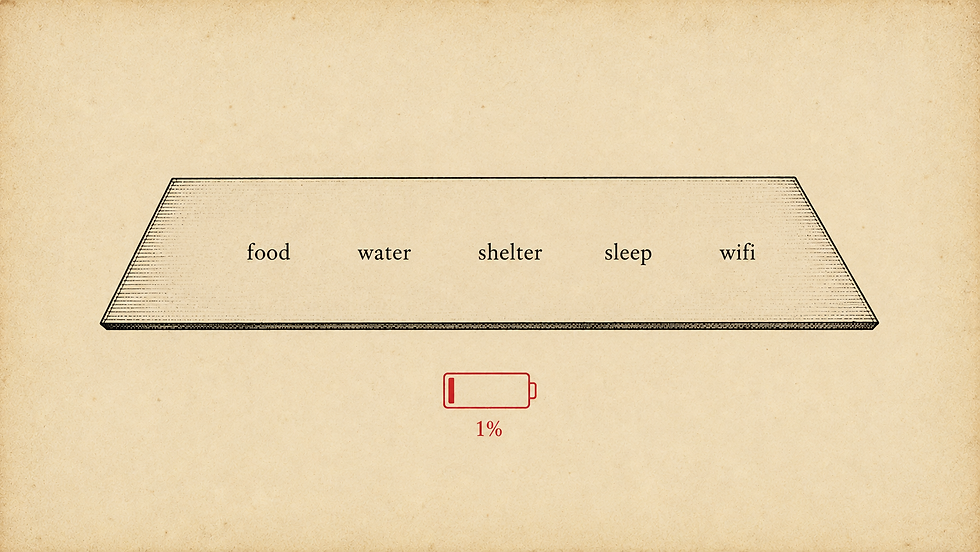
Maslow said physiological. Air, food, water, sleep. Gen Z says yes, and also, Wi-Fi. And before you roll your eyes at that, understand that this is not a joke anymore, it is documented. Digital access for this generation is genuinely foundational. It is not sitting somewhere in the middle of the pyramid as a nice-to-have. It is load bearing. It influences social interaction, education, family dynamics, identity formation, all of it, simultaneously. Nearly every single Gen Z individual owns a smartphone and expects seamless digital experience everywhere they go.
A dead phone battery in 2026 is not an inconvenience. It is a small, temporary severance from the world. You have watched someone experience this. You have possibly been someone experiencing this. The panic is real and it is physiological.
Okay. So the pyramid gained a floor. Fine. Frameworks evolve.
Except that is not what actually happened.
Here is the part that genuinely reframed how I think about this generation.
Academic research on Gen Z motivation has found that Maslow's hierarchy, applied to this cohort, stops functioning as a linear sequential model entirely. It becomes, and I am quoting the actual finding here, a dynamic multidimensional ecosystem of concurrent needs.
Concurrent. Not sequential. All at once.
Which means the twenty three year old you know in Mumbai is simultaneously: negotiating genuine financial insecurity, building a personal brand, in therapy, questioning their entire career trajectory, and pursuing some form of creative self expression that pays nothing.
Bottom of the pyramid and top of the pyramid. Same Tuesday. Same afternoon. Sometimes the same hour.

Maslow's model has no room for this. It assumes you resolve one floor and move up. Gen Z lives on every floor at once, running between them, exhausted, wondering why the framework everyone handed them does not describe their actual life.
Because it does not. It was never built to.
And the numbers back this up in ways that are almost uncomfortable to read.
Deloitte's Global Gen Z and Millennial Survey found that a significant majority of Gen Z respondents prioritise working for organisations that align with their values and support their wellbeing. Note what that means structurally. In Maslow's model, purpose is the reward you earn after you have secured everything below it. For Gen Z, purpose is the entry requirement. It is the condition on which they will accept the job that provides the security in the first place.
The pyramid did not just get reordered. It got inverted at the exact point where it mattered most.
Research on Gen Z workplace motivation found the same thing repeatedly. Job security matters to this generation, but only insofar as it provides opportunities for learning and professional growth. Stability alone does not motivate. Stability with meaning does. Stability without it is just a nicer cage. Try explaining that to a generation raised on the idea that a stable job was the whole point. Now here is the twist that makes this whole thing genuinely fascinating rather than just another generational think piece.
The generation that made digital connectivity a foundational survival need is now actively, urgently, desperately trying to get away from it. 81% of Gen Z adults say they often wish they could disconnect from digital devices more easily. Searches for digital detox ideas are up 72%. Searches for digital detox vision boards, which is such a beautifully Gen Z thing to search for that I need a moment, are up 273%. Nearly half of Gen Z globally now limits their screen time in some deliberate way, with 17% doing it every single day. Read that alongside the earlier finding and sit with the contradiction. The floor they built into the base of their pyramid is the exact thing they are now trying to escape.
That is not hypocrisy. That is the single most honest thing about this generation. They built their entire existence on a technology, discovered it was consuming them, and are now trying to negotiate a relationship with it rather than pretending they can simply walk away. Which is more self aware than any generation before them managed about their own dependencies.
So what actually replaced the pyramid.
Nothing clean. Nothing you can draw on a slide and present to a board.
What replaced it is a mess of simultaneous needs, all screaming at the same volume, with no hierarchy left to tell you which one deserves your attention first. Financial anxiety and creative ambition. The need to be seen and the need to disappear. Connectivity as oxygen and connectivity as poison. Purpose as prerequisite and purpose as luxury.

Maslow drew a ladder and told us to climb it one rung at a time.
Gen Z inherited a world where every rung arrived at once, in a feed, at three in the morning, with push notifications. They are not climbing anything. They are choosing. Constantly. Between things that all feel urgent, in a framework that stopped describing reality decades ago, with nobody offering them a better map. That is the actual story here. Not that Gen Z has different needs. That they have all of them. Simultaneously. With no instruction manual.
And they are figuring it out anyway.


Comments