



Mumbai Was Built From Seven Islands. Now It's Been Rebuilt From 738,000 Plastic Bricks.

Mumbai was not built. Mumbai was assembled.
Seven islands - Colaba, Old Woman's Island, Mahim, Mazagaon, Parel, Worli, Bombay - stitched together over two centuries of reclamation until they stopped being islands and started being a city. Land pulled out of water. Causeways where there was sea. A place made by putting pieces next to each other until the shape held.
So there is something almost too neat about a Danish plastic-brick company arriving in Ghatkopar and setting a world record by putting 738,000 pieces next to each other until the shape held.
Bhavana Mandon, LEGO India's country manager, made exactly that point at the launch - that a city assembled piece by piece was a fitting place for the brand to land. It reads like marketing. It also happens to be true.
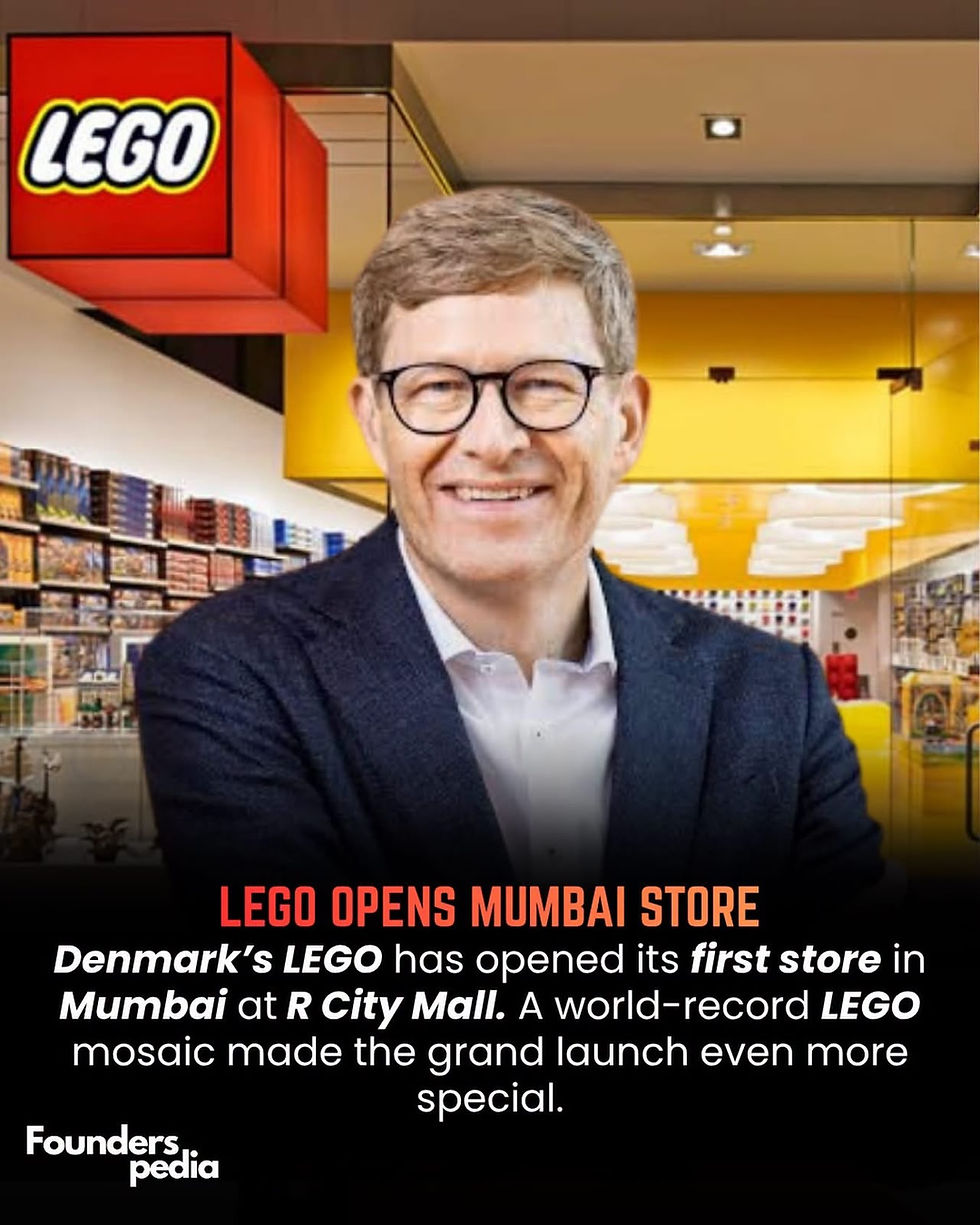
What actually opened
On July 25, the LEGO Group opened its first Certified Store in Mumbai, on the ground floor of R City Mall in Ghatkopar West. It is 2,310 square feet. It stocks more than 250 sets, including the ones that only turn up in certified stores - the Technic Koenigsegg megacar, the Icons arcade pinball machine, the sets that adult collectors circle like sharks.
It is not, contrary to a lot of the graphics doing the rounds this week, LEGO's first store in India. It is the fifth. Gurugram got the first at Ambience Mall in May 2025, then two in Bengaluru, then Chennai. Mumbai, in the great tradition of Mumbai assuming it goes first, went fifth.
The store was opened with the Ample Group, inside a Runwal Realty mall. Over 300 children turned up on day one. Rannvijay Singha came. So did creators Ayush Mehra, Agasthya Shah, Raunaq Rajani and Ishpreet Balbbir. There was a flat 10% off on July 25 and 26, which is how you know somebody understood the local market.
The record
The headline number is 738,000 bricks.
That is the mosaic that took the Guinness World Records title for the largest LEGO brick mosaic (multiple panels), built by Mumbai fans working alongside Ritam Bhatnagar, one of India's best-known adult LEGO builders. Cube-shaped. Covered in the city - the Bandra-Worli Sea Link, the coastline, the kaali-peeli taxis. “Hello Mumbai” across the top.
Sit with the logistics of that for a second. Seven hundred and thirty-eight thousand individual pieces, sorted by colour, placed by hand, by a crowd of strangers who came to a mall in Ghatkopar and left having broken a world record together.
Nobody was paid to place those bricks. That is not a small detail.
The Dabbawala made of 29,000 pieces
The thing that will actually get photographed, though, is inside the store.
There is a LEGO Dabbawala. Twenty-nine thousand bricks. Alongside pop-art builds of the Gateway of India, Marine Drive, the Sea Link, the black-and-yellow taxi. India's first vertical LEGO Play Wall runs along one side.
The Dabbawala is the choice worth thinking about. LEGO could have built Bollywood. It could have built cricket. It could have built the skyline - the safe, postcard, airport-lounge version of this city that every global brand reaches for when it wants to say Mumbai without knowing anything about Mumbai.
Instead it built the men who carry lunch boxes. A logistics network so precise that Harvard studies it, run by people who mostly did not finish school, that has functioned for over a century without an app. A system built out of identical small units arranged in exact sequence, where one piece in the wrong place breaks the whole chain.
If you were going to explain LEGO to Mumbai using one thing Mumbai already has, it would be that.

Who this store is actually for
Here is the part the press release does not say.
LEGO in India is expensive. A serious set costs what a family spends on a week of groceries. The certified-store exclusives cost considerably more than that. This is not a toy shop in the way a toy shop was a toy shop when most of us were nine.
Which makes the Ghatkopar location genuinely interesting. Not Lower Parel. Not BKC. Not a glass box in South Bombay where the brand could sit politely among luxury logos and be seen by exactly the people who already own LEGO. R City is a family mall in the eastern suburbs - the actual middle of the actual city, where people go on a Sunday because it is close, not because it is aspirational.
Putting the store there is either a real bet on a broader audience or a very good piece of positioning. Probably both. Either way, a kid from Ghatkopar can now walk past a vertical wall of bricks on a weekday evening, and that was not true a fortnight ago.
The bigger thing
There is a grown-up LEGO economy in India now, and it has been building quietly for years.
AFOLs - Adult Fans of LEGO, and yes, that is the actual term - have run communities, meets and displays here long before any certified store existed, importing sets at punishing prices because nobody was selling them locally. Ritam Bhatnagar did not appear at this launch out of nowhere. He is the visible edge of a subculture that built itself with no retail infrastructure at all.
Five stores in fifteen months is a company noticing that the audience arrived before the shops did.
And that is the actual culture story here, underneath the record and the ribbon-cutting: a generation that grew up without access to this stuff, that is now old enough to buy it for itself, and is spending on the childhood it did not quite get to have. The sets that sell hardest in India are not the ones aimed at children. They are the ones aimed at the people those children became.
Seven islands. Seven hundred and thirty-eight thousand bricks. A city that has always understood that if you keep adding pieces, eventually you get somewhere to stand.
The LEGO Certified Store is on the ground floor of R City Mall, Ghatkopar West, open 11 AM to 10 PM.


Comments