

Khushi: The Princess of the Jungle Ending Explained: Sacred Grove Secrets and the Forest Guardian Reveal

The calls of hornbills and emerald canopy breezes set the stage in Khushi: The Princess of the Jungle, Manorama Max's enchanting Children's Day animated premiere on 14 November 2026.
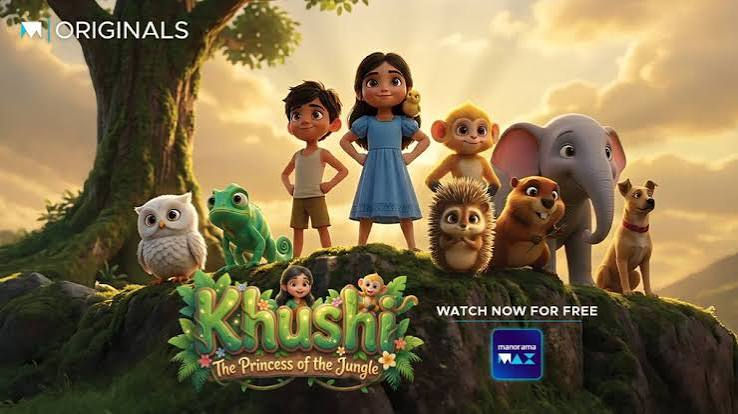
Set deep in the mist-shrouded foothills of the Western Ghats, this Malayalam animated ecological adventure blends regional folklore with pressing conservation themes. Designed for young viewers and families, the film tackles the delicate balance between indigenous biodiversity and creeping industrial greed, proving that childhood empathy can conquer even the heaviest machinery.
Please note: Comprehensive narrative details, thematic deconstruction, and ending spoilers follow for Khushi: The Princess of the Jungle.
The Guardian Child of the Western Ghats
The story revolves around Khushi, an intrepid eight-year-old orphan girl raised by her grandmother on the edge of the Periyar wilderness. Unlike the townspeople who view the deep forest with suspicion, Khushi possesses an uncanny communion with wildlife, communicating effortlessly with herd elephants, langurs, and river otters. Her life is centered around protecting the ancestral Sacred Grove (Kavu), a virgin botanical sanctuary sheltering centuries-old medicinal flora.
The sanctuary's tranquility is threatened when an unscrupulous timber consortium, backed by city developer Menon, secures forged permits to clear three hundred hectares of pristine forest for an expansive luxury eco-resort. The clash between predatory commercial expansion and ecological stewardship echoes the moral confrontations explored in our analysis of indigenous folklore and social resistance, highlighting how traditional communities stand as the final barrier against rampant exploitation.
The Bulldozers at the Ancient Gate
As the monsoon clouds assemble over the peaks, the timber company rolls heavy excavation equipment up the winding mountain roads. When the local forest ranger is sidelined by corporate intimidation, Khushi realizes the forest must defend itself. Armed only with a handcrafted bamboo flute bequeathed by her grandmother and a satchel of rare wild seeds, she ventures into the heart of the forest to awaken its slumbering elemental protectors.
The second act escalates into thrilling cat-and-mouse suspense. Khushi and her elephant companion, Appu, lay clever organic diversionary traps, using hollow bamboo logs to mimic tiger roars and deploying stinging bee swarms to temporarily disable the logging camps. The tactical ingenuity of the forest defense recalls the strategic precision analyzed in subterranean fortress and procedural operations, demonstrating how intimate knowledge of local terrain can neutralize superior technological force.
The Sacred Grove Climax: Awakening the Vanadevatas
The film reaches its emotional zenith during a nocturnal thunderstorm at the roots of the colossal Grandfather Banyan. As commercial chainsaws threaten to sever the sacred trunk that stabilizes the river catchment, Khushi climbs to the highest canopy bough. Playing a poignant, soaring melody on her bamboo flute, her music resonates with the natural acoustic frequencies of the mountain watershed.
In a visually stunning, bioluminescent sequence, the ancient forest spirits—the Vanadevatas—awaken from the roots and waterfalls. Rather than unleashing violent fury, the elemental forces command the swelling monsoon torrents, triggering a precise, non-lethal earthflow that swallows the diesel generators and bulldozers, burying the machines under protective mud while sparing every tree and animal. Developer Menon's crew flees in terror, recognizing the inviolable sanctity of the wild.
The Biosphere Reserve and Khushi's Crown
In the film's heartwarming resolution, state wildlife authorities and tribal council leaders arrive on the scene. Alerted by Khushi's documented evidence of rare endangered plant species, the government officially rescinds the developer's illegal lease and gazettes the entire valley as an inviolable Biosphere Reserve. The community formally honors Khushi not as an abandoned orphan, but as the ceremonial 'Princess of the Jungle.'
The ending carries a resonant message for Children's Day: true guardianship of our planet requires neither immense wealth nor political authority, but pure courage, empathy, and an unwavering respect for the living earth. With rich, verdant animation and evocative traditional folk instruments, Khushi: The Princess of the Jungle stands as an uplifting, essential animated gem for audiences of all ages.


Comments