
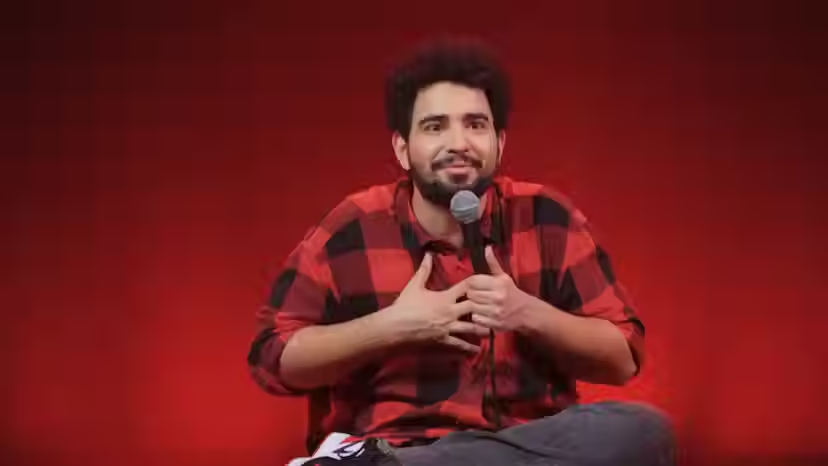


India's Got Latent: Samay Raina's Comedy Return


The landscape of digital comedy in India has been significantly influenced by Samay Raina's hit talent-comedy series, India's Got Latent. Following a successful first season, the second season of the show premiered on June 20, 2026. The series is released bi-weekly and is available to audiences via a dual-platform simulcast on both Netflix and YouTube. Hosted by Raina, the show continues to showcase unusual and eccentric talents from across the country, combining them with sharp stand-up comedy and celebrity guest panels. The series represents the growing intersection between traditional television distribution and independent digital content creation.
The format of the show is distinct from traditional talent competitions. Contestants perform their unique acts in front of a panel of judges, but the scoring system features a twist. Before performing, each contestant must rate their own talent on a scale. The judges, led by Samay Raina and co-judge Balraj Singh Ghai, then provide their own evaluation. The primary goal for the contestant is not to get the highest score, but to ensure their self-rating matches the judges' score. This mechanic creates a humorous dynamic where self-awareness is rewarded more than raw skill. The tension builds as contestants try to evaluate their own appeal, often leading to funny misalignments. The scoring system encourages contestants to be honest about their abilities, creating a refreshingly self-deprecating tone.
The premiere episode of the second season featured a high-profile guest panel, including actors Alia Bhatt and Sharvari Wagh, alongside comedian Aashish Solanki. The presence of mainstream cinema stars highlights the growing influence of digital comedy formats in the Indian entertainment industry. The interactions between the traditional actors and the eccentric performers provide much of the episode's humor, showing the contrast between polished public personas and raw, unpredictable talents. The panel's reactions are spontaneous, capturing genuine surprise at the weird acts. This crossover appeal has helped the show reach audiences who might not normally follow independent comedy channels.
A key aspect of the show's success is its focus on internet culture and community engagement. Samay Raina's hosting is fast-paced and irreverent, allowing him to navigate the chaotic performances with ease. The show has developed a dedicated online community that dissects each episode on platforms like Reddit and X. However, the show's popularity has also attracted challenges, with various unofficial mobile applications attempting to capitalize on the brand, leading to warnings from the producers regarding official streaming channels. The host often references these developments, keeping the content current and connected to online discussions, reinforcing the interactive nature of the broadcast.
The production values are simple, mimicking the casual style of internet broadcasts while maintaining professional sound and editing. The show's appeal lies in its authenticity; it celebrates weirdness and comedic failure rather than polished professionalism. By placing internet comedians alongside major Bollywood stars, the series bridges the gap between mainstream television and digital creator content. The audience gets to see a raw, unedited side of celebrity guests, who are forced to react to bizarre situations. The low-budget aesthetic is a deliberate choice, emphasizing the raw talent and immediate humor over corporate production values.
The series is accessible to viewers worldwide. In India, audiences can watch the episodes on YouTube or stream them on Netflix. For international viewers in the United States (US), the United Kingdom (UK), Canada, and Australia, the show is available on Netflix and YouTube, ensuring that the global diaspora can follow the eccentric performances and comedic banter. With new episodes dropping every two weeks, the second season is set to continue its run as a dominant force in digital comedy.
The growth of India's Got Latent indicates a shift in how comedy is consumed in South Asia. Traditional television networks have historically favored family-friendly, scripted comedy shows. In contrast, Raina's project relies on unscripted, edgy humor that speaks directly to younger, internet-native demographics. The dual-release model on YouTube and Netflix is a strategic move that maximizes reach, using YouTube for immediate community engagement and Netflix for premium presentation. This approach allows the show to capture both casual viewers and dedicated fans.
Samay Raina built his channel's initial audience through chess streaming during the global pandemic, creating an interactive style that he successfully transitioned into large-scale unscripted formats. This streaming background is visible in the show's pacing, which mimics the casual, high-interaction style of live broadcasts. The comedic contribution of co-judge Balraj Singh Ghai provides a reliable anchor, as his traditional stand-up background balances Raina's chaotic hosting. The rotating guest panels are carefully selected to represent different segments of the entertainment industry, ensuring a fresh perspective for each episode.
The licensing and distribution agreement represents a unique model for independent creators. By securing a non-exclusive streaming window with Netflix while maintaining simultaneous uploads on YouTube, Raina's production team has bypassed the traditional gatekeeping of major Indian television channels like Sony TV or Star Plus. This distribution freedom ensures that the show is not bound by strict network censorship guidelines, allowing the comedians and judges to deliver unfiltered, edgy humor that would otherwise be edited out. The success of this model indicates that premium digital networks are willing to accommodate flexible distribution terms to capture the massive audiences built by independent online creators.
The acts themselves range from the impressive to the deliberately awful, with the show celebrating both extremes. Contestants who display genuinely unique, obscure talents are given a platform, while those who fail spectacularly are handled with good-natured humor by the judges. The guest panels must adapt to this unpredictable environment, often leading to moments where established actors must step outside their comfort zones. This unpredictability is the core appeal of the show, ensuring that no two episodes are alike.
As the second season progresses, the producers have introduced minor adjustments to the format, including guest performers and special theme episodes. The core scoring mechanic remains the same, ensuring the show retains its unique identity. The success of the series has also led to discussions about live tours and merchandise, indicating the potential for independent digital formats to scale into larger entertainment franchises. Samay Raina's ability to maintain creative control over the project while partnering with major platforms like Netflix serves as an interesting model for future digital creators in India.
The ongoing conversation surrounding the show on social media platforms indicates that India's Got Latent has achieved a significant level of cultural relevance. Fans actively participate in rating the contestants online, comparing their own scores with the judges' decisions. This active participation highlights how modern media is moving away from passive consumption toward interactive engagement. The show's ability to maintain its raw, independent spirit despite its commercial success will be key to its long-term survival in the competitive digital landscape. With millions of views per episode, the series has demonstrated that unscripted digital formats can achieve mainstream success without the backing of traditional television conglomerates. This structural shift in the entertainment ecosystem suggests that independent creators will continue to command significant influence in the years to come, rewriting the rules of comedy distribution across South Asia and the global diaspora. Fans actively analyze each guest judge's reaction frame-by-frame on social media platforms, creating a secondary wave of viral marketing that keeps the show in public conversation long after the initial broadcast.
Quick Facts
Title: India's Got Latent
Genre: Comedy / Talent Show
Host & Judges: Samay Raina, Balraj Singh Ghai, and rotating celebrity guests
Season 2 Premiere: June 20, 2026
Platform & Schedule: Released bi-weekly on Netflix and YouTube simultaneously
Season 2 Ep 1 Guests: Alia Bhatt, Sharvari Wagh, Aashish Solanki
Global Availability: Streamable on YouTube and Netflix in India, US, UK, Canada, Australia
FAQ
When did Season 2 of India's Got Latent release?
The second season of the show premiered on June 20, 2026. Episodes are released on a bi-weekly schedule on the official channels.
Where can I watch India's Got Latent online?
The series is simulcast on YouTube and Netflix. You can watch it in India, the United States, United Kingdom, Canada, and Australia on both platforms.
What is the unique scoring rule in India's Got Latent?
Contestants must self-rate their performance before they start. The goal is for the judges' final score to match the contestant's self-evaluation precisely.
Who was on the guest panel for India's Got Latent Season 2 Episode 1?
The premiere episode featured Bollywood actors Alia Bhatt and Sharvari Wagh alongside stand-up comedian Aashish Solanki as guest judges.


Comments