



Independence Day And Indian Cinema: From Silent Pioneers To Modern Blockbusters

Every year as August 15 approaches, multiplexes across India prepare for major holiday releases. Modern audiences view Independence Day as a premier commercial movie weekend. However, as a film historian analyzing the heritage of Indian cinema, I look at August 15 through a much deeper historical lens.
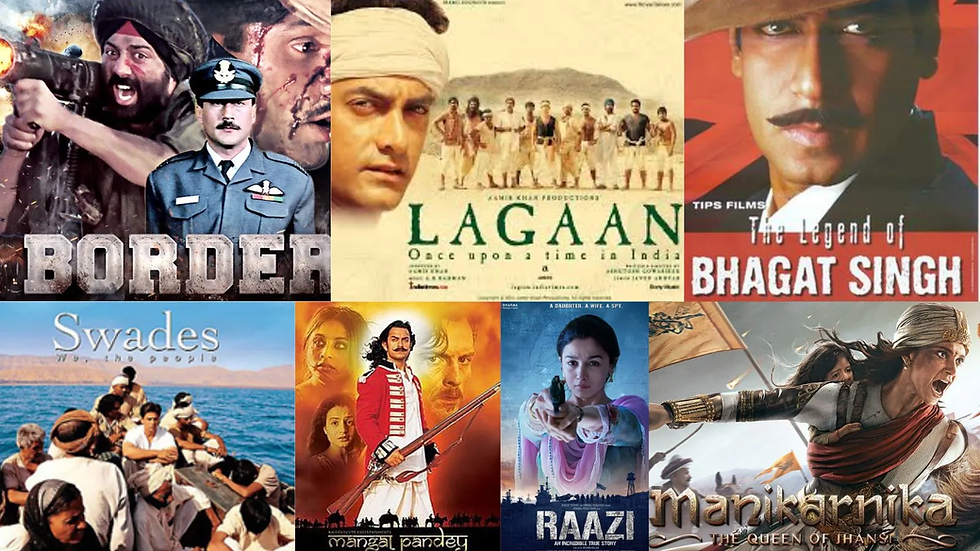
Long before cinema became a multi-crore global industry, Indian movies operated as a shadow weapon of mass mobilization during the freedom movement. Early directors, lyricists, and producers did not merely document history. They actively fought in the independence struggle.
They risked financial ruin, police raids, and imprisonment to outsmart British censors. They embedded forbidden Swadeshi symbols inside mainstream entertainment, turning movie halls into spaces of anti-colonial resistance.
Understanding how Indian cinema depicted the freedom struggle requires exploring both the pioneer visionaries who outsmarted colonial censorship and the modern filmmakers who transformed anti-colonial history into global visual spectacles like RRR, Sardar Udham, and Lagaan.
Quick Facts: Historical & Modern Freedom Cinema Milestones
First Banned Film: Bhakta Vidur (1921) by Baburao Painter
Anti-Colonial Trick: "Door Hato O Duniyawalo" in Kismet (1943)
Pioneer Studio: Prabhat Film Company (V. Shantaram & Partners)
Golden Era Classic: Shaheed (1965) starring Manoj Kumar
Modern Oscar Nom: Lagaan (2001) directed by Ashutosh Gowariker
Modern Realism: Sardar Udham (2021) starring Vicky Kaushal
Global Spectacle: RRR (2022) directed by S.S. Rajamouli
Direct Answer: How Has Indian Cinema Depicted The Freedom Movement From Early Pioneers To Modern Movies?
Indian cinema depicted the freedom movement by evolving from secret allegorical resistance during British rule into modern global blockbusters. Early pioneer filmmakers like Baburao Painter, V. Shantaram, Sohrab Modi, and Kavi Pradeep produced subversive films like Bhakta Vidur (1921) and Kismet (1943), outsmarting British colonial censors to fund and inspire the independence movement. After independence, this tradition grew from golden-era classics like Shaheed (1965) into modern cinematic milestones including Lagaan (2001), Rang De Basanti (2006), Sardar Udham (2021), and RRR (2022).
Silent Era Subversion: Outsmarting British Colonial Censors
The relationship between Indian cinema and the freedom movement began during the silent era. British colonial authorities quickly realized that film was a far more potent medium than printed newspapers because it could reach illiterate masses across diverse linguistic regions.
In response, the British government established the Indian Cinematograph Act of 1918, creating strict regional censor boards to intercept any content promoting national independence, Mahatma Gandhi's teachings, or anti-British sentiment.
Indian filmmakers responded with brilliant artistic subversion.
1. Baburao Painter And The Banned Legacy Of Bhakta Vidur (1921)
In 1921, Baburao Painter, founder of the Maharashtra Film Company, produced a silent mythological film titled Bhakta Vidur. On the surface, the movie retold a story from the Mahabharata.
However, Baburao Painter dressed the lead character of Vidur in a distinct white Gandhi cap, khadi attire, and showed him spinning a charkha on screen. The political metaphor was instantly clear to Indian audiences, who cheered wildly in theaters.
British inspectors recognized the subtext and promptly banned Bhakta Vidur across Mumbai, Chennai, and Kolkata. It became the very first Indian motion picture to be banned by colonial authorities, proving that Indian filmmakers were ready to defy state censorship to support the national movement.
2. Kavi Pradeep And The Trick Lyrics Of Kismet (1943)
By the early 1940s, the Quit India Movement was at its peak. Bombay Talkies released Kismet in 1943, directed by Gyan Mukherjee. The film featured a song written by lyricist Kavi Pradeep titled "Door Hato O Duniyawalo Hindustan Humara Hai".
To pass the song through British censorship, Kavi Pradeep wrote lines mentioning Germany and Japan, tricking colonial inspectors into believing it was a pro-Allied wartime propaganda song.
Once the film hit theaters, Indian audiences immediately recognized the true meaning of the lyrics. People stood up in movie halls and sang the song as an anti-British anthem. When British authorities finally realized they had been fooled, they issued arrest warrants for Kavi Pradeep, forcing him to go into hiding.
The Visionary Pioneers: V. Shantaram, Sohrab Modi, And K.A. Abbas
The early decades of Indian cinema were shaped by courageous visionaries who viewed their cameras as instruments of social reform and political emancipation.
V. Shantaram And Prabhat Film Company
V. Shantaram, co-founder of Prabhat Film Company in Kolhapur and Pune, was a master of political allegory. Films like Amrit Manthan (1934) and Duniya Na Mane (1937) addressed caste oppression, women's rights, and social stagnation, which Shantaram viewed as internal barriers holding India back from true freedom.
During the 1930s, Prabhat Film Company quietly funneled a portion of its box office profits to support local freedom fighters and underground press publications operating in Maharashtra.
Sohrab Modi And Historical Resistance
Sohrab Modi, founder of Minerva Movietone, specialized in grand historical dramas designed to inspire national pride. His film Sikandar (1941), depicting King Porus standing up to Alexander the Great, was released during World War II.
The film's speeches on self-respect and territorial sovereignty resonated so strongly with Indian soldiers serving in the British Indian Army that military authorities banned Sikandar from being screened in army cantonments. Later, in 1953, Modi directed Jhansi Ki Rani, India's first Technicolor film, cementing the memory of Rani Lakshmibai's 1857 resistance on the big screen.
K.A. Abbas And IPTA's Social Realism
Khwaja Ahmad Abbas, a key figure in the Indian People's Theatre Association (IPTA), brought sharp socio-economic realism to Indian cinema. His script for Dharti Ke Lal (1946) documented the devastating 1943 Bengal famine, exposing how colonial policies caused the deaths of millions.
Abbas demonstrated that independence was not merely about swapping flags. It was about ensuring human dignity, economic justice, and food security for the common citizen.
Golden Era Depictions: Manoj Kumar And The Rise Of Patriotic Cinema
Following Independence in 1947, Indian cinema shifted from secret subversion to processing the trauma of Partition and building a new national identity. The 1950s saw filmmakers like Bimal Roy (Do Bigha Zamin) and Mehboob Khan (Mother India) exploring rural resilience and nation-building.
By the mid-1960s, a distinct sub-genre of explicit patriotic cinema emerged, led by actor-director Manoj Kumar.
The Landmark Impact Of Shaheed (1965)
In 1965, Manoj Kumar directed and starred in Shaheed, a biographical film depicting the life of Bhagat Singh, Sukhdev, and Rajguru. Unlike earlier sanitized historical accounts, Shaheed brought revolutionary passion to mainstream theaters.
Supported by timeless musical compositions like "Mera Rang De Basanti Chola" and "Sarfaroshi Ki Tamanna", the film presented Bhagat Singh's intellectual clarity and sacrifice with deep reverence. Shaheed established the blueprint for how Bollywood would portray freedom fighters for the next three decades, earning Manoj Kumar the nickname "Bharat Kumar."
Modern Cinema: How 21st-Century Filmmakers Transformed Anti-Colonial History
As Indian cinema entered the 2000s and moved toward the modern era, the depiction of the freedom struggle underwent a massive evolution. Filmmakers stopped relying on simple melodrama, utilizing international production standards, historical realism, and mythic scale to tell anti-colonial stories.
1. Lagaan (2001) And Rang De Basanti (2006)
Ashutosh Gowariker's Lagaan (2001) redefined modern Indian cinema by using a game of cricket as a metaphor for anti-colonial tax resistance. By uniting villagers across different castes and backgrounds against British officers, Lagaan showcased that Indian unity was the ultimate key to freedom, earning an Academy Award nomination.
Rakeysh Omprakash Mehra's Rang De Basanti (2006) bridged historical revolutionaries with contemporary youth culture. By editing the stories of Bhagat Singh and Chandrashekhar Azad alongside modern college students fighting corruption, the film connected past sacrifices with 21st-century civic responsibility.
2. Modern Biopics: Manikarnika And Sye Raa Narasimha Reddy (2019)
The late 2010s saw a surge in high-budget biographical epics celebrating regional freedom fighters who fought British rule long before the 20th century.
Kangana Ranaut's Manikarnika: The Queen of Jhansi (2019) brought fierce action choreography to the story of Rani Lakshmibai's 1857 revolt. Simultaneously, Sye Raa Narasimha Reddy (2019), starring Chiranjeevi, brought to light the forgotten story of Uyyalawada Narasimha Reddy, who led an armed rebellion against the British East India Company in Andhra Pradesh in 1846.
3. Shoojit Sircar's Sardar Udham (2021)
Shoojit Sircar's Sardar Udham (2021), starring Vicky Kaushal, represents the high-water mark of realistic modern anti-colonial filmmaking. The film chronicles Udham Singh's two-decade journey to avenge the 1919 Jallianwala Bagh massacre by assassinating Michael O'Dwyer in London.
Rather than using loud jingoism, Sardar Udham delivers a quiet, devastating examination of colonial violence. The 50-minute re-enactment of the Jallianwala Bagh massacre stands as one of the most sobering, historically precise sequences in Indian film history, stripping away romanticism to expose the brutal reality of imperial rule.
4. S.S. Rajamouli's RRR (2022): The Global Anti-Colonial Spectacle
In 2022, S.S. Rajamouli's RRR took anti-colonial Indian cinema to a global audience. The film reimagined real-life Telugu freedom fighters Alluri Sitarama Raju (Ram Charan) and Komaram Bheem (NTR Jr.) into mythic action heroes joining forces against British imperialists in 1920s Delhi.
RRR combined kinetic action choreography, spectacular music, and visceral anti-colonial catharsis. When the film won an Academy Award for "Naatu Naatu" and dominated international box offices, it proved that India's historical struggle against British rule possessed global narrative power.
For international audiences and NRI communities in the US, UK, Canada, and Australia looking to stream these modern classics, films like RRR, Sardar Udham, and Lagaan are available globally on major streaming platforms like Netflix and Amazon Prime Video.
The Historian's Perspective: Why Freedom Cinema Remains Essential
Looking back across a century of Indian filmmaking, the story of Indian cinema and Independence Day is fundamentally a story of resilience. Early pioneers built an industry under colonial rule, facing censorship and financial threats to ensure that Indian voices, Indian stories, and Indian dreams could be seen on screen.
As multiplexes screen new releases this August, honoring these early visionaries alongside modern masters is essential. Movies like Bhakta Vidur, Kismet, Shaheed, Sardar Udham, and RRR are not merely commercial entertainment. They are living monuments to the courage, sacrifice, and artistic brilliance that helped build modern India.
FAQ Section
What was the first Indian movie banned by British colonial censors?
The silent film Bhakta Vidur (1921), directed by Baburao Painter, was the first Indian film banned by British censors because the lead character wore a white Gandhi cap and spun a charkha, symbolizing Mahatma Gandhi's anti-colonial movement.
How did the 1943 film Kismet outsmart British censorship?
Lyricist Kavi Pradeep wrote the song "Door Hato O Duniyawalo Hindustan Humara Hai" for Kismet (1943), mentioning Germany and Japan to trick censors into believing it was anti-Axis propaganda. Indian audiences recognized the anti-British subtext and sang it in freedom rallies.
What are the best modern Indian cinema movies about the freedom struggle?
Top modern Indian anti-colonial films include Ashutosh Gowariker's Lagaan (2001), Rakeysh Omprakash Mehra's Rang De Basanti (2006), Shoojit Sircar's Sardar Udham (2021), and S.S. Rajamouli's RRR (2022).
How did RRR depict the Indian freedom struggle for global audiences?
S.S. Rajamouli's RRR (2022) reimagined historical revolutionaries Alluri Sitarama Raju and Komaram Bheem into mythic heroes fighting British imperialists in 1920s India, using high-octane action and spectacular music to take anti-colonial storytelling to global theaters.
Where can international viewers stream modern Indian freedom struggle movies?
International audiences in the US, UK, Canada, and Australia can stream acclaimed modern patriotic films like RRR and Lagaan on Netflix, and Sardar Udham on Amazon Prime Video.



Comments