

Christopher Nolan The Odyssey Mahabharata: The Overlap Is Real

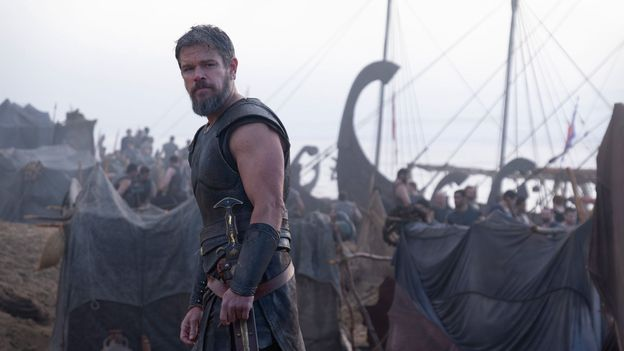
Christopher Nolan The Odyssey Mahabharata connection is accelerating ahead of the film's July 17, 2026 theatrical release. The similarities are not an accident of marketing, but a structural reality of the text Christopher Nolan chose to film. Christopher Nolan's The Odyssey is a direct adaptation of Homer's Greek epic, not a credited remake of the Mahabharata. Matt Damon stars as Odysseus, an exiled king navigating a hostile sea to return to Ithaca after the Trojan War. Christopher Nolan's The Odyssey shares no formal connection to Indian mythology. The thematic overlap stems entirely from shared cross-cultural archetypes involving divinely cursed warriors, brutal homecoming wars, and the heavy moral cost of righteous duty.
Quick Facts
Release Date: July 17, 2026
Platform: Theatrical IMAX release globally. Streaming on JioCinema in India, and internationally on the JioCinema global app.
Director: Christopher Nolan
Runtime: TBA
Top Cast: Matt Damon (Odysseus), Anne Hathaway (Penelope), Tom Holland (Telemachus)
Status: Upcoming
The Moral Paralysis of Matt Damon's Odysseus
A surface reading of the plot gives you the standard hero's journey. Odysseus spends a decade trying to return home after masterminding the Trojan horse. Odysseus faces sirens, giants, and hostile gods. The core dramatic question is whether a flawed hero can reclaim a lost home. The Mahabharata answers the exact same question through the Pandava brothers. The Pandavas lose their kingdom in a rigged dice game, endure years of exile, and wage a catastrophic war to win back their throne. Like Odysseus, the Pandavas carry the heavy guilt of mass slaughter. The Pandavas spend the latter part of the epic wondering if regaining power was worth the moral cost. Nolan's Odysseus is not a triumphant conqueror. USA Today notes that Matt Damon plays a man shaped by PTSD dread. That profile is strikingly close to Yudhisthira and Arjuna. On the eve of battle, Arjuna breaks down, paralyzed by the idea of killing his own kin. Both Odysseus and the Pandavas are epic protagonists defined by moral crisis rather than sheer invincibility.
Anne Hathaway's Penelope Functions As A Draupadi Figure
In Nolan's Ithaca, Penelope holds the kingdom together while arrogant suitors overrun the palace and consume her resources. Penelope is a symbol of stubborn loyalty. Penelope defends an absent husband's claim in a world that has decided Odysseus is dead.
The Indian lens makes this dynamic immediately recognizable. The Mahabharata gives Draupadi a comparably besieged role. As the shared wife of the Pandavas, Draupadi is publicly humiliated in the Kaurava court and swears she will not tie her hair until it is washed in the blood of her enemies. While the Pandavas wander in exile, Draupadi's insult remains unresolved. Penelope's household sits in a similar state of corrupted suspension. Both women function as living reminders that the hero's journey home is not just about reunion. The journey is about violently cleansing a corrupted domestic space.

How Zeus's Law Operates Exactly Like Dharma
The Atlantic reports that Nolan places a heavy emphasis on "Zeus's Law," the ancient Greek idea of sacred hospitality. Odysseus cites this law whenever Odysseus seeks shelter. Odysseus usually finds betrayal instead. The Odyssey repeatedly asks whether these warriors are cursed, or if the world itself is disintegrating after too much hubris.
The Mahabharata frames these exact questions through dharma and karma. Kings, warriors, and sages debate righteous conduct when every option leads to suffering. Krishna's guidance to Arjuna in the Gita attempts to reconcile personal morality with cosmic order. When Nolan shows Odysseus testing the limits of divine law, Indian audiences are watching a Westernized version of dharma and karma conflicts.
The Non-Linear Playbook Belongs To Both Epics
Critics note that Nolan structures The Odyssey with his signature temporal muddling. The sack of Troy is teased early and revealed fully later. Flashbacks bleed into present-day conversations. Mahabharata scholars point out that the Indian epic operates exactly like this. The central war is framed through embedded stories, ancestral flashbacks, and philosophical digressions. Stylistically, Nolan is adapting Homer. Structurally, the non-linear approach brings Christopher Nolan directly to the Mahabharata playbook.
Indian viewers paying premium IMAX prices come equipped with subconscious memories of televised Mahabharat reruns. Nolan's latest film feels less like a foreign classic and more like a globalized cousin of a local epic. The film is re-skinned with Greek names but driven by Kurukshetra-level stakes. Claiming the film is copied is inaccurate. Acknowledging that The Odyssey taps into the exact same mythological architecture is simply reading the data correctly.
FAQ
Is The Odyssey based on Mahabharata? No, Christopher Nolan's The Odyssey is a direct adaptation of Homer's ancient Greek epic poem. The similarities arise because both epics rely on universal archetypes of exiled heroes, divine intervention, and the moral fallout of massive wars.
What is Christopher Nolan The Odyssey plot explained? The Odyssey follows King Odysseus as Odysseus spends ten years attempting to return to Ithaca after the Trojan War. Odysseus must survive hostile monsters and vengeful gods while Penelope defends their palace from aggressive suitors.
Who plays Penelope in The Odyssey? Anne Hathaway plays Penelope in The Odyssey. Penelope is the fiercely loyal wife of Odysseus who protects their kingdom from collapse while Tom Holland plays Telemachus, the son who comes of age during his father's long absence.
What is The Odyssey movie release date India? The Odyssey releases in Indian theaters and IMAX screens nationwide on July 17, 2026. This date matches the global release schedule set by Universal Pictures.


Comments