

AH Ending Explained: Rahul Vijay's Dark Investigative Climax and Syndicate Reveal

Grim urban crime demands relentless pursuit when institutional corruption conceals systemic violence. In director Sai Baali's Telugu investigative thriller AH, Rahul Vijay delivers a gritty, career-redefining turn as Detective Arjun, an unyielding police officer tasked with unraveling a string of vanishing college students across Hyderabad.
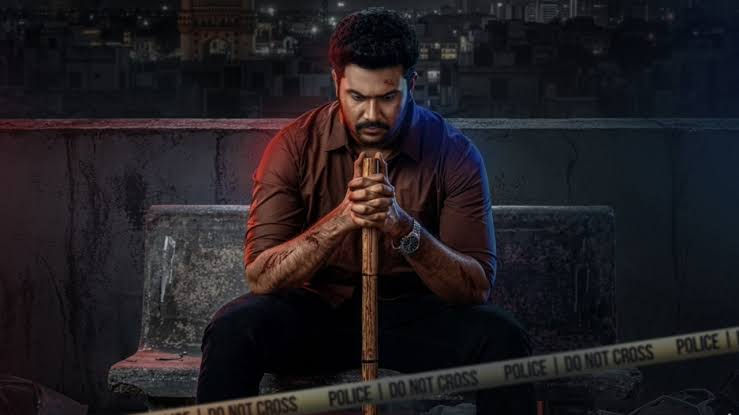
The film discards standard commercial song breaks and romantic subplots to construct a taut, atmospheric procedural that pulls viewers into a harrowing underground trafficking conspiracy.
Detailed narrative spoilers ahead: this deep-dive breaks down the procedural clues, undercover stakes, institutional rot, and rain-drenched climax confrontation of AH.
The Disappearance Pattern: Decoding the Phony Overseas Placement Trap
The narrative begins with the sudden disappearance of Sneha, a final-year biotechnology graduate who vanishes without a trace after attending an exclusive walk-in interview in Hyderabad's Financial District. Assigned to lead a specialized task force under intense media scrutiny, Detective Arjun quickly notes alarming commonalities across five unresolved missing-persons files logged over the preceding six months: every victim was an academically gifted woman from a lower-middle-class family seeking overseas employment opportunities.
Forensic digital analysis of the recruitment portal reveals that the placement agency operates behind multiple disposable shell corporations registered in offshore tax havens. The recruiters utilized spoofed server IPs, encrypted messaging relays, and temporary physical interview suites rented inside legitimate corporate tech parks to project an aura of unassailable prestige.
This intricate web of illicit corporate shielding mirrors the executive maneuvering and legal grey zones explored in our analysis of corporate governance and accountability. Rather than operating as legitimate employment brokers connecting candidates to overseas firms, the consultancy functions as a predatory pipeline feeding an interstate human trafficking and illegal organ-harvesting syndicate.
Undercover Stakes: How Archana Iyer's Investigation Infiltrates the Perimeter
Arjun's investigation gains crucial traction through an uneasy, clandestine alliance with investigative journalist Divya (Archana Iyer). Driven by personal grief over her younger sister's unresolved disappearance a year prior, Divya goes undercover posing as an applicant seeking a hospitality role in Southeast Asia. Wearing concealed micro-audio transmitters and GPS-embedded footwear, Divya allows herself to be transported to a secluded transit holding safehouse situated in Shamshabad.
Her daring reconnaissance exposes the syndicate's operational mastermind: a charismatic corporate executive portrayed with chilling menace by John Vijay, who maintains close ties with corrupt municipal enforcement officials and private logistics fleets. John Vijay's character represents the calculated banality of modern white-collar evil, viewing human lives strictly as high-yield commodities.
When Divya's audio feed is abruptly jammed by frequency-scrambling equipment inside the holding facility, Arjun realizes her cover has been compromised. The police team initiates a high-speed nocturnal pursuit along the outer ring road, racing against a ticking clock to prevent the victims from being moved out of state jurisdiction.
The Warehouse Raid: Tactical Breakdown of the Rain-Drenched Climax
The film's climactic third act takes place inside an abandoned container depot near Medchal under torrential rainfall. Rather than relying on stylized wire-work stunts or slow-motion heroics, director Sai Baali stages a grounded, visceral raid. Arjun and his tactical unit breach the perimeter just as the syndicate prepares to load eight sedated victims into insulated shipping containers destined for maritime departure through Vizag port.
A brutal hand-to-hand duel ensues between Arjun and John Vijay's lead enforcer across rusted steel containers. Arjun uses close-quarters defensive maneuvers and tactical disarms to neutralize armed guards, taking multiple injuries in the process. Meanwhile, Divya manages to break free from her restraints and disable the facility's primary hydraulic gate controls, preventing the transport trucks from escaping onto the highway.
Cornered inside the terminal control office, the syndicate boss attempts to incinerate server hard drives containing international client registries and financial transaction records. Arjun breaches the office door, disarming the executive in a desperate physical struggle and securing intact digital evidence that implicates senior bureaucratic backers across three states, ensuring the criminal network is dismantled at its highest tier.
Genre Standing: How AH Evolves the Telugu Crime Thriller
In a regional cinematic landscape frequently dominated by outsized star vehicles and hyper-commercial formulas, AH stands out alongside benchmark investigative procedurals like the HIT franchise and Agent Sai Srinivasa Athreya. The screenplay respects procedural realism: mobile triangulation errors, bureaucratic pushback, and forensic bottlenecks are treated as tangible obstacles rather than convenient plot devices.
The sheer momentum and gritty realism parallel the intense investigative beats dissected in modern crime narrative examinations. By anchoring the stakes in real-world socioeconomic vulnerabilities—namely, the desperation of educated youth seeking upward mobility—AH transforms a missing-persons case into a chilling reflection of contemporary urban perils.'
Critical Verdict: Unapologetic, Hard-Hitting Procedural
Rating: 4 out of 5 Stars. Rahul Vijay anchors the film with focused intensity, effectively trading commercial polish for raw moral weight. Archana Iyer brings credible emotional resolve, while Sai Baali's disciplined direction ensures the suspense remains taut until the final arrest. A must-watch for fans of authentic, hard-boiled crime cinema.



Comments