Search Results
Search this site
5945 results found with an empty search
- ASSI Makers Bring Five Premieres to Tier-2 India, Take an Unconventional Route for promotions
Film to screen exclusively for cinema lovers in Patna, Ahmedabad, Lucknow, Indore , Delhi and Kolkata ahead of its big-screen release on 20th February The makers of ASSI are set to roll out an audience-first promotional strategy by taking the film across India ahead of its release. With six special premieres planned across Patna, Ahmedabad, Indore, Lucknow, Delhi, and Kolkata, scheduled a week before the film’s release, the makers aim to spark the right conversations among audiences. The approach reflects an effort to give equal importance to cities beyond the metros along with major urban centres in the film’s promotions. This also indicates the strong confidence the team has in the film. The team behind ASSI has consciously chosen to step beyond the usual promotional circuits to connect directly with audiences who continue to champion meaningful, content-led films. These cities represent communities of viewers who engage with cinema not just as entertainment, but as a shared cultural experience. By bringing the film directly to audiences ahead of its theatrical release, the makers hope to initiate conversations at the grassroots level, allowing the film’s themes to resonate organically. This approach mirrors the core intent of ASSI, an investigative courtroom drama that dares to question uncomfortable realities and provoke dialogue beyond the screen. The premieres are envisioned not merely as celebratory events, but as cultural touch-points, spaces where filmmakers, performers, and audiences come together to engage with the film’s ideas. In doing so, ASSI positions itself as a film that belongs as much to its viewers as it does to its creators. Starring Taapsee Pannu in the lead, ASSI features Kani Kusruti, Revathy, Manoj Pahwa, Kumud Mishra, and Mohammed Zeeshan Ayyub, with special appearances by Naseeruddin Shah, Suprriya Pathak, and Seema Pahwa, further elevating the film’s thrilling depth. Gulshan Kumar and T-Series present ASSI, a Benaras Media Works production, directed by Anubhav Sinha and produced by Bhushan Kumar, Krishan Kumar, and Anubhav Sinha. The film releases exclusively in theatres worldwide on 20th February 2026.
- Mann Hawa from ASSI Uplifts the Spirit with Strength, Truth and Resolve
Mann Hawa from the upcoming film ASSI is a soulful yet stirring track that perfectly mirrors the spirit of this fast-paced investigative courtroom drama that dares to ask uncomfortable questions. Composed by Rochak Kohli with heartfelt lyrics by Kumaar, and brought alive by the evocative voices of Mohit Chauhan, Parampara Tandon, and Rochak Kohli, the song captures the inner strength and quiet courage it takes to stand tall against the world. Mann Hawa is about choosing resilience over fear, truth over silence, and conviction over compromise. It gently uplifts the heart while instilling a sense of resolve, making you feel empowered to fight for yourself and what you believe in no matter the odds. Talking about the song director Anubhav Sinha shared, “Mann Hawa is not just a song, it is the emotional heartbeat of ASSI. In a story that challenges truths and confronts the uncomfortable, this track stands for the courage to speak up, to rise, and to stand tall against all odds. It celebrates the strength we find within ourselves when we choose to confront the world with honesty and resilience.” Starring Taapsee Pannu in lead, ASSI features Kani Kusruti, Revathy, Manoj Pahwa, Kumud Mishra, and Mohammed Zeeshan Ayyub, with special appearances by Naseeruddin Shah, Supriya Pathak, and Seema Pahwa, further elevating the film’s thrilling depth. Gulshan Kumar and T-Series present ASSI, a Benaras Media Works production, directed by Anubhav Sinha and produced by Bhushan Kumar, Krishan Kumar, and Anubhav Sinha. The film releases exclusively in theatres worldwide on 20th February 2026.
- From Bulls to Blessings: How Lanzante is Redefining Supercar Symbolism
"Your brand is a gateway to a different world. It’s not just a product; it’s a promise of a new reality." This marketing sentiment has never felt more literal than in the high-octane world of supercars. For decades, the industry has been a metaphorical safari of aggression. We’ve seen the charging bulls of Lamborghini and the prancing horses of Ferrari symbols designed to evoke raw, predatory power and the spirit of the hunt. These emblems tell a story of conquest and speed, positioning the car as a beast to be tamed. However, the legendary British automotive firm Lanzante has recently steered away from this traditional "aggressive stance" to adopt a symbol that feels revolutionary in its calm: Lord Ganesha. The soul of this shift traces back to an intimate, cross-cultural friendship. Paul Lanzante, the visionary behind the brand, shared a deep bond with the late George Harrison. Harrison, famously a devout practitioner of Hindu philosophy, once shared a perspective that stayed with Paul: Ganesha is not just a deity, but the Vighnaharta the remover of all obstacles and the giver of wisdom. To Lanzante, this wasn't just a piece of theological trivia; it was the ultimate engineering philosophy. While other brands were focused on creating "beasts" that conquer the road, Lanzante realized he wanted to create machines that transcend it. He envisioned a car that removes the technical and physical obstacles between the driver and the experience, offering a ride governed by "wisdom" rather than just reckless force. From a marketing psychology perspective, this is a masterstroke in brand positioning. By moving from the animal kingdom to the divine, the brand undergoes a "sacred elevation." In traditional luxury marketing, a brand promise is usually functional (we are fast) or emotional (you will feel powerful). Lanzante, however, has managed to make God’s promise the Brand’s promise. When the symbol is the Remover of Obstacles, the marketing narrative shifts from "look how fast I am" to "nothing can stand in your way." It is a pivot from external aggression to internal mastery. This choice is as functional as it is spiritual. In an era where every hypercar has 1,000 horsepower, "speed" is no longer a unique selling point; it’s a commodity. By adopting Ganesha, Lanzante differentiates itself through a narrative of flow and problem-solving. It tells the client that the engineering is so sophisticated that it anticipates and clears every hurdle be it aerodynamic drag or mechanical friction. It turns the act of driving into a meditative, frictionless experience. In the cutthroat world of luxury cars, Lanzante has proven that sometimes, the most aggressive way to win the market is to stop being aggressive and start being wise In the high-speed chase for dominance, perhaps the ultimate luxury isn't the strength to fight the road but the wisdom to clear it.
- Mark Ruffalo vs. OpenAI: Why the "QuitGPT" Movement is 2026’s Biggest Cultural Reset
Everyone is buzzing about Mark Ruffalo’s latest Instagram tiles, but let’s stop pretending this is just another celebrity reposting a petition. This is a calculated, high-stakes collision between Hollywood’s most relentless activist and the world’s most powerful AI company. The math isn't mathing for OpenAI right now: as they pivot toward federal defense contracts and political kingmaking, they’re losing the very creative class that built their training data. Ruffalo isn't just "spiraling"—he’s leading a villain era for Big Tech. What Actually Happened? In February 2026, a grassroots movement called QuitGPT went viral after FEC filings revealed OpenAI President Greg Brockman donated $25 million to the pro-Trump Super PAC, MAGA Inc. Mark Ruffalo, a veteran of the 2023 SAG-AFTRA strikes and a long-time climate activist, became the face of the boycott. He is urging his millions of followers to cancel their ChatGPT Plus subscriptions, citing OpenAI’s growing entanglement with ICE (Immigration and Customs Enforcement) and the Department of Homeland Security (DHS). The Insider Take This isn't about a single donation; it’s about PR damage control failing in real-time. OpenAI spent years branding themselves as "for humanity," but the 2026 "OpenAI for Government" initiative—which includes a $200 million Pentagon pilot and GPT-4 being used to screen resumes for federal agencies—has stripped that mask off. Ruffalo is smart. He’s not just attacking the tech; he’s attacking the revenue model. By targeting subscriptions, he’s hitting OpenAI where it hurts while the company is already bleeding market share to Google’s Gemini and Anthropic’s Claude. It’s a "straight-to-OTT" level of drama for Sam Altman, who now has to explain to progressive users why their $20/month is effectively funding a political machine they despise. Why This Matters for the Fanbase If you think this is just "Twitter noise," check the receipts. Over 200,000 people joined the boycott in the first week alone. For actors and artists, this is an extension of the 2023 labor wars. The Stakes: If Ruffalo successfully links ChatGPT to political extremism and state surveillance, the "cool" factor of using AI evaporates. The Prediction: Expect a "voluntary" transparency report from OpenAI within the next 14 days to stem the tide. If they don't, we’re looking at a permanent cultural reset where AI becomes as politically polarized as cable news. What Fans Are Missing Keep your eyes on the ID Verification pivot. While everyone is arguing about Trump, OpenAI quietly started requiring ID for "cybersecurity-related tasks." Ruffalo’s real fear—and the one he’s breadcrumbing in his captions—is that ChatGPT is becoming a surveillance tool. By framing the boycott around "solidarity with Minneapolis" (where ICE activity has sparked protests), Ruffalo is turning a tech debate into a civil rights movement. He’s not just a Marvel hero; he’s playing the long game to ensure AI companies face the same "polluter" status as the fracking firms he fought a decade ago. QUICK FACTS: Campaign Name: QuitGPT / Cancel ChatGPT Key Figure: Mark Ruffalo (Lead Amplified Activist) The Trigger: Greg Brockman’s $25M donation to MAGA Inc. The Tech Link: GPT-4 usage by ICE and DHS for surveillance/hiring. Current Momentum: 200,000+ sign-ups as of Feb 9, 2026. Fans Also Asked Q: Why is Mark Ruffalo boycotting ChatGPT? A: Mark Ruffalo is supporting the QuitGPT movement because OpenAI’s President donated $25 million to a pro-Trump Super PAC. He also cites OpenAI’s contracts with ICE as a violation of the ethical standards artists fought for during the 2023 strikes. Q: Is Greg Brockman still the President of OpenAI? A: Yes, Greg Brockman remains President. His massive 2025 donation to MAGA Inc. is the primary reason the QuitGPT campaign labels ChatGPT as "Trump’s biggest donor." Q: What is the QuitGPT movement? A: QuitGPT is a 2026 boycott movement urging users to delete ChatGPT and cancel subscriptions. It focuses on the political donations of OpenAI executives and the company's partnerships with the Department of Homeland Security. Q: Are there alternatives to ChatGPT for artists? A: Activists like Ruffalo point to Claude and Gemini, though some argue for a total shift to open-source models to avoid "corporate capture" of creative work.
- Dhurandhar Financial Post-Mortem: How a ₹250Cr Budget Yielded a ₹1,349Cr Global Phenom
The 2025 cinematic landscape was dominated by one name: Dhurandhar. Directed by Aditya Dhar and starring Ranveer Singh, this spy-action thriller didn't just break records—it shattered the traditional financial ceiling of Bollywood. With an estimated profit of ₹300-400 crore, it stands as one of the most profitable Indian films in history. The ₹250 Crore Gamble: Budget Breakdown The film was produced by Jio Studios and B62 Studios with a total landing cost (including marketing) of ₹250-280 crore. Core Production vs. Marketing Production Budget: ₹140-150 crore (50-54% of total). Print & Advertising (P&A): ₹110 crore (39-44% of total). The Ranveer Factor: Ranveer Singh’s ₹50 crore fee accounted for 35.7% of the core production budget and 20% of the total budget. Budget Component Amount (₹ Crore) % of Total Total Production Budget 250-280 100% Core Production 140-150 50-54% Cast Fees 75 27-30% P&A / Marketing 110 39-44% Box Office Domination: From ₹100Cr to ₹1,000Cr Dhurandhar achieved a worldwide gross of ₹1,349.05 crore. Domestic Milestones (India Net) The film's trajectory in India was historic, becoming the fastest Hindi film to hit the ₹500 crore mark (16 days). Total India Net: ₹894.45 crore. Total India Gross: ₹1,056.02 crore. Day 1 (Thursday): Opened at ₹28.60 crore. Week 1 Total: ₹207.25 crore. Global Footprint (Overseas) Despite no release in the Middle East due to content sensitivity, the film earned ₹293.03 crore ($33.5M) abroad. USA: ₹137.00 crore ($15.2M). Australia: Noted 90% occupancy in top chains during the second weekend. Profitability & ROI Analysis The "Producer’s Share" model reveals a highly efficient recovery system. The film was effectively in profit from Day 1 when factoring in non-theatrical rights. Total Revenue Recovered: ₹624.50 crore. Net Profit: ₹374.50 crore. Return on Investment (ROI): 2.50x. Profit Margin: 149.8%. Revenue Source Amount (₹ Crore) Producer Share (₹) India Theatrical Share 894.45 (Net) 360.00 Overseas Theatrical Share 293.03 (Gross) 132.00 OTT Rights (Netflix) 85.00 85.00 Satellite & Music 47.50 47.50 FAQs What was the total worldwide box office collection of Dhurandhar 2025? The film earned a massive ₹1,349.05 crore worldwide, making it the highest-grossing Bollywood film of 2025 and the second-highest Hindi film of all time. How much did Ranveer Singh charge for his role in Dhurandhar? Ranveer Singh was paid ₹50 crore, which represented approximately 20% of the film's total budget including marketing. When is the release date for Dhurandhar 2: The Revenge? The sequel is currently scheduled to hit theaters on March 19, 2026. What are the digital streaming rights for Dhurandhar and who bought them? Netflix acquired the post-theatrical digital rights for Part 1 for ₹85 crore. Interestingly, Jio Hotstar has already secured Part 2 for ₹150 crore. Why was Dhurandhar not released in the Middle East? The film was not released in Gulf/Middle Eastern territories due to its theme surrounding the Indo-Pak conflict, which is a sensitive topic in those markets.
- Why Sara Ali Khan’s Silence is a Nuclear Strike on Clout Culture
Let’s unpack this trauma, shall we? In the hyper-digitalized arena of the Mumbai socialite scene, we are witnessing a fascinating collision of Hegemony and Performative chaos. Orry—the man who is essentially a professional "Liver"—is currently doing the most to stay in the news cycle, while Sara Ali Khan is doing something radical: absolutely nothing. It’s giving "Main apni favorite hoon" energy, but with a London School of Economics degree of restraint. While Orry is out here weaponizing the Parasocial Relationship he’s built with the internet to drag family names into the mud, Sara is choosing a silence so loud it’s practically resonating across the Pataudi Palace. We need to discuss the socio-political implications of an A-lister refusing to engage with an influencer’s digital temper tantrum, because honestly, the audacity of the "trauma" claims is almost as impressive as the blue mesh top they were delivered in. The Breakdown: Silence as the Ultimate Power Move The Roast: A Blue Mesh Top and a Lot of Audacity So, Orry decided to take a "small joke" (his words, not mine) about Sara’s career by suggesting a bra-top was holding together her "hits." Trigger warning: extreme cringe. He then doubled down by naming Sara, Amrita, and Palak as the "3 worst names" in a deleted reel. (Imagine being a grown man and playing "Mean Girls" with the mother of your former best friend. The lack of Agency in his own relevance is staggering.) The "Turn": The SRK/Aryan Khan Strategy Let's get serious for a second. Sara is clearly following the "Khan Blueprint"—the same one Shah Rukh and Aryan Khan utilized during the 2021 drug case drama. When the state, the media, and the internet were screaming for a reaction, the Khans gave them a void. In the logic of Hegemonic celebrity culture, a response is a gift; it validates the attacker. By staying silent, Sara isn't just "ignoring" Orry; she is structurally erasing him from her narrative. The Reality Check: The Death of the Influencer Dig In the chaotic Indian internet, where everyone from your neighborhood aunty to a random bot has an opinion, Sara’s silence is her strongest weapon. By not responding, she’s refusing to grant Orry the status he craves. If she speaks, he wins. If she stays silent, he’s just a guy in a mesh top shouting into the void. It is a masterclass in maintaining Dignity under the pressure of Performative bullying. The Stats (Since You Refuse to Read) TL;DR: The Fallout Files Protagonists: Sara Ali Khan (Actor), Orry (Influencer), Amrita Singh (Target of "Trauma" claims). The Catalyst: Orry’s "3 worst names" reel and "Sara Ali Khan's hits" bra-top comment. The Precedent: SRK & Aryan Khan’s "Silence is Golden" PR strategy during the 2021 investigation. Current Status: Sara has unfollowed; Orry is demanding a public apology from Amrita Singh. Fans Also Asked Why did Sara Ali Khan and Orry fight? Technically, the fallout started over "unflattering" birthday photos and escalated after Orry made public digs at Sara's career. Culturally, it’s a case of Heteronormative friendship circles imploding when boundaries are crossed for digital clout. Is Sara Ali Khan responding like Shah Rukh Khan did? Yes. Much like the Khans during the 2021 drug case, Sara is choosing total silence to avoid feeding the media frenzy. It’s a strategy designed to starve the controversy of oxygen. What did Orry say about Amrita Singh? Orry claimed he suffered "trauma" because of Amrita Singh and stated he can only reconcile with Sara if her mother apologizes. He has declined to provide details, making the claim feel highly Performative . What is the song on Sara Ali Khan’s story? She shared Naam Chale by Vikram Sarkar. The lyrics emphasize living freely and avoiding "vivaad" (controversy), which fans took as a subtle "Bye, Felicia" to the entire drama.
- Dhurandhar Part 2 Prediction: Why the JioHotstar Move is a Middle Finger to Netflix
Everyone is obsessed with the ₹1,300 crore box office haul, but the real bloodbath is happening in the boardroom. Jio Studios just pulled a "bait and switch" on Netflix that would make a corporate raider blush, and it’s going to change how you watch the sequel. What Actually Happened? Aditya Dhar’s Dhurandhar was a production nightmare that turned into a gold mine. After shooting nearly seven hours of footage, the film was split into two parts just weeks before its December 2025 release. To hedge their bets on a massive ₹280 crore budget, Jio Studios sold Part 1 to Netflix for a cool ₹130 crore—only for the film to become a global juggernaut. The Insider Take: Risk Hedging vs. Seller's Remorse The math wasn't mathing for Jio initially. They were terrified of an Indian 2 style disaster, so they offloaded the streaming rights to Netflix for quick liquidity. It was a "safe" move that backfired the moment the box office crossed ₹1,000 crore. Now, the sequel—Dhurandhar: The Revenge—is being yanked back to JioHotstar. This isn't just a platform shift; it's a strategic clawback. Netflix essentially paid to build the hype for a franchise they no longer fully own. It’s a villain era move by Jio, and honestly? It’s genius. Why This Matters for the Box Office & OTT This fragmentation is a nightmare for the casual viewer but a win for Jio’s subscriber growth. By keeping Part 2 "in-house," JioHotstar is forcing millions of Netflix users to cross the digital picket line. If you want the conclusion to Ranveer Singh’s arc, you're paying for a new subscription. For the Industry: This sets a precedent for "Platform Hopping" in franchises. For the Fans: Expect a massive marketing push to "bring the hero home" to Jio’s own ecosystem. What Fans Are Missing: The Music Label Pivot The switch from Saregama (Part 1) to T-Series (Part 2) is the smoking gun. It proves that the initial contracts were signed in a state of panic or low confidence. T-Series doesn't buy into "maybe" hits; they buy into certainties. This shift confirms that the sequel's budget has likely ballooned, and the production scale is moving from "ambitious thriller" to "global epic." QUICK FACTS Part 1 Global Gross: ₹1,300+ Crore Production Budget: ₹280 Crore (Estimated for both parts) OTT Platform Part 1: Netflix India OTT Platform Part 2: JioHotstar (Confirmed via recent promos) Music Label: T-Series (Shifted from Saregama) Fans Also Asked Q: Where can I watch Dhurandhar: The Revenge? A: Dhurandhar Part 2 will stream exclusively on JioHotstar after its theatrical run. Unlike the first film, the sequel is being kept within the Jio ecosystem to drive platform subscriptions. Q: Why is Dhurandhar Part 1 on Netflix but Part 2 on JioHotstar? A: Jio Studios sold the first film’s rights to Netflix to minimize financial risk before the movie became a hit. Following its massive success, they’ve kept the sequel rights for their own platform to maximize profit. Q: Is Dhurandhar based on a true story? A: While it draws inspiration from high-stakes geopolitical maneuvers, it is a fictionalized narrative directed by Aditya Dhar. The "true story" is the chaotic production history involving a 7-hour rough cut. Q: Will Ranveer Singh and Akshaye Khanna return for Part 2? A: Both actors are confirmed to lead the sequel. The second part was filmed simultaneously with the first, ensuring no major gaps in production or cast availability.
- Bombay Jazz at Prithvi: Why This 20-Year-Old "Ghost Story" Still Hits Different
Everyone is flocking to the Prithvi schedule for March 1st, but let’s stop the hype for a second: Bombay Jazz isn't just a play; it’s a high-end forensic audit of Bollywood’s soul. While most "musical tributes" are just glorified karaoke, this show is a brutal, rhythmic autopsy of how the industry used and discarded the very geniuses who gave it its swing. If you think you know "Eena Meena Deeka," you don’t. You know the melody, but you don't know the Goan arrangers who were paid in peanuts while the composers took the awards. This play is their receipt. What Actually Happened? This isn't a new production; it’s a legendary two-hander that has been evolving since 2007. The Concept: A semi-autobiographical narrative blending live jazz with a biting monologue about the Goan and Anglo-Indian musicians of the 1950s–70s. The Talent: Denzil Smith (the veteran actor/narrator) and Rhys Sebastian D’Souza (the saxophone virtuoso) recreate the era of smoke-filled ballrooms and uncredited film recordings. The 2026 Context: Returning to Prithvi Theatre on March 1st for two shows (5 PM & 8 PM), this run marks nearly two decades of this production "living rent-free" in Mumbai’s cultural memory. The Insider Take The math isn't mathing for most "nostalgia acts," but Bombay Jazz survives because it refuses to be polite. Written by Ramu Ramanathan and fueled by Naresh Fernandes’ research (Taj Mahal Foxtrot), the script is jagged. It captures the villain era of the big studios—bounced cheques, erased credits, and the literal silencing of the brass sections that made R.D. Burman sound like a genius. Denzil Smith doesn't just act; he channels the ghost of every arranger who died in a chawl while his tunes played on every radio in India. Why This Matters for the 2026 Audience In an era of AI-generated beats and generic streaming soundtracks, Bombay Jazz is a cultural reset. It reminds the "straight-to-OTT" generation that Mumbai’s sound was built on immigration, church choirs, and American jazz legends landing at the Taj Mahal Hotel. The Stakes: If we lose shows like this, we lose the actual history of how the "Bollywood Sound" was invented. It wasn't just ragas; it was swing, and it was brought here by people the history books ignored. What Fans Are Missing The "Easter Egg" here is Rhys Sebastian. He isn't just playing background music; his saxophone is a character. Pay attention to the transitions—the way a classic Hindi film hook morphs into a complex jazz improvisation. That’s not just a performance; it’s a demonstration of how the music was actually "translated" in the 50s. Also, keep an eye on the minimal staging; the use of archival projections is a calculated choice to make the past feel like a fever dream you can't quite wake up from. QUICK FACTS Show Date: March 1, 2026 Venue: Prithvi Theatre, Juhu Cast: Denzil Smith & Rhys Sebastian D’Souza Writer: Ramu Ramanathan Runtime: ~75 Minutes (No Interval) Vibe: Sophisticated, Bittersweet, Masterclass-level Music Fans Also Asked Q: Is Bombay Jazz a musical or a play? A: It is a hybrid "play with music." It uses a narrative script punctuated by live jazz performances to tell a documentary-style story through a fictional lens. Q: Where can I book tickets for Bombay Jazz at Prithvi? A: Tickets are typically available on BookMyShow or at the Prithvi Theatre box office. Given its cult status, these shows usually sell out days in advance. Q: Who are the real musicians mentioned in Bombay Jazz? A: The play references legends like Anthony Gonsalves, Sebastian D’Souza, and Chic Chocolate—the real-life "ghostwriters" of India’s Golden Age film music. Q: Do I need to know jazz to enjoy the show? A: Not at all. The show uses familiar Bollywood melodies as an entry point, making the complex history accessible even if you've never stepped into a jazz club.
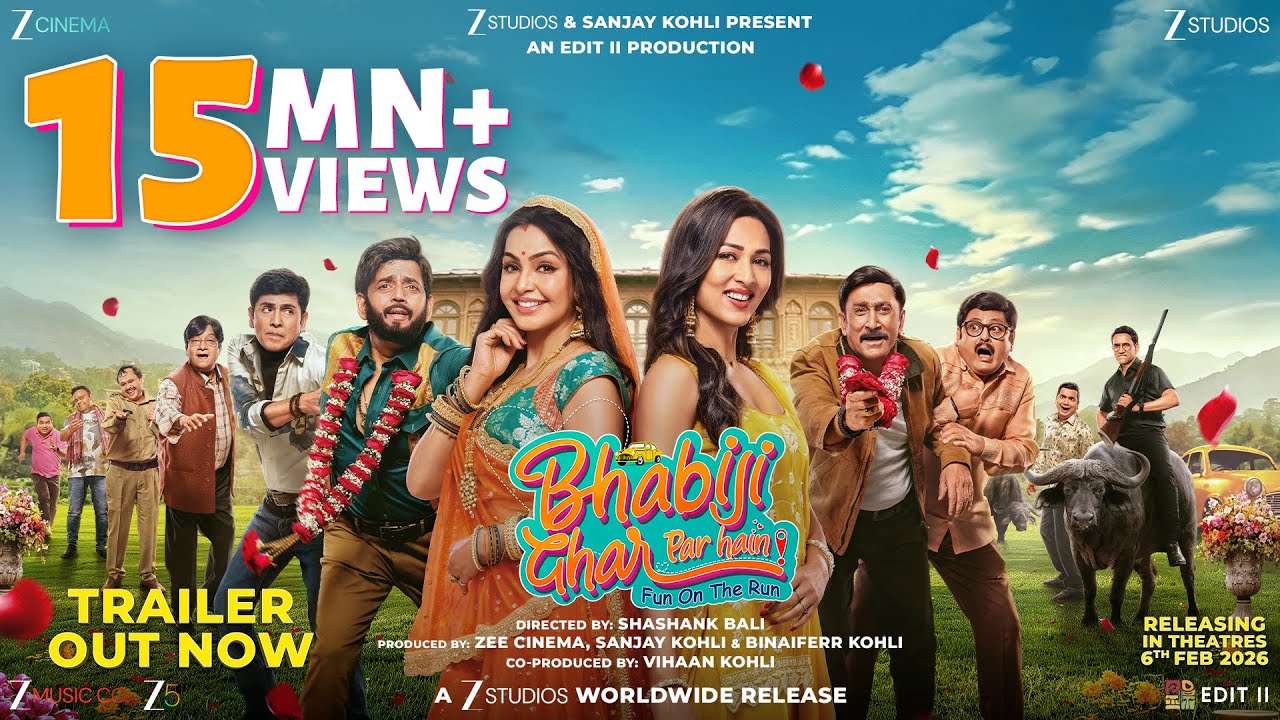
- Bhabiji Ghar Par Hain! Fun on the Run Ending Explained: Why the ‘Two Climaxes’ Gimmick is Polarizing Fans
The cult-classic sitcom just made its big-screen leap, but everyone is talking about the chaotic final 30 minutes. Forget a standard resolution; the makers opted for a "multi-climax" structure that feels more like a fever dream than a movie finale. Here is the breakdown of that messy, high-stakes ending and why the "two endings" promise might just be PR spin for a script that didn't know when to quit. What Actually Happened? The film’s third act is a relentless chase through Uttarakhand. After the brothers Shanti (Ravi Kishan) and Kranti (Mukesh Tiwari) decide to forcibly marry Angoori and Anita, the plot spirals into a series of "fake-out" endings. Just when it seems the husbands, Vibhuti and Tiwari, have saved the day, a new conflict—involving a possessed Angoori and a sentient Ambassador car named "Buaji"—resets the stakes. The Insider Take The "two climaxes" marketing isn't about giving the audience a choice (like a Choose Your Own Adventure ); it’s a calculated attempt to justify a bloated runtime. By stacking a horror-comedy twist on top of a road-trip comedy, the film tries to be everything at once. It’s giving "straight-to-OTT" energy hidden behind a theatrical budget. The humor shifts from the sharp wit of the TV show to crude, over-the-top slapstick that feels like it was written for a different movie entirely. Why This Matters for the Franchise This movie is a massive litmus test. If the box office holds, expect a "Bhabiji Cinematic Universe" with more spin-offs. However, by changing the DNA of the show—trading subtle banter for car chases and ghost possessions—the makers risk alienating the core fanbase that made the show a decade-long hit. If this flops, it’s back to the 30-minute sitcom format forever. What Fans Are Missing Did you notice how the "ghost" possession of Angoori mirrors the classic TV episodes but with a darker edge? This wasn't just a gag; it was the writers' way of "resetting" the power dynamic. In the end, the status quo is restored—the bhabhis remain with their husbands, and the villains are humiliated—but the trauma of the "road trip" is never really addressed. It’s a classic sitcom reset button, but in a 2-hour movie, it feels unearned. QUICK FACTS Theatrical Release: February 2026 Key Villains: Shanti (Ravi Kishan) & Kranti (Mukesh Tiwari) The Twist: A "double climax" featuring a horror-comedy possession angle. The "Buaji" Factor: A side plot involving a vintage car and Bacchu Shukla (Nirahua). Status Quo: Main characters return to their original dynamics by the credits. Fans Also Asked Q: Does Bhabiji Ghar Par Hain! Fun on the Run have two endings? A: Not exactly. While marketed as having "two climaxes," it is actually one continuous, extended finale that flips the plot twice to keep the audience guessing. Q: Who does Angoori Bhabhi end up with in the movie? A: Angoori remains with Tiwari. Despite the villain Shanti’s obsession and the forced marriage plot, the film maintains the show's original couples. Q: Is there a post-credits scene in the Bhabiji movie? A: The film uses a "post-post climax" structure during the final stretch. While there isn't a traditional Marvel-style teaser, the final gags suggest the chaos isn't over. Q: Is the Bhabiji movie a sequel to the TV show? A: It functions as a standalone "special event" movie. It uses the same characters and tropes but operates on a much larger, more chaotic scale than the daily episodes.
- Vadh 2 Ending Explained: The "Collective Vadh" and That Redemptive Twist
Everyone expected a whodunit, but Vadh 2 delivered a "why-we-did-it." The finale is a calculated middle finger to the legal system, proving that in Shambhunath’s world, a clean conscience is worth more than a clean record. What Actually Happened? The finale reveals that the disappearance of Keshav (Akshay Dogra) wasn't the work of a single assassin, but a coordinated execution involving Shambhunath, the new inmate Naina, and even the "by-the-book" jailer Prakash Singh (Kumud Mishra). As Investigator Ateet Singh closes in, he realizes the entire prison wing has entered a pact of silence. The "vadh" wasn't a crime; it was a sanitation project. The Insider Take The twist works because it subverts the "hero vs. villain" trope. By making the jailer an accomplice, the film suggests that the system is so broken it can only be fixed by breaking the rules. It’s a villain era for justice itself. The math isn't mathing for the investigators because they’re looking for a killer, while the prison is hiding a movement. This is peak "Main Character Energy" for Sanjay Mishra—he’s no longer just a victim; he’s the architect of a new moral code. Why This Matters for the Franchise The ending sets up a massive shift for a potential Vadh 3. By moving the protagonist from a private citizen to a retired constable with "insider access" to the criminal underbelly, the stakes are now systemic. This isn't just a "sleeper hit" anymore; it’s a blueprint for a series that questions the validity of the IPC (Indian Penal Code) when faced with absolute evil. What Fans Are Missing Did you notice the exchange of the small "shagun" envelope at the very end? That wasn't just money; it was the same ritual Shambhunath used in the first film. It’s a thematic Easter egg confirming that his philosophy of "vadh" has successfully radicalized even the most honest men, like Prakash Singh. The "redemptive twist" isn't that they got away with it—it's that they no longer feel guilty. QUICK FACTS: THE ENDING The Killer: A collective of inmates and staff (The "Collective Vadh"). The Motive: Protecting Naina and ending Keshav's MLA-backed immunity. The Twist: Jailer Prakash Singh destroyed the forensic evidence. Status of Shambhunath: Retired, living with the weight of "justice" rather than "guilt." Fans Also Asked Q: Does Sanjay Mishra go to jail at the end of Vadh 2? A: No. Thanks to the "PR damage control" and the erasure of evidence by the prison staff, Shambhunath Mishra retires peacefully. The film ends with him stepping into the light, contrasting the dark, cramped prison cells. Q: What happened to the MLA’s brother, Keshav? A: Keshav was neutralized in a "vadh" involving multiple parties. His body was disposed of using the very prison supply chain Shambhunath controlled for years, making it impossible to trace. Q: Is there a post-credit scene in Vadh 2? A: While there’s no MCU-style scene, the final shot of Shambhunath looking at a news report of another "untouchable" criminal is a clear setup for his next target. The plot armor is thick, and he’s ready for more. Q: Why did Prakash Singh (Kumud Mishra) help cover up the murder? A: Prakash realized that "plot armor" for criminals like Keshav is built by the law itself. His decision to help Shambhunath was his own "cultural reset," choosing moral justice over his professional oath.
- Solo Mio Ending Explained: Why Matt’s "Gia Pivot" is the Ultimate PR Move
The credits have rolled on Solo Mio , and while the scenery was 10/10, the resolution left some fans wondering if Matt’s closure was earned or just a convenient script exit. Let's dissect the finale of Kevin James’s Roman holiday. What Actually Happened? After spending half the movie moping through tandem bike tours meant for two, Matt (Kevin James) finally stops checking his phone for Heather’s "I made a mistake" text. Encouraged by Gia (Nicole Grimaudo), he stops acting like a tourist in his own life and starts living like a local. The film ends with Matt choosing to stay in Rome, fully committing to a new romance with Gia and leaving his fear of rejection at the Trevi Fountain. The Insider Take The ending is a total "Villain Era" rejection —but for the ex-fiancée. By never bringing Heather back for a final confrontation, the film denies her the "main character" spotlight. It’s a calculated move to keep the audience focused on Matt’s growth. However, let’s be real: Matt’s "self-discovery" is heavily subsidized by the fact that he’s in a Roman fever dream. The ending feels a bit like PR damage control for the ego; instead of going home to face the "WhatsApp uncles" and the pity of his suburban neighbors, he stays in a postcard. It’s the ultimate "I’m doing better than you" flex. Why This Matters for the Character If Matt had gone back to the States, the movie would have been a tragedy about a guy who lost his deposit. By staying, it becomes a cultural reset for his identity. This ending signals that Matt is no longer the "safe, predictable" guy Heather walked out on. For Kevin James the actor, this ending is crucial: it proves he can lead a story that concludes with genuine romantic chemistry rather than just a punchline about a pizza. What Fans Are Missing Did you notice the lack of a "confrontation" scene? Most rom-coms would have Heather show up at the airport or call in the final act. Solo Mio intentionally leaves her out. Why? Because the movie isn't about Matt and Heather; it’s about Matt’s relationship with risk . Gia’s final line, “You have to try. Don’t be afraid,” isn't just about their relationship—it’s the film's thesis. The "plot armor" here isn't that he finds love; it's that he finds a version of himself that doesn't need a refund to feel whole. QUICK FACTS: THE FINALE The Final Couple: Matt and Gia The "Ex" Factor: Heather never appears; she remains a ghost in the narrative. The Location: Matt chooses to stay in Rome indefinitely. The Message: Rejection is a redirection (and it’s easier to swallow with a view of the Colosseum). Post-Credits: None. The story is a closed loop. Fans Also Asked Q: Does Matt ever find out why Heather left him? A: No, and that’s the point. The film stays in Matt’s perspective to emphasize that "closure" is something you give yourself, not something you get from an ex. The math isn't mathing for a logical explanation, so the movie doesn't try to provide one. Q: Is Matt moving to Italy permanently? A: The ending strongly implies he’s staying to see where things go with Gia. It’s giving "Sleeper Hit Energy"—a guy who loses his life plan but finds a much better one in the process. Q: What was the significance of the solo dance scene? A: That was Matt’s "Gagged" moment. It showed he finally became comfortable in his own skin without needing a partner to validate his existence. It was the turning point from "abandoned groom" to "independent lead." Q: Is Nicole Grimaudo’s character, Gia, supposed to be his soulmate? A: In the world of Solo Mio , yes. She represents the "anti-Heather"—spontaneous, local, and brave. Their final kiss is the "Fan Service" moment the audience waited 90 minutes for.
- Denim Affair by Seema SinghWhere denim, design, and self belief come together
In an industry often driven by fleeting trends, Seema Singh has consistently built something far more enduring. With Denim Affair , she once again proves why SS by Seema Singh occupies a distinct space in Indian fashion. This collection is not built around noise or novelty. It is built around women, their confidence, and their evolving relationship with what they wear. Launched in the heart of Mumbai, Denim Affair unfolds as a love story told through denim. Not the rugged, utilitarian idea of denim we are used to, but denim softened by craft, elevated by embroidery, and shaped by thoughtful tailoring. The result is a collection that feels powerful without being loud and romantic without being fragile. Seema Singh’s design language What sets Seema Singh apart is clarity. Her design philosophy has always centred on strength wrapped in elegance. Over the years, she has built a loyal following of women who trust her instinct, her eye for detail, and her ability to make clothing feel personal. Denim Affair reflects that maturity. Every garment carries her signature balance of softness and structure. Intricate embroidery sits comfortably on denim surfaces. Clean silhouettes allow the fabric to flow with the body. There is restraint where needed and indulgence where it matters. This is design that understands proportion, movement, and emotion. The Denim Affair lineup The collection explores denim across multiple moods. Structured dresses that hold their shape while remaining fluid. Sarees that reinterpret tradition through a contemporary lens. Jackets and separates that can anchor a look without overpowering it. Each piece is designed to be styled effortlessly, worn repeatedly, and lived in rather than reserved for a single moment. What stands out across the lineup is versatility. Denim Affair understands the modern woman’s wardrobe. These are pieces that transition easily from day to evening, from casual sophistication to understated glamour. The embroidery adds depth without excess, allowing the denim to remain the hero. A launch that reflected the soul of the brand The launch itself felt intimate yet confident, much like the collection. Romantic floral installations, bold colour accents, and a welcoming atmosphere set the tone. It was not about spectacle for the sake of it. It was about storytelling. The message was clear. Love begins with self respect, and style begins with authenticity. Seema Singh’s presence at the launch reinforced that sentiment. Her ease, warmth, and pride in her work mirrored the values the brand stands for. It reminded everyone present that SS by Seema Singh is as much about the woman behind the label as it is about the clothes themselves. The SS by Seema Singh store experience Located at Crest Link, Dreamland on Linking Road in Khar West, the SS by Seema Singh store is more than a retail space. It is a destination. The store brings together multiple designers while still retaining Seema Singh’s unmistakable aesthetic. Warm, inviting interiors allow the garments to breathe and encourage exploration. Denim Affair sits seamlessly within this space, inviting customers to touch the fabrics, study the embroidery, and experience the collection beyond photographs. The store team offers a personalised experience that mirrors the brand’s philosophy of thoughtful dressing. Why Denim Affair matters In a season often dominated by performative romance, Denim Affair offers something quieter and stronger. It speaks to women who choose themselves, who value craft, and who seek clothing that reflects who they are rather than who they are trying to impress. Seema Singh continues to show that fashion can be emotional without being sentimental and powerful without being aggressive. Denim Affair is a reminder that confidence never goes out of style and that denim, when treated with care and imagination, can tell stories far deeper than trends. Denim Affair is now available at SS by Seema Singh,Shop 1 G FI, Crest Link Dreamland, Linking Road, 14th Road, Khar West, Mumbai.For appointments and enquiries, the store is available via call or WhatsApp. This season, fall in love with denim all over again.