Search Results
Search this site
5945 results found with an empty search
- Carmeni Selvam Ending Explained: Why He Drops The Dubai Plan [Full Breakdown]
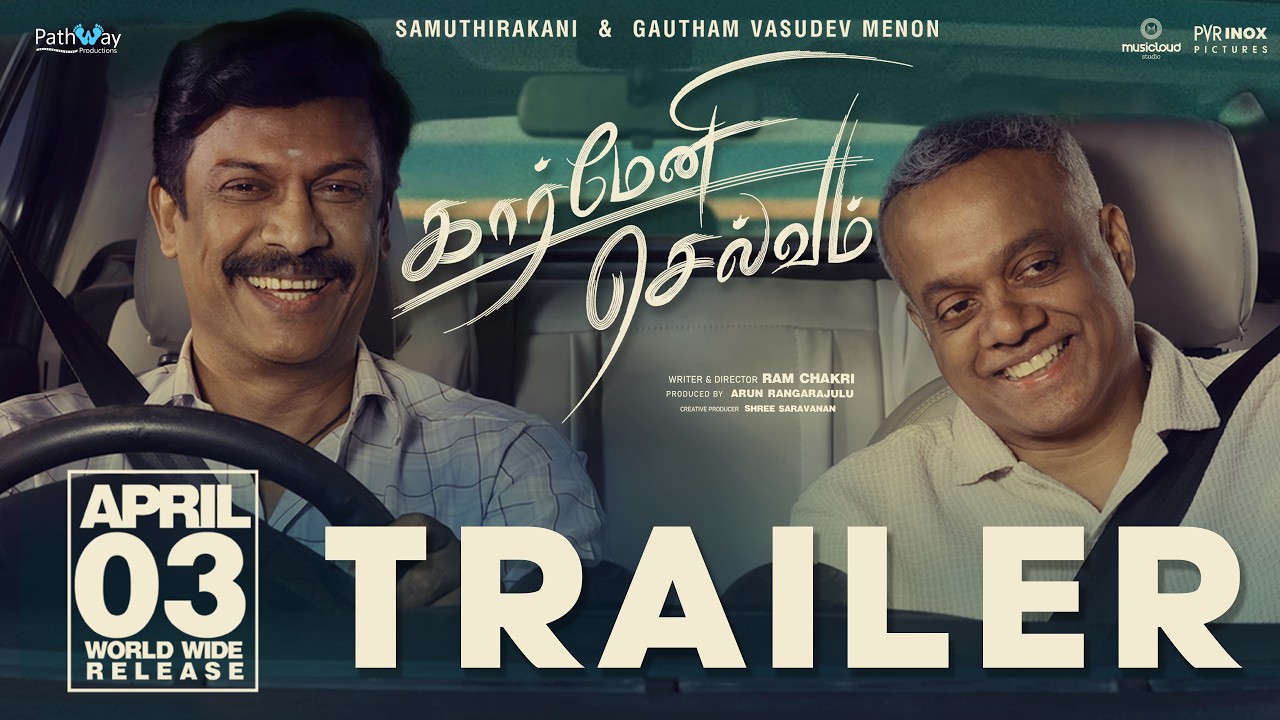
Selvam ultimately rejects the idea of moving to Sharjah, choosing his family's emotional security over the relentless pursuit of quick wealth. While the film builds towards a tragic financial collapse, the real climax is a quiet realization about what we owe the next generation. Carmeni Selvam Ending Explained Selvam stops his dangerous spiral of taking on massive loans and acting as an illegal taxi driver to fund a lavish, artificial lifestyle. Rather than abandoning his wife Shanthi to work abroad to pay off his debts, he accepts that true prosperity is found in peace and family presence, not in impressing society. Full Plot Breakdown If you read our recent Carmeni Selvam release date and cast guide, you know that director Ram Chakri avoids melodramatic violence in favor of grounded realism. The narrative is entirely character-driven, forcing a working-class man to confront the laws of modern economy and ego. The Driver and the Quiet Life Selvam (Samuthirakani) is introduced as a deeply principled, simple driver who works for a wealthy boss, Sampath (Gautham Vasudev Menon). Living in a modest house by the sea with his wife Shanthi (Lakshmi Priyaa Chandramouli) and their young son, their life is defined by strict budgets and a quiet, negotiated contentment. Selvam starts off as a man of self-respect who refuses to depend on others. The Sister's Function and the Spark of Greed The catalyst for his downfall is not a traditional villain, but a moment of deep social humiliation. Unable to afford an expensive gift at his sister’s daughter's function, Selvam's pride takes a massive hit. Shanthi's desire for upward mobility and the sting of social slights push them into raiding their meager savings to buy an extravagant gift just to prove a point. This one ego-driven choice cracks the foundation of their simple life. The Cab Rides and The Debt Spiral When his boss leaves town briefly, Selvam begins using the luxury car as an illegal taxi to earn extra cash. The passengers he ferries act as unsolicited life coaches, preaching the gospel of modern materialism—spend to feel rich, use credit cards, and chase sudden wealth. Seduced by the idea of easy money, Selvam starts living beyond his means, taking out aggressive loans to fund a lifestyle he cannot afford. The debt quickly spirals completely out of control, threatening to destroy the very family he was trying to elevate. The Sharjah Temptation Cornered by debt collectors and his own compounding mistakes, Selvam considers the ultimate sacrifice: leaving his family behind to work a grueling job in Sharjah (Dubai). It is a harsh reality many middle-class families face, but the film frames his potential escape not as a noble victory, but as an exile forced upon him by his own greed. The Final Choice: Peace Over Prosperity In the climax, there is no dramatic shootout, no winning lottery ticket, and no sudden financial miracle. The ending circles directly back to Shanthi’s earlier, piercing question: "What will we show our son if he asks what we did for the next generation?" Selvam realizes that running away to earn money will cost him the emotional security of the family he is trying to provide for. He abandons the Sharjah plan. The film concludes on a beautifully bittersweet note. Selvam and Shanthi are still poor, and they still have heavy debts to manage, but their emotional clarity is restored. The overarching message is clear: chasing "Carmeni Selvam" (the dark, money-centric wealth) destroys homes, but choosing "peace-centric Selvam" (contentment, integrity, and being present) is the true inheritance they must leave for their son. Quick Facts Release Date: April 3, 2026 Platform: Theatrical release. (Streaming on Aha in India. Available internationally via the Aha global app). Director: Ram Chakri Runtime: 138 Minutes Cast: Samuthirakani, Gautham Vasudev Menon, Lakshmi Priyaa Chandramouli, Abhinaya Status: In Theaters Now Frequently Asked Questions Why does Selvam use his boss's car? Selvam uses his boss Sampath's car as an illegal taxi while Sampath is out of town. He does this to earn extra cash after feeling humiliated by his inability to afford luxury items for his family. Does Selvam go to Dubai in the end? No, Selvam does not go to Sharjah/Dubai. He realizes that staying with his family and facing his debts with integrity is more important than fleeing abroad to chase money. What is the meaning of the title Carmeni Selvam? According to Samuthirakani, 'Carmeni' refers to Lord Venkateswara, and 'Selvam' stands for wealth. However, the title also symbolizes the darker, obsessive side of money that ruins peace of mind. Is there a post-credits scene in Carmeni Selvam? No, there is no post-credits scene. The movie ends definitively on its bittersweet, emotional note. If you want more grounded narratives, check out our list of the best Tamil dramas of 2026.
- Biker Ending Explained: The Real Meaning of Vicky's Final Race [Full Breakdown]
Vicky completes the brutal final motocross race not to claim a podium spot, but to finally earn his father's forgiveness. However, the emotional climax is less about winning a trophy and more about a broken family reclaiming their shared legacy on the dirt track. Biker Ending Explained Biker concludes with a high-stakes motocross race where Vicky (Sharwanand) pushes through physical trauma and immense pressure to finish the course. Instead of walking away like he did in the past, he crosses the finish line under the watchful eye of his tough-love father, Sunil Narayan (Dr. Rajasekhar). The ending serves as a silent, emotional reconciliation between the two, proving Vicky has matured enough to balance his racing passion with his love for his family, a theme we previously highlighted in our breakdown of Biker's early teaser trailers. Full Plot Breakdown If you checked out our earlier Biker release date and cast guide, you already know this film marks India's first major foray into motocross sports dramas. But beneath the roaring two-stroke engines and the meticulously choreographed dirt track sequences, director Abhilash Reddy Kankara has built a surprisingly tender father-son narrative that anchors the entire runtime. The Weight of Ambition and the Fallout To understand the power of the film's final sequence, we have to look back at the emotional wreckage that led to it. Vicky once viewed motocross solely as a vehicle for his own personal ambition and ego. Trained by his demanding, tough-love father Sunil Narayan, Vicky's relationship with the sport became increasingly toxic. Sunil pushed his son to the absolute limit, believing that relentless pressure was the only way to forge a champion. When a devastating accident physically and mentally broke him, Vicky didn't just walk away from professional racing—he walked away from his father entirely. This bitter fallout created years of emotional distance, leaving Vicky to live a quiet, unfulfilled life away from the dirt tracks, burying his trauma rather than confronting it. Returning to the Dirt Track The turning point of the film arrives when Vicky finally realizes that avoiding the sport hasn't healed his internal trauma; it has merely transferred his deep-seated resentment onto his family, including his endlessly supportive wife Ananya (Malavika Nair). The decision to return to the track isn't driven by an arrogant need to prove his dominance to the world or capture a lucrative sponsorship. Instead, it is a deliberate, agonizing choice to face the very fears that fractured his family in the first place. Vicky signs up for the most demanding motocross competition of his career, fully aware that his body and mind are no longer in their prime, and that stepping back onto the dirt means confronting the ghosts of his past failures. The High-Stakes Climax Race The final act is built around a genuinely spectacular, never-before-seen motocross sequence in Indian cinema. The race is shot with heavy technical polish, relying on immersive, bone-rattling sound design and visceral dirt-bike stunts rather than CGI padding. As Vicky navigates the physically punishing, unpredictable course, the film brilliantly crosscuts between the chaotic, adrenaline-fueled action on the track and the quiet, unbearable tension in the stands. Sunil sits courtside, his trademark stoic demeanor completely breaking as he watches his estranged son risk his life on the dangerous jumps. Every sharp turn and near-crash on the track perfectly mirrors the emotional turbulence of their shared history. A Silent Apology and a Blessing As Vicky enters the final lap of the competition, the narrative boldly shifts its focus away from a standard sports-movie victory and toward an intimate character study. Vicky overcomes the intense physical risks of the track, but more importantly, he overcomes the psychological urge to bail out when the pressure peaks. When he crosses the finish line, he isn't the triumphant champion holding the first-place trophy. The victory is entirely internal and deeply personal. He completes the race on his own terms. In a film filled with roaring engines, the most crucial moment is completely silent. The relentless race itself acts as Vicky's unspoken apology for his past resentment, and Sunil's quiet, tearful smile from the stands serves as his absolute, unconditional blessing. Finding the Perfect Balance The movie gracefully closes by showing Vicky back on the bike, but the context has entirely changed. He no longer rides with a massive chip on his shoulder or a desperate need to escape his father's overbearing shadow. With Ananya and Sunil actively supporting him from the sidelines, Vicky has finally found a healthy, sustainable balance. He now wants glory alongside his family, not in spite of them. This emotional evolution is exactly why critics are calling the climax incredibly satisfying—it redefines what a true "win" looks like in the context of a sports drama, successfully grounding the high-octane stunts in raw, relatable human connection. Post-Credits Scene / What's Next for the Biker Franchise Because Biker is being heavily marketed as India's first motocross-centric sports drama, the natural question is whether UV Creations plans to turn Vicky's story into a larger franchise. The ending certainly leaves Vicky on an upward trajectory, actively riding and mentally prepared for new challenges. A sequel could easily focus on higher-level international competitions, fulfilling the tease of Indian racers competing on the global stage. However, as a standalone film, the narrative feels incredibly complete. There is no post-credits scene to tease a direct continuation, as the core conflict—the fractured father-son dynamic—has been entirely resolved. If we do get a Biker 2, it will need a brand-new emotional anchor to justify returning to the track. For now, you can check out our list of upcoming Telugu sports dramas to see what else is hitting theaters this year. Quick Facts Release Date: April 3, 2026 Platform: Theatrical release. (Streaming on JioHotstar in India. Available internationally via the JioHotstar global app). Director: Abhilash Reddy Kankara Runtime: 162 Minutes Cast: Sharwanand, Dr. Rajasekhar, Malavika Nair Status: In Theaters Now Frequently Asked Questions Does Vicky win the final race in Biker? Vicky does not win the first-place trophy, but he successfully completes the grueling race without giving up. His true victory is proving his resilience to his father, which makes the climax much more rewarding than a standard sports movie podium finish. Why did Vicky and his father stop talking? Their relationship fell apart due to Sunil's intense training methods and Vicky's resentment following a severe motocross accident. The emotional distance lasted for years, turning a simple sports rivalry into a deeply fractured family dynamic. Is Biker based on a true story? No, Biker is a fictional sports drama written and directed by Abhilash Reddy Kankara. However, the film successfully captures the intense physical and mental demands that real-life Indian motocross athletes face. Does Ananya support Vicky's return to racing? Yes, Ananya is fully supportive of Vicky returning to the dirt track by the end of the film. Her presence in the stands during the climax is a brilliant visual cue that Vicky has finally integrated his passion with his devotion to his family. Will there be a Biker sequel? There are no official announcements from UV Creations regarding a Biker sequel yet. While the father-son arc is fully resolved, the ending definitely leaves enough room for a follow-up focused on Vicky entering international motocross competitions.
- XO, Kitty Season 3 Ending Explained: The Subway Kiss [Full Breakdown]
Yes, Kitty and Min Ho finally end up together in the XO, Kitty Season 3 finale following a grand romantic gesture in a Seoul subway station. However, their much-anticipated reunion is just a small part of Kitty's much larger journey toward accepting an unpredictable future over a perfectly scripted senior year. XO, Kitty Season 3 Ending Explained XO, Kitty Season 3 concludes with Kitty choosing to leave KISS early to pursue her next chapter at NYU on her own terms. Before she boards her flight, Min Ho tracks her down in the subway, where the two finally confess their feelings, exchange "I love yous," and cement their relationship status. The season closes with Min Ho joining Kitty in business class on her flight back to Portland, bringing their Season 1 airplane meet-cute full circle as an official couple ready to face the future together. Full Plot Breakdown If you read our recent [XO, Kitty Season 3 release date and cast guide], you already knew the path to endgame romance is rarely straightforward in Jenny Han's universe. The finale masterfully weaves together several sprawling character arcs, forcing the core cast to confront their transition into adulthood. The Messy Mid-Season Split To understand the emotional payoff of the finale, we have to look back at the friction that dominated the middle of the season. Kitty and Min Ho’s relationship suffers a devastating blow due to a complex misunderstanding involving Eunice. The fallout is messy, forcing an abrupt breakup that leaves both characters isolated. Rather than rushing a quick fix, the narrative smartly forces Kitty and Min Ho into separate corners to reflect. Min Ho has to unpack his own defensive emotional walls, while Kitty is forced to confront the reality that she cannot micromanage the feelings of the people around her. Kitty’s Turning Point and the NYU Decision Kitty’s core character flaw throughout the entire franchise has been her relentless need to play matchmaker and control the narrative—not just for others, but for her own life. She enters Season 3 desperately trying to script a flawless senior year at KISS. The turning point arrives when she realizes that holding onto this rigid vision is actually holding her back. Her decision to leave KISS early and accept an offer from NYU represents massive emotional maturity. She stops trying to force a perfect ending and instead embraces the terrifying reality of an unwritten future. The 18th Birthday Party and Chosen Family Before the romantic climax, the show makes sure to honor the platonic relationships that serve as the foundation of the series. Kitty’s 18th birthday party acts as the emotional farewell for the KISS crew. Even though the group is scattering to different colleges and taking wildly different paths across the globe, the party solidifies them as a chosen family. The bittersweet celebration underscores that true friendships can withstand distance and changing circumstances, giving Kitty the closure she needs to board her flight without regrets. The Subway Chase and Confession In true romantic-comedy fashion, Min Ho realizes what he is losing just as Kitty is preparing to leave Seoul. The ensuing subway chase is a classic trope executed with sharp emotional precision. When Min Ho finally catches up to Kitty on the platform, all the previous miscommunications and defensive posturing are stripped away. They both lay their cards on the table, resulting in a mutual confession of love. The kiss on the platform isn't just a reconciliation; it feels entirely earned because both characters spent the necessary time growing apart before coming back together. The Flight Back to Portland The most satisfying moment of the finale is its direct visual callback to the very beginning of the series. Kitty boards her flight back to Portland, only to find Min Ho taking the seat next to her in business class. In Season 1, this setting was the battleground for their initial friction and witty banter. Now, it symbolizes their alignment. Kitty letting Min Ho join her proves that her decision to go to NYU isn't about running away—it's about moving forward, and she is finally ready to let someone else navigate the turbulence with her. What's Next for the KISS Crew The finale deliberately leaves several doors cracked open for the supporting cast. Yuri’s storyline takes a massive step forward as she successfully launches her "Riches to Rags" fashion line, proving she can step out from under her family's shadow. More importantly, she accomplishes this with Juliana’s help. The season heavily hints that Juliana, fresh off a breakup, is realizing her lingering feelings for Yuri. As we noted in our [Yuri's Season 2 ending explained] piece, their dynamic has always been the show's slow-burn secret weapon, and a rekindled romance seems inevitable. With the core group heading to different colleges, any future installments will likely pivot from a high-school drama to a collegiate coming-of-age story. Quick Facts Release Date: April 2026 Platform: Streaming on Netflix in India. Available internationally via the Netflix global app. Showrunner: Jenny Han Runtime: ~30 Minutes per episode Cast: Anna Cathcart, Sang Heon Lee, Gia Kim, Anthony Keyvan Status: Streaming Now Frequently Asked Questions Do Kitty and Min Ho end up together? Yes, Kitty and Min Ho officially become a couple in the Season 3 finale. After a romantic confession in a Seoul subway station, Min Ho joins Kitty on her flight back to the United States. Why does Kitty leave KISS early? Kitty leaves KISS to pursue an opportunity at NYU. Her departure signifies her emotional growth, proving she is finally willing to let go of her rigid high school plans to embrace an uncertain future. Do Yuri and Juliana get back together? The show strongly implies a future reconciliation for Yuri and Juliana. Following Juliana's breakup, the two successfully collaborate on Yuri's fashion line, and the finale leaves their romantic tension unresolved but highly optimistic. Will there be an XO, Kitty Season 4? Netflix has not officially confirmed a fourth season yet. However, you can check our [updated Netflix renewal tracker] for the latest news on whether we will follow Kitty to NYU.
- Ready or Not 2 Ending Explained: The Ring Loophole [Full Breakdown]
Grace survives the High Council's dawn deadline by marrying Titus, killing him, and tossing the demonic control ring into the ensuing chaos. However, her survival isn't just about outlasting the night it's a calculated masterclass in weaponizing the cult's own ancient, magical bureaucracy against them. Ready or Not 2: Here I Come Ending Explained Grace escapes the High Council's ritual by exploiting a hidden contractual loophole: marrying into another cursed family to shift the power dynamics. By discarding the leadership ring before the sun rises, she triggers a magical default that causes every remaining cult member to spontaneously explode because no one is technically in control. Grace walks away completely free, rescuing Faith and officially severing her ties to Mr. Le Bail's twisted games. Full Plot Breakdown If you followed our early Ready or Not 2 release date and cast updates, you already knew the sequel would pick up exactly where the Le Domas estate massacre left off. However, the introduction of the High Council turns a simple survival story into a high-stakes tactical war. The High Council’s Retaliation The film wastes no time establishing that the Le Domas family was merely one branch of a much larger, global syndicate indebted to Mr. Le Bail. The High Council, serving as the demonic entity's board of directors, captures Grace shortly after the events of the first film. They aren't just looking for revenge; they need to correct the cosmic imbalance caused by the Le Domas failure. Grace is thrust into a new, heavily fortified compound and subjected to a fresh set of brutal rituals. This time, the game isn't Hide and Seek—it's a twisted version of King of the Hill, where the ultimate prize is a signet ring that grants control over the Council's vast empire. Faith Becomes the Ultimate Leverage Grace’s primary motivation shifts from pure self-preservation to rescue when she discovers the Council has taken Faith hostage. The cult knows that Grace has become hardened and practically immune to their psychological torture, so they use Faith as the ultimate bargaining chip. If Grace refuses to participate in the trials, Faith dies. This forces Grace to play along, meticulously observing the Council's rigid adherence to their ancient, bureaucratic rules. It is during these trials that Grace realizes the cult's greatest strength—their strict traditions—is also their fatal weakness. The Tactical Marriage to Titus The turning point of the film relies on a brilliant subversion of the first movie's premise. In the original, marriage was the trap; here, it becomes the escape hatch. Grace discovers a loophole buried in the Council's bylaws: if a sacrifice marries into an opposing faction within the Council before dawn, the power structure violently shifts, nullifying the current ritual. Grace manipulates Titus, a power-hungry and arrogant heir within the Council, into an impromptu, blood-soaked wedding ceremony. Titus believes he is securing his own ultimate authority by binding Grace to his bloodline. The Ring, the Chaos, and the Dawn The moment the makeshift vows are completed, Grace doesn't hesitate—she immediately executes Titus. As his widow, the demonic contract legally transfers the rights of the signet ring to her. However, the genius of her plan lies in her refusal to wear it. The Council's magic dictates that someone must physically possess the ring to govern the entity's power when the sun crests the horizon. Grace tosses the ring into the center of the surviving cult members. What follows is a spectacular, gruesome free-for-all as the elite elites tear each other apart to claim the jewelry. The greed of the High Council becomes their undoing. No one secures the ring in time. As dawn breaks over the compound, the magical contract defaults. Much like the unforgettable finale of the first film—which we ranked highly in our top horror finales of the decade—the cosmic penalty for failure is absolute. Every remaining cult member violently explodes into mist and viscera. Grace and Faith, completely unharmed by the curse, walk out of the burning compound together, finally reclaiming their freedom on their own terms. What's Next for Grace and Faith? The explosive finale leaves very little room for the High Council to return, effectively wiping out the upper management of this cinematic universe. However, the presence of Mr. Le Bail remains a wildcard. Grace and Faith's survival proves that the demonic contracts can be beaten through technicalities, which could inspire other victims or draw the ire of the entity itself. While a third film hasn't been greenlit yet, the emotional closure of Grace and Faith walking away together serves as a definitive end to this specific nightmare. If the franchise continues, it will likely explore a new corner of Mr. Le Bail's world. Quick Facts Release Date: April 2026 Platform: Theatrical release (Streaming on JioHotstar in India. Available internationally via the Hulu/Disney+ global app). Directors: Radio Silence (Matt Bettinelli-Olpin and Tyler Gillett) Runtime: 104 Minutes Cast: Samara Weaving, Adam Brody, Andie MacDowell (flashbacks) Status: In Theaters Now Frequently Asked Questions Why did Grace marry Titus? Grace married Titus strictly to exploit a legal loophole in the High Council's demonic contract. By marrying into his family, she shifted the power dynamic of the ritual, allowing her to take control of the signet ring once she killed him. What happens if no one wears the ring at dawn? The cult's magic requires a designated leader to hold the power at sunrise. Because Grace threw the ring away and the cultists fought over it, the dawn deadline passed without a leader, triggering a default penalty that caused them all to explode. Does Faith survive the movie? Yes, Faith survives the events of the sequel. Grace manages to outsmart the High Council and rescue her, with the final shot showing the two women leaving the destroyed compound together. Is there a post-credits scene in Ready or Not 2? No, there is no post-credits scene. The film ends definitively with the destruction of the High Council, though you can check our updated horror release calendar to see what Radio Silence is directing next.
- Culture Curry: The Fallacy of Representation in a Heterogeneous Civilization
The global discourse on "representation" in cinema has become increasingly loud, yet remarkably narrow. As we dissect pop culture through a post-colonial lens, it becomes evident that the modern demand for representation is often a Eurocentric import—a box-ticking exercise born out of Western identity politics that struggles to translate into the complex, kaleidoscopic reality of the Indian subcontinent. When we apply this lens to the upcoming cinematic retelling of the Ramayan —starring Ranbir Kapoor, Sai Pallavi, and Sunny Deol—we must ask: are we chasing a ghost of Western sociopolitical theory, or are we looking at the deep-seated anthropological structures of Indian performance? The Myth of the "Representative" Indian The primary flaw in applying Western representational theory to India is the sheer scale of our heterogeneity. India is not a monolith; it is a sprawling collection of subcultures, dialects, and linguistic identities. To demand "true" ethnic representation in a lead actor is a logistical and sociological impossibility in a nation where a hundred miles can change the tongue, the cuisine, and the lineage. In this vacuum of "perfect" representation, Bollywood—and indeed, much of Indian cinema—has historically defaulted to a specific archetype. To understand why, we must look beyond modern talent agencies and into the social anthropology of the Indian civilization. The Brahmin as the "Physical Memory Bank" Historically, the Brahmin community was not merely a priestly class but the storytellers and story-livers of the civilization. Through a rigorous, multi-generational oral tradition, they became physical memory banks. By committing vast scriptures to memory with absolute discipline, they essentially "genetically coded" an aptitude for the preservation of narrative. This wasn't just about religion; it was about the Jatra —the folk theatre that traveled across the country, keeping the epics alive through performance. The act of "becoming" a deity or a hero from the Ramayana or Mahabharata was a communal duty. However, this anthropological evolution comes with a caveat. The strict endogamy practiced within these communities—a form of communal eugenics—maintained this specialized skill set but also resulted in a lack of broader diversity within that "performer" class. While regional cinema, particularly in the South, has made strides toward meritocracy, the "safest bet" for a pan-Indian production often remains the "upper-caste" leading person. The industry defaults to the face that has, for millennia, been the vessel for these specific sagas. The Persistence of Caste in the Secular and Sacred It is a fascinating sociological reality that even within the Abrahamic conversions in India, the shadow of the caste system persists. We see it in the D’Souza Prabhus of Mangalore or the Kachi Sindhi Lohana Khoja Muslims. The social DNA of the "original" caste remains an invisible architecture beneath the surface of new religious identities. If the underlying structure of Indian society is so deeply rooted in these ancestral archetypes, the Western notion of "diversity" starts to look like a shallow coat of paint on a very old building. Does the Ramayan Need a Representation Test? This brings us to our central question: Should the casting of Ranbir Kapoor , Sai Pallavi , and Sunny Deol be subjected to the modern "representation test"? From a social anthropological perspective, the answer is likely no . The Archetypal Resonance: These actors are not just playing characters; they are stepping into roles that are part of the collective unconscious. Ranbir Kapoor and Sai Pallavi carry a lineage of performance that aligns with the "storyteller" tradition mentioned earlier. Transcending the Eurocentric Model: If we view the Ramayan through an Indo-centric lens, the "merit" lies in the ability to evoke the rasa (essence) of the epic. The "representation" that matters here is not the checklist of modern census categories, but the representation of the civilizational memory . The Heterogeneity Defense: Given that no single person can represent the "average" Indian, the focus shifts to the performer's ability to act as a vessel for the myth. Final Thought The demand for representation in Bollywood often ignores the fact that Indian cinema is already a manifestation of an ancient, complex social hierarchy that prioritized the oral and physical transmission of myths. While we must continue to push for a more inclusive meritocracy, we must also recognize that applying Eurocentric "woke" metrics to the casting of the Ramayan is an exercise in futility. In the land of the Jatra , the performer is a memory bank. And as long as the memory is preserved with integrity, the vessel—whether it be a Kapoor or a Pallavi—is performing a role that was written into the DNA of the civilization long before the word "representation" ever entered the lexicon.
- The Best Actors Who Played Lord Hanuman And Why One Remains Unbeatable [Ranked 2026]
Dozens of actors have lifted the mace, but only a handful have managed to carry the spiritual weight of Lord Hanuman on screen. While modern CGI can build the muscles, capturing the absolute devotion of Bajrang Bali requires a grounded screen presence that visual effects simply cannot render. The Evolution of Hanuman on Screen For decades, Indian television and cinema have attempted to capture the essence of Lord Hanuman. The character is not just a mythological figure; he is the absolute embodiment of devotion, strength, courage, and loyalty. When a production casts Hanuman, they aren't just filling a role—they are managing the spiritual expectations of over a billion people. (Diaspora Note: Classic shows like Ramanand Sagar's Ramayan are currently streaming globally on YouTube, while newer adaptations like Adipurush are available internationally via Netflix and Prime Video.) The Real Story: Ranking the Bajrang Balis It takes more than heavy makeup and a prop mace to leave a mark. Here is the definitive ranking of how the most notable actors handled the monumental pressure of the role, from standard portrayals to the gold standard. 10. Deepak Jethi ( Ramayan , 2002) Jethi stepped into the role during the early 2000s television revival. While his performance brought a fresh, aggressive energy to the screen, it ultimately struggled to step out of the massive shadow cast by older classics. 9. Raj Premi ( Jai Hanuman ) Premi gave viewers a staunchly traditional and highly devotional version of the character. His tenure was marked by strong physical energy, anchoring a show that catered strictly to orthodox mythological fans. 8. Raj Mange ( Jai Jai Jai Bajrang Bali ) Mange proved that the character's appeal isn't just about towering physical strength. His portrayal was incredibly faithful to the devotional, almost gentle tone of the series, resonating heavily with family audiences. 7. Ishant Bhanushali ( Sankat Mochan Mahabali Hanuman ) Playing the young, mischievous version of the deity, Bhanushali captured the innocence and charm of Maruti before he realized his full power. He remains the most memorable child actor to tackle the mythology. 6. Nirbhay Wadhwa ( Sankat Mochan Mahabali Hanuman & Srimad Ramayan ) Wadhwa is arguably the definitive modern face of Hanuman on television. His towering screen presence and classical approach have made him the go-to casting choice for contemporary network mythologicals. 5. Danish Akhtar Saifi ( Siya Ke Ram ) Saifi’s background in wrestling gave his Hanuman a distinct, imposing physicality, but it was his ability to balance that strength with quiet grace that earned him widespread critical appreciation. 4. Devdatta Nage ( Adipurush ) Nage’s casting was a calculated risk that became one of the most debated topics in modern Indian cinema. While Nage brought genuine effort to the role, the film's controversial dialogue choices and heavy reliance on CGI sparked immense backlash. (For more on this, read our [Adipurush box office disaster breakdown]). 3. Vindu Dara Singh ( Jai Veer Hanuman ) Stepping into the role his father immortalized was an impossible task. However, Vindu Dara Singh brought his own distinct legacy to the screen, managing to meet massive audience expectations with a highly respectable, physical performance. 2. Mukesh Khanna ( Hanuman , 2005) It was only a voice role, but Khanna’s commanding baritone gave the 2005 animated feature a profound sense of authority. He proved that the essence of Hanuman translates beautifully to animation when backed by the right vocal gravitas. 1. Dara Singh ( Ramayan & Luv Kush ) There is Dara Singh, and then there is everyone else. Ramanand Sagar’s casting of the legendary wrestler remains one of the greatest decisions in Indian television history. Singh didn't just play Hanuman; he became the living, breathing icon of him. Decades later, his portrayal is still the face of Bajrang Bali in Indian popular culture. Why Casting Hanuman Today is a Calculated Risk The immense backlash faced by recent big-budget adaptations proves that modern audiences are entirely unforgiving when it comes to mythological inaccuracies. As we've noted in our [analysis of modern mythological casting trends], producers often mistake physical bulk for spiritual weight. The actors who succeed in this role—like Dara Singh or Nirbhay Wadhwa—understand that the power of Hanuman comes from his unwavering devotion to Lord Ram, not just his ability to lift a mountain. What Everyone's Missing The industry is currently obsessed with creating "hyper-real" mythological universes using green screens, completely ignoring the fact that the most beloved portrayals relied on practical effects and raw actor charisma. If upcoming cinematic universes want to succeed, they need to look back at the emotional core of the 1980s and 90s television adaptations rather than Hollywood superhero templates. Quick Facts Most Iconic Portrayal: Dara Singh ( Ramayan , 1987) Highest Grossing Film Portrayal: Devdatta Nage ( Adipurush , 2023) Best Animated Portrayal: Mukesh Khanna (Voice, Hanuman , 2005) Most Frequent Modern Casting: Nirbhay Wadhwa Key Trait Required: Devotional screen presence over pure physicality Frequently Asked Questions Who is the most famous actor to play Hanuman? Dara Singh is universally recognized as the most famous and beloved actor to play Lord Hanuman. His performance in Ramanand Sagar's Ramayan set a benchmark that has never been surpassed. Did Dara Singh's son also play Hanuman? Yes, Vindu Dara Singh played the role in the television series Jai Veer Hanuman . He stepped into the mythological space years after his father defined the character for Indian audiences. Why was the Hanuman portrayal in Adipurush controversial? The Adipurush portrayal faced heavy criticism primarily due to the colloquial and modernized dialogue written for the character. Audiences felt it disrespected the traditional, dignified speech associated with the deity. (Check out our [full timeline of the Adipurush dialogue controversy] for the complete context). Which actor played the best child Hanuman? Ishant Bhanushali is widely considered the best child actor to take on the role. His performance in Sankat Mochan Mahabali Hanuman perfectly captured the deity's youthful mischief.
- Main Vaapas Aaunga Release Date and Cast Details [Full Breakdown]
Imtiaz Ali's Main Vaapas Aaunga officially hits theaters on June 12, bringing together Vedang Raina, Diljit Dosanjh, and Naseeruddin Shah in a highly anticipated drama. But the real story here is how an outsider like Raina is being positioned in what looks to be Ali's most ambitious ensemble project in years. Main Vaapas Aaunga Release Date and Cast Explained The film is confirmed for a June 12 theatrical release under the Applause Entertainment banner. The core cast features Diljit Dosanjh, Sharvari Wagh, veteran actor Naseeruddin Shah, and rising star Vedang Raina. If you are actively tracking our [2026 Bollywood release calendar and box office predictions], this Imtiaz Ali directorial is shaping up to be a major summer contender. Releasing in cinemas globally, international audiences can expect standard theatrical distribution, with post-theatrical OTT streaming details yet to be announced by Applause. Vedang Raina’s Role and The Imtiaz Ali Experience While Applause Entertainment is keeping the exact plot under strict wraps, we do know Vedang Raina will be stepping into uncharted territory by playing a turbaned Sardarji. This casting choice alone signals a departure from his previous urban-centric roles and hints at a culturally rooted narrative—a hallmark of Imtiaz Ali’s signature filmmaking style. Raina recently broke his silence on the project, calling the rigorous shoot an "experience of a lifetime." Imtiaz Ali has built his career on extracting raw, vulnerable performances from his leads, and it appears Raina was not immune to this process. "I'm actually spoiled as an actor after this experience," Raina confessed. "He's a director that brings the best out of you without you even realising." This is high praise, but it tracks perfectly with Ali’s methodology. The director is known for throwing his actors into immersive environments, stripping away their polished exteriors to find the emotional core of the character. For a young actor still solidifying his place in the industry, this kind of mentorship is invaluable. Furthermore, Raina had the rare opportunity to share significant screen time with Naseeruddin Shah. Working alongside a veteran of Shah's caliber is a trial by fire for any newcomer. For Raina, the experience served as an intensive masterclass in craft. "Naseer sir is just a legend," he noted. "I tried to observe him as much as I could and learned things I’ll remember for life." If you want a deeper look at how this director historically shapes his actors, read our [Imtiaz Ali filmography retrospective and character breakdown] to see the transformative arcs he traditionally crafts. What to Expect from the Rest of the Cast The combination of Diljit Dosanjh’s undeniable screen presence, Sharvari Wagh’s rising momentum, and Naseeruddin Shah’s gravitas makes Main Vaapas Aaunga a fascinating puzzle. Adding Raina to the mix suggests a multi-generational narrative, likely exploring the themes of identity, displacement, and the journey back home—themes explicitly teased by the title itself (I Will Return). Raina’s own career trajectory makes him an interesting fit for a film about proving oneself. When asked about his status as an industry outsider navigating massive projects, he remained notably pragmatic. "It’s now been a couple of years, I really don’t think about it that often," he explained. "I’m lucky to be doing what I’m doing. There’s only a handful in the entire country getting these opportunities. I will make the most of it." He has also made it clear he refuses to box himself into a specific corner or rely on a single formula for success. "I’m not limiting myself to a genre," he stated. "If a script resonates with me and my heart is in it, I’ll do it. I’m learning along the way, but maybe I’d be more in control. I think I usually go with the flow and let things happen. But I take charge slightly more." This blend of going with the flow and taking charge is exactly what is required to survive an Imtiaz Ali set. For fans waiting to see how this eclectic ensemble gels on the big screen, and the financial impact it might have, read our [Diljit Dosanjh box office analysis and theatrical pull] to understand the massive audience he commands. Quick Facts Release Date: June 12 Platform: Theatrical Release (Global) Director: Imtiaz Ali Studio: Applause Entertainment Cast: Diljit Dosanjh, Sharvari Wagh, Naseeruddin Shah, Vedang Raina Status: Upcoming / Post-Production Frequently Asked Questions When does Main Vaapas Aaunga release? The film is scheduled to release in cinemas worldwide on June 12. Applause Entertainment is expected to announce the official OTT streaming partner closer to the end of its theatrical window. Who is starring in Imtiaz Ali's new movie? The primary cast includes Diljit Dosanjh, Sharvari Wagh, Naseeruddin Shah, and Vedang Raina. This marks the first time this specific ensemble is working together under Ali's direction. What is Vedang Raina's role in the film? Vedang Raina plays a turbaned Sardarji in the movie. While specific plot details are still classified, the actor has described the challenging role as a transformative experience. Is Main Vaapas Aaunga an OTT release or theatrical? It is exclusively a theatrical release first. Releasing in Indian cinemas and internationally simultaneously, audiences will have to buy a ticket before it eventually lands on a streaming platform.
- Crime 101 Ending Explained: Why Lubesnick Lets Mike Go [Full Breakdown]
Detective Lubesnick deliberately lets Mike walk free at the end of Crime 101 because the meticulous thief saved his life during the botched final heist. But Mike's physical escape comes at a heavy psychological cost, completely shattering the strict moral code we tracked in our. Crime 101 Ending Explained The climax of Crime 101 sees Detective Lou Lubesnick abandon his years-long pursuit of the "101 Bandit" to grant his target ultimate mercy. After a volatile biker named Ormon crashes Mike's final multi-million dollar heist, Mike is forced to break his own "no one gets hurt" rule to shoot Ormon and save Lubesnick's life. In return, the detective repays the debt by framing the dead Ormon as the mastermind, allowing Mike to reunite with his love interest and quietly gift Lubesnick his dream 1968 Camaro as a parting thank you. Streaming on JioHotstar in India. Available internationally via the JioHotstar global app. Full Plot Breakdown To understand why a career lawman lets his white whale swim away, we have to look at the exact sequence of events that breaks both men's professional codes. The Final Heist and Mike's Code For years, Mike has operated strictly by the book—his own book. The titular "Crime 101" rulebook is a set of personal guidelines dictating no violence, perfectly clean jobs, and a guarantee that nobody gets physically hurt. Mike is a technician, not a thug. He plans one last multimillion-dollar job to secure his retirement, relying on his usual meticulous preparation. However, the introduction of Ormon—a highly volatile biker brought into the fold by the fence known as Money—acts as the catalyst for the film's tragic finale. Ormon is the antithesis of Mike; he represents the unpredictable, violent chaos that Mike has spent his entire criminal career trying to avoid. The Confrontation and the Fatal Shot When the final heist goes wrong, it goes wrong spectacularly. Ormon crashes the operation, discarding Mike's careful blueprints in favor of brute force and sadism. During the ensuing chaos, Detective Lubesnick—who has been tracking the 101 Bandit for years against the wishes of his own department—is caught in the crossfire. As Ormon moves to kill the detective, Mike makes a split-second decision that alters his life forever. Mike pulls the trigger, killing Ormon. He saves Lubesnick's life, but in doing so, he irrevocably breaks his fundamental "no one gets hurt" rule. It is a moment of self-defense and tactical necessity, but for a man defined by his boundaries, it is a devastating psychological blow. Lubesnick’s Ultimate Choice Lubesnick's decision to let Mike walk is the emotional crux of the film. For years, his superiors dismissed his theory that the 101 Bandit was a solo, meticulous operator, insisting instead that a larger cartel was responsible. Lying on the ground, having just been saved by the very man he was hunting, Lubesnick sees the stark difference between Mike's controlled methodology and Ormon's senseless brutality. Lubesnick disarms the shaken thief, but rather than slapping the cuffs on him, he tells Mike to disappear. To ensure the safety of both men, Lubesnick concocts a flawless cover-up. He reports to the authorities that Ormon was the real 101 Bandit all along, and that he, Lubesnick, killed the biker in the line of duty. He even takes it a step further by leveraging corporate power-player Steven Monroe, quietly threatening a wider investigation into Monroe's finances to ensure nobody looks too closely at the official police report. As we noted in [AltBollywood's breakdown of the best modern heist thrillers], the real victory often happens in the paperwork. The Escape, The Romance, and The Camaro Mike survives and escapes prison, but his "happy ending" is firmly rooted in moral gray territory. He is free, but he can no longer pretend to be a bloodless, victimless thief. His relationship with the insurance broker (referred to interchangeably as Maya or Sharon) provides the film's optimistic note. In a poignant scene, she runs out of her corporate office to find him, signaling her choice to embrace this complicated new life over the soul-crushing corporate machine she's been trapped in. The film's closing grace note belongs to the detective. Lubesnick receives a mysterious package containing a garage key. Inside, he discovers a pristine, dark-green 1968 Camaro—his ultimate dream car. Mike has left it for him as a silent token of gratitude. As Lubesnick drives off, the audience understands that while he didn't get the career-making collar, he gained something more valuable: dignity, a quiet payoff, and the knowledge that his act of humanity was deeply understood. What's Next for the Crime 101 Universe While the narrative wraps up its primary conflict, the thematic doors remain wide open. If a sequel or spin-off were to materialize, it would have to address the fallout of Mike operating without his psychological safety net. He is now a killer, however justified the act was. Furthermore, Lubesnick's blackmail of Steven Monroe establishes a dangerous lingering threat. The corporate system rarely forgets a grudge, and Monroe could easily begin digging into the discrepancies of the Ormon cover-up. Read our full [Crime 101 sequel predictions and franchise status report] to see where the story could head next. Quick Facts Release Date: March 2026 Platform: JioHotstar (India) / JioHotstar Global App (International) Director: Bart Layton Status: Streaming Now Key Cast: Chris Hemsworth, Pedro Pascal, Mark Ruffalo Frequently Asked Questions Who is the real 101 Bandit in the movie? Mike is the actual 101 Bandit who orchestrated the meticulous jewel thefts. However, Detective Lubesnick officially frames the deceased biker Ormon for the crimes to close the case and let Mike escape. Why does Mike kill Ormon? Mike shoots Ormon to prevent the violent biker from murdering Detective Lubesnick during the botched final heist. This action saves the detective's life but forces Mike to break his strict personal rule against violence. Who sent Lubesnick the 1968 Camaro at the end? Mike purchased and arranged the delivery of the dark-green 1968 Camaro. It serves as a multi-million dollar "thank you" to Lubesnick for allowing him to walk away from the crime scene as a free man. Do Mike and Maya stay together? Yes, the film heavily implies they begin a new life together. Maya is shown fleeing her oppressive corporate office to reunite with Mike, choosing an uncertain but free future over the rigid corporate system.
- Supergirl Woman of Tomorrow Trailer Explained The Dark DCU Era [Full Breakdown]
The Supergirl: Woman of Tomorrow trailer confirms James Gunn's new DCU is giving Kara Zor-El a gritty, cynical, and alcohol-fueled cosmic reboot. But beneath the Blondie needle-drops and Krypto's bathroom humor lies a tragic revenge story that completely separates her from her famous cousin. Supergirl: Woman of Tomorrow Trailer Explained Milly Alcock steps into the boots of Kara Zor-El in a space-faring adventure that heavily adapts Tom King's acclaimed comic run, leaning into a darker, more chaotic energy than previous iterations. The official trailer establishes Kara not as a wholesome Earth protector, but as a traumatized survivor hunting an intergalactic assassin named Krem of the Yellow Hills across the cosmos. With stunning alien worlds and a distinct Guardians of the Galaxy vibe driven by director Craig Gillespie, this footage proves the franchise is expanding its sci-fi borders far beyond what was established in Earth's orbit—if you need a refresher on how we got here, check out our complete Superman DCU ending explained. Full Trailer Breakdown The Krypto Opening and the Shadow of Superman The trailer wastes no time establishing the massive tonal difference between Kara and Clark Kent, opening with a hilariously disrespectful shot of Krypto the Superdog peeing on a stack of Daily Planet newspapers in Kara’s messy, grungy bedroom. The visual storytelling here is razor-sharp. The front page of the paper boasts a massive headline about Superman valiantly saving a nuclear reactor, while Supergirl is relegated to a tiny, almost insulting sub-headline about rescuing cats. This immediately tells the audience that Kara is living in the massive, suffocating shadow of her cousin's god-like reputation on Earth. She isn't revered; she is an afterthought. A Very Unhappy 23rd Birthday Kara’s isolation is heavily emphasized as she celebrates her 23rd birthday entirely alone. Joking to herself that "23 will be my best year yet… it’s not a very high bar," Alcock perfectly captures a jaded, struggling hero who hasn't found her purpose. The footage quickly transitions to Kara heading to a dingy bar on a distant alien planet to drink by herself. This sequence directly mirrors the opening pages of Tom King’s Woman of Tomorrow comic, establishing that Kara uses alcohol and isolation to numb her profound sense of loss. She possesses god-like power, but she is fundamentally lost in the universe. The Trauma of Krypton and Argo City Unlike Clark Kent, who was sent to Earth as an infant and has no memory of Krypton's destruction, Kara was a teenager when her world ended. The trailer hammers this trauma home with devastating flashbacks to Krypton’s fall. We see glimpses of her mother, Alura, and visually stunning shots of Argo City, with Kandor-like energy domes rising from the ashes of her dead planet. We also witness a solemn Kryptonian funeral procession. These aren't just cool visual effects; they are the psychological anchor of the movie. Kara remembers the screams, the fire, and the death of her people. That trauma is exactly what drives her anger, her drinking, and her willingness to go to brutal, violent places that Superman would never dare approach. "I See the Truth": The Core Philosophical Divide The thematic thesis of the film is delivered in Kara's most vital piece of voiceover regarding her cousin: "He sees the good in everyone… and I see the truth." This line firmly positions her as a harsher, more cynical figure. While Superman represents blind optimism and hope, Supergirl represents cold, hard reality. She has seen the worst the universe has to offer, and she doesn't believe that a simple smile and a cape can fix it. This distinction is crucial for audiences expecting a traditional superhero narrative—this is a cosmic western about grief. Enter Ruthye Marye Knoll and the Inciting Incident The catalyst for the film's plot arrives in the form of Ruthye Marye Knoll, played by Eve Ridley. The trailer gives us our first look at the young alien girl who initially asks Kara about Krypton before begging for her help. Ruthye's father has been murdered, and she needs a champion. This interaction is the spark that pulls Kara out of her self-destructive spiral. She isn't saving the world out of an inherent sense of duty; she is taking on a bloody, targeted revenge mission for a grieving child because she understands exactly what it feels like to lose everything. Krem of the Yellow Hills and the Cosmic Chase The target of their revenge quest is revealed to be Krem of the Yellow Hills, played by Matthias Schoenaerts. Described as a deep-space pirate and assassin, Krem is the villain Kara must hunt across the cosmos. The trailer’s final montage shifts into high gear, set to Blondie's "Call Me," showcasing an epic, colorful, and violent space adventure. We see massive space battles, laser-gun action, and long-range travel between wildly different planets. We also get a triumphant shot of Kara donning her official DCU Supergirl suit, signaling her evolution from a traumatized drifter into a fully realized, albeit deeply flawed, superhero. For a deeper dive into how this visual style compares to the comics, read our breakdown of Tom King's essential DCU reading list. What's Next for the DCU Franchise Supergirl: Woman of Tomorrow is positioned as a foundational pillar of James Gunn’s Chapter One: Gods and Monsters. While Superman re-established Earth's heroes, this film acts as the DCU's gateway into the cosmic realm. By setting Kara up as a galaxy-hopping, uncompromising warrior, the franchise is creating a hero who can handle the deep-space threats that Earth-bound characters cannot. Furthermore, the introduction of Krypto the Superdog as a bridge between Clark and Kara hints at future team-ups. Kara's journey from a cynical drifter to a cosmic protector will likely culminate in her eventual return to Earth, setting the stage for highly anticipated Justice League crossovers. Quick Facts Release Date: June 26, 2026 Platform: Theatrical Release (Releasing globally in theaters. Following its theatrical window, it will be available to stream internationally and via JioCinema in India, and Max in the US/UK). Director: Craig Gillespie Runtime: TBA Cast: Milly Alcock, Matthias Schoenaerts, Eve Ridley Status: Upcoming Frequently Asked Questions Is Supergirl: Woman of Tomorrow connected to Superman? Yes, it is the second official film in James Gunn's new DCU timeline. Kara's cinematic debut directly acknowledges David Corenswet's Superman, though she operates on a distinctly different, cosmic level. Who plays Supergirl in the new DCU movie? Milly Alcock, widely recognized for her breakout role in House of the Dragon, plays Kara Zor-El. Her casting is a calculated choice to bring a grittier, more battle-hardened and rebellious edge to the Last Daughter of Krypton. Who is the villain in Supergirl: Woman of Tomorrow? Krem of the Yellow Hills, played by Matthias Schoenaerts, serves as the primary antagonist. He is a ruthless deep-space pirate and assassin whose actions trigger Kara's intergalactic revenge mission. Is Krypto the Superdog in the Supergirl movie? Yes, Krypto is featured prominently in the trailer as Kara's companion. Beyond comic relief and bathroom humor, the super-powered canine provides an essential emotional anchor for the traumatized hero and visually links her back to her cousin. What song is playing in the Supergirl trailer? The trailer features the hit song "Call Me" by Blondie. The high-energy needle-drop signals a stylized, pop-infused tone reminiscent of James Gunn's work, which you can read more about in our complete guide to the new DCU slate's musical direction.
- Eat Pray Bark Ending Explained: Who Really Needed Training? [Full Breakdown]
The ending of Eat Pray Bark reveals that Nodon's intensive Tyrolean mountain retreat was never actually about training naughty dogs—it was a masterclass in human group therapy. While the owners arrive seeking a quick fix for their disobedient pets, the real resolution requires them to confront the emotional baggage driving their animals' chaotic behavior, a thematic shift you might recognize if you regularly read our breakdowns of character-driven European comedies . Eat Pray Bark Ending Explained The climax of Eat Pray Bark proves that the dogs' behavioral issues were direct reflections of their owners' unresolved trauma, insecurities, and relationship friction. By forcing the human characters to take accountability for their own flaws, legendary trainer Nodon successfully rehabilitates the owners, which naturally cures the dogs' anxieties in the process. The film closes on the reassuring reality that mutual trust and realistic expectations, rather than strict commands, are the true keys to a balanced human-animal bond. Full Plot Breakdown Eat Pray Bark leverages a classic pressure-cooker environment to force its characters into vulnerability. Set against the beautiful but isolating backdrop of the Tyrolean mountains, the narrative structure strips the ensemble of their daily comforts and forces them to look in the mirror—which, in this case, happens to have four legs and a tail. The Illusion of the "Problem Dog" The film establishes its central conceit early on: five eccentric owners arrive at Nodon’s legendary retreat convinced that their pets are broken. Ursula, an image-conscious politician, views her dog Brenda as a PR tool rather than a living creature. Babs brings her massive, boisterous dog Torsten, completely oblivious to her own lack of boundaries. Ziggy and Helmut’s pampered Yorkshire terrier, Gaga, is a walking manifestation of their passive-aggressive marital disputes. Finally, the reserved Hakan struggles with his Belgian Shepherd, Roxy, whose severe anxiety perfectly mirrors Hakan's own deep-seated fear of vulnerability. The initial sessions focus on the comedic failure of traditional obedience. The dogs refuse to comply, act out in public, and embarrass their owners. However, Nodon’s unconventional methods quickly pivot the focus away from the animals and onto the leashes' opposite ends. Nodon's Unconventional Intervention The second act transitions from physical training to psychological unravelling. Nodon serves as the enigmatic catalyst, engineering scenarios where the owners' specific neuroses are brought to the surface. He doesn't teach the dogs to sit; he teaches the humans to communicate. For Ursula, the retreat challenges her to prioritize genuine responsibility over superficial optics. If she wants Brenda to trust her, she has to stop treating the dog like a prop for her political campaign. Similarly, Nodon forces Ziggy and Helmut to realize that Gaga’s terrible habits are a byproduct of their own bickering. They overindulge the terrier to compensate for the affection missing in their marriage. As we noted in our recent analysis of relationship dynamics in modern streaming comedies, films in this genre often use a shared responsibility—like a pet or a project—to highlight the cracks in a foundational romance. The Climax and True Transformation In typical human-animal comedy fashion, the climax centers on a breakthrough disguised as a breakdown. Nodon pushes the group to their limits, forcing an emotional confrontation. Hakan’s storyline provides the heaviest emotional anchor here. A man who keeps his distance to avoid being hurt, Hakan is forced to realize that Roxy’s fearfulness is a direct response to his own closed-off energy. To calm the Belgian Shepherd, Hakan must finally drop his guard. The culminating sessions in the final act abandon obedience drills entirely in favor of confronting hard truths. The owners apologize, adjust their expectations of "perfect" behavior, and accept that their pets are reacting to the energy they project. Returning from the Mountain The resolution of Eat Pray Bark operates on the idea that the retreat was a spiritual journey masquerading as a boot camp. The owners leave the Tyrolean mountains fundamentally changed. Ursula chooses authentic connection over political optics, Babs learns to implement structure without losing her optimism, Ziggy and Helmut repair their marriage by addressing their mutual pettiness, and Hakan learns to embrace vulnerability. They return home with a healthier understanding of themselves, resulting in naturally calmer, happier dogs. What's Next for the Eat Pray Bark Franchise Currently, there is no official confirmation of an Eat Pray Bark sequel. The film functions as a standalone narrative with a definitive, emotionally tidy resolution for its core ensemble. Because the human characters have successfully resolved their internal conflicts, a direct continuation with the same cast would risk undoing their character growth. However, given the modular nature of Nodon's retreat, the premise leaves the door wide open for an anthology-style continuation. A potential sequel could easily follow Nodon taking on a fresh batch of dysfunctional owners and their neurotic pets in a new location. Quick Facts Release Date: April 2026 Platform: Streaming on Netflix in India. Available internationally via the global Netflix app. Setting: Tyrolean Mountains Key Characters: Ursula (Brenda), Babs (Torsten), Ziggy & Helmut (Gaga), Hakan (Roxy), Nodon Status: Streaming Now Frequently Asked Questions Is there a post-credits scene in Eat Pray Bark? No, Eat Pray Bark does not feature a post-credits scene. The narrative wraps up entirely before the final credits roll, leaving the characters' arcs fully resolved. What breed is Hakan's dog Roxy? Roxy is a Belgian Shepherd. The breed's high intelligence and sensitivity perfectly suit the film's narrative, mirroring Hakan's own deep-seated anxiety and emotional guard. Where was Eat Pray Bark filmed? The movie is set and heavily relies on the visually stunning but isolating landscape of the Tyrolean mountains. This setting is crucial for pulling the characters out of their comfort zones. Will there be an Eat Pray Bark sequel? Netflix has not officially announced a sequel. If you want to stay updated on potential follow-ups, keep an eye on our monthly Netflix renewal and cancellation tracker.
- Ramayana April 2 First Look Is a Massive Risk [Box Office Analysis]
Namit Malhotra and Nitesh Tiwari are playing a dangerous game of chicken with a multi-hundred-crore budget. By withholding the faces of Ranbir Kapoor and Yash until the April 2 Hanuman Jayanti reveal, they’ve engineered unprecedented hype—but they have also set an impossibly high, perhaps unachievable, bar for the actual visual assets. What Actually Happened On April 2, 2026, the official character posters and visual montage for Ramayana: Part 1 will finally hit the internet. Producer Namit Malhotra officially confirmed the date, strategically aligning the drop with Hanuman Jayanti to unveil Ranbir Kapoor as Lord Ram, Sai Pallavi as Sita, Yash as Ravana, and Sunny Deol as Hanuman. For context on how the studio set up this reveal, check out our Ramayana July 2025 teaser breakdown. The Real Story The PR spin wants you to believe this nine-month gap between the world-building teaser and the character reveals was purely an artistic rollout, but it is actually a calculated marketing shield. By dropping the VFX-heavy, Hans Zimmer-scored glimpse last July, DNEG and ReDefine established the visual and acoustic credibility of the universe before exposing the actors to social media scrutiny. Indian mythology adaptations live or die on character styling. The makers watched the Adipurush debacle unfold and took notes. They screened these April 2 assets to a select Los Angeles audience first to test the waters. They know that once Ranbir’s divine avatar and Yash’s demonic look drop, the discourse will shift from the impressive IMAX-scale environments entirely onto the costume and makeup departments. Why This Matters for the Franchise Box Office Ranbir Kapoor’s casting as Ram has been heavily debated in industry circles since day one. This April 2 drop is his definitive moment to silence the skeptics or accidentally fuel a relentless meme cycle. For Yash, stepping into Ravana's armor is a massive pan-Indian gamble. If his look lands with audiences, he immediately becomes the most anticipated cinematic antagonist of the decade, driving unprecedented advance bookings for Diwali 2026. For a deeper look at the leading man's stakes, read our Ranbir Kapoor box office trajectory analysis. What Everyone's Missing Everyone is hyper-focused on the Ram-Ravana dynamic, but the real test on April 2 is Sunny Deol as Hanuman. The strategic choice to release this specifically on Hanuman Jayanti means Deol's character design needs to anchor the entire PR blitz. It is a brilliant synergy of cultural calendar and cinematic marketing, but it carries immense risk. If Deol's aesthetic feels even slightly off, the religious and emotional sentiment the marketing team is trying to tap into could instantly sour. To understand the director's track record with ensemble casts, explore our Nitesh Tiwari directorial ranking. Quick Facts Release Date: Diwali 2026 (Part 1) / Diwali 2027 (Part 2) Platform: Global Theatrical Release (Streaming on JioHotstar in India. Available internationally via the JioHotstar global app.) Director: Nitesh Tiwari VFX Studio: DNEG & ReDefine Cast: Ranbir Kapoor, Sai Pallavi, Yash, Sunny Deol Status: Post-Production Frequently Asked Questions Why is the Ramayana first look releasing on April 2? April 2, 2026, marks Hanuman Jayanti. The producers chose this auspicious date to emotionally connect the character reveals—specifically Sunny Deol's Hanuman—with the cultural celebrations. Who is in the cast of Nitesh Tiwari's Ramayana? The core cast confirmed for the April 2 reveal includes Ranbir Kapoor (Ram), Sai Pallavi (Sita), Yash (Ravana), and Sunny Deol (Hanuman). Supporting cast members like Ravi Dubey (Lakshman) are also expected to feature. Is the Ramayana movie a two-part series? Yes. Ramayana: Part 1 will hit theaters on Diwali 2026, focusing on the early narrative and Sita's abduction. Part 2, covering the war in Lanka, will follow on Diwali 2027. Was there already a teaser for Ramayana? A world-building teaser dropped in July 2025. It focused heavily on the cosmic scale, environments, and the Hans Zimmer/AR Rahman score, but intentionally obscured clear looks at the main actors' faces.
- Something Very Bad Ending Explained: Rachel's True Fate [Full Breakdown]
Rachel technically dies at the altar when Nicky forces their vows, but her physical death is actually a supernatural promotion. The wedding-day bloodbath isn't just a family curse claiming another victim; it is the origin story of the next Witness. Something Very Bad Is Going to Happen Ending Explained In the finale, Rachel refuses to marry Nicky after realizing he isn't her true soulmate, prompting him to force the ring onto her finger in a desperate bid to save his family. Because the vows lack genuine love and consent, the generational curse activates, causing Rachel to bleed out and collapse in the snow. However, Rachel's consciousness survives as she replaces the original Witness, trading her mortal life to become the eternal guardian watching over Nicky's cursed bloodline. Streaming on Netflix in India. Available internationally via the Netflix global app. For a look at when we might see this story continue, read our [Something Very Bad Season 2 release date predictions]. Full Plot Breakdown The Generational Curse and the Warning Signs To understand the brutal finale of Something Very Bad Is Going to Happen, you have to understand the rules of the lodge. Across the eight-episode season, Rachel uncovers that Nicky’s family is bound by a strict, lethal generational curse. The core rule is absolute: if a family member marries someone who is not genuinely their soulmate, the marriage ceremony activates the curse. This isn't a metaphor for a bad marriage; it results in catastrophic bleeding and death at or around the wedding. As the wedding day approaches, Rachel, a naturally superstitious bride-to-be, becomes convinced that the increasingly violent omens around her are direct warnings. She isn't just getting cold feet. A key breaking point in their relationship comes when Nicky repeatedly dismisses her very real fears about the curse. This continuous gaslighting makes Rachel realize he does not truly see or believe her. If he cannot understand her core fears, he cannot be her soulmate. The Altar Ultimatum The tension culminates at the altar. Surrounded by Nicky's family, Rachel finally admits the truth out loud: she cannot honestly say "I do." She no longer believes that Nicky is her soulmate. Because her refusal is genuine, the sacrifice the family expected her to make is no longer willing or loving. The careful, precarious balance they hoped would contain the curse is instantly destroyed. Desperate to save his mother and his sister Portia from the curse's wrath—especially after the revelation that Portia's secret Vegas marriage and their mother’s earlier romantic choices also violated the soulmate rule—Nicky makes a fatal, selfish decision. If you want to see how this compares to other recent horror tropes, check out [AltBollywood's review of Netflix's latest horror offerings]. The Forced Vows and the Bloodshed Instead of accepting Rachel's boundary, Nicky decides to push ahead with the ceremony. He physically slips the ring onto Rachel’s finger and says “I do” for both of them. He effectively forces her into marriage without her consent in a last‑ditch effort to complete the ritual on a technicality. But the curse does not deal in technicalities; it deals in truth. Because Rachel no longer believes Nicky is her soulmate and never agreed in her heart, the forced completion of the vows triggers the curse instead of stopping it. Rachel immediately begins to bleed profusely from her eyes and nose in front of the horrified wedding guests. She stumbles outside into the freezing snow, collapses, and appears to die from the curse’s violent, gruesome effects. Death Comes for the Witness While Rachel's body lies in the snow, the show's mythology shifts entirely. The Witness—the mysterious figure who has policed the curse and appeared whenever it claimed a victim—moves in to collect valuables from the dead, just as he has always done. However, he is suddenly confronted by an invisible presence that he recognizes as Death itself. Death has finally come for the original Witness because a replacement has been found. Rachel takes his place. She rises in a completely new supernatural role, becoming the next Witness. She is now bound to watch over Nicky’s cursed bloodline for eternity. What's Next for the Franchise From the outside, Rachel’s body is dead, but the show frames this as a transformation rather than an end. Her consciousness continues as a spectral guardian figure. By making Rachel the new Witness instead of granting her a standard happy ending, the series underlines that escaping toxic love demands real sacrifice. If Netflix greenlights a second season, the dynamic is entirely flipped. Rachel now holds final authority over the curse that once victimized her. Future episodes would likely follow Nicky's surviving family members as they attempt to navigate relationships, knowing their former almost-in-law is now the supernatural entity judging their soulmate status. Quick Facts Release Date: March 27, 2026 Platform: Netflix Creator / Showrunner: Haley Z. Boston Runtime: 8 Episodes (approx. 45 mins each) Status: Streaming Now Frequently Asked Questions Does Rachel actually die in Something Very Bad Is Going to Happen? Yes, Rachel's physical body dies from the curse after Nicky forces the wedding vows. However, her consciousness survives as she is transformed into the new Witness, making her an immortal supernatural entity. What is the meaning of the curse in the show? Creator Haley Z. Boston has explained that the real horror is the everyday terror of committing to someone who does not truly believe in or see you. The curse literalizes the danger of settling for a partner who isn't your true soulmate. Why did Portia and the mother trigger the curse? Other women connected to Nicky’s family die because they also chose partners who were not true soulmates. Portia’s secret Vegas marriage proved that settling for the wrong person in this bloodline always carries a lethal cost. Could Nicky have stopped Rachel from dying? Yes, if Nicky had fully trusted Rachel and stopped the ceremony, they might have survived. His lack of faith in her fears, and his arrogant attempt to outsmart the curse by forcing the vows, is the story’s true tragedy. For more deep dives into character motivations, read our [breakdown of the best horror shows of 2026].